Table of Contents
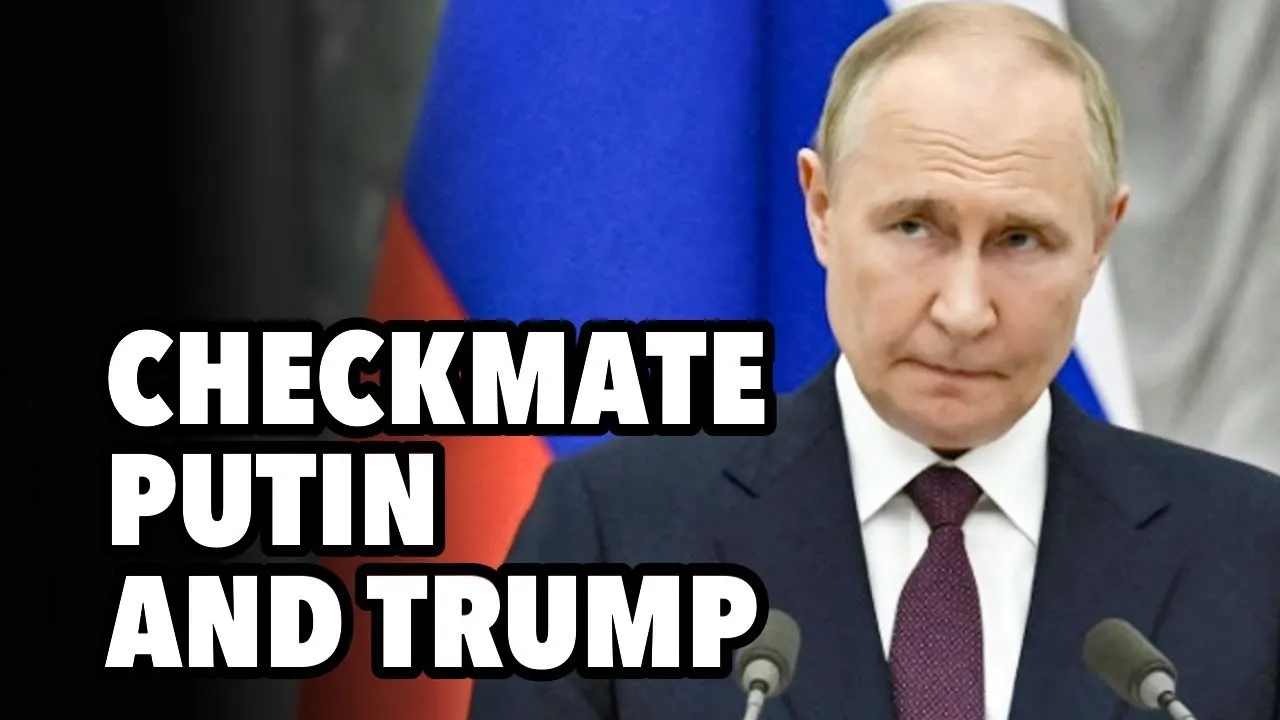
In a recent diplomatic address that has largely flown under the radar of Western mainstream media, Vladimir Putin delivered a speech to thirty newly appointed ambassadors that signals a profound shift in Russia's geopolitical stance. While many observers have been focused on potential peace plans from an incoming Trump administration, the Russian President’s rhetoric suggests that the window for a localized settlement in Ukraine has closed.
The speech went far beyond standard diplomatic pleasantries. Instead, it outlined a hardening of Moscow's position, linking the resolution of the Ukrainian conflict directly to a total renegotiation of the European security architecture. For analysts watching the Kremlin closely, the message was clear: Russia is no longer looking for a ceasefire based merely on the current frontlines, but is reverting to its pre-war demand for a fundamental restructuring of NATO’s presence in Eastern Europe.
Key Takeaways
- Expanded Scope of Conflict Resolution: Putin explicitly linked the settlement of the Ukraine crisis to the implementation of a new security architecture for all of Europe, moving the goalposts significantly.
- Return to December 2021 Proposals: The demands echo Russia's pre-war draft treaties, effectively calling for a rollback of NATO infrastructure to 1998 lines.
- Rejection of Unilateralism: The speech served as a stern rebuke of US "might makes right" policies, emphasizing international law and the UN Charter.
- European Strategic Paralysis: While Russia hardens its stance and the US pursues its own interests (including Greenland), European leaders remain diplomatically sidelined, lacking the agency to negotiate effectively.
- The End of Negotiation Hopes: By setting conditions the US political establishment deems impossible, Russia appears to be signaling a commitment to resolving the conflict through military means rather than diplomacy.
Redefining the Conditions for Peace
For months, speculation has swirled regarding a potential "Istanbul Plus" agreement or a freeze along the line of contact. However, Putin’s recent address effectively dismantled these assumptions. By stating that the root cause of the crisis was NATO expansion in contravention of previous promises, he indicated that any lasting solution must address the cause, not just the symptom.
This is a drastic pivot from recent expectations. The Kremlin is signaling that negotiations cannot simply be about territory in the Donbas or Ukraine's neutrality alone. Instead, the conversation must return to the foundational security arrangements of the continent.
Resurrecting the December 2021 Draft Treaties
The specific reference to previous Russian proposals points directly back to the two draft treaties Moscow presented to the United States and NATO in December 2021. At the time, these proposals were dismissed by Western leaders as non-starters. They called for legally binding security guarantees that would essentially preclude NATO expansion and, crucially, require the withdrawal of foreign forces and infrastructure from countries that joined the alliance after 1997.
"What we want in order to settle this conflict in Ukraine is to go back to December 2021 to negotiate the entire security architecture in Europe all over again. And that means... that all NATO forces in Eastern Europe be withdrawn and removed back to the positions they had in 1998 before NATO expansion began."
By resurrecting these demands, Moscow is asking for a reversal of decades of Western geopolitical strategy. This position suggests that the Kremlin believes its military leverage is sufficient to demand a rewrite of the post-Cold War order, rather than just a settlement of the current hostilities.
A Sharp Rebuke of US Unilateralism
Beyond the specific demands regarding NATO, the speech contained a broader ideological critique of United States foreign policy. Addressing ambassadors from both friendly and "unfriendly" nations, Putin defended the legacy of the United Nations and the multipolar system, framing them as the shared inheritance of the Allied victory in World War II.
This rhetoric serves as a direct counter-narrative to the "rules-based order" often cited by Western capitals. Putin condemned unilateral actions and the "might is right" philosophy, specifically criticizing recent US pressures on nations like Venezuela and Iran. This was interpreted by seasoned observers as a preemptive warning to the incoming Trump administration: Russia will not accept a transactional relationship where the US dictates terms based on raw power.
The Cuban Signal
In a subtle but significant move, Putin explicitly referred to Cuba as an "ally" while accepting the credentials of the new Cuban ambassador. This terminology is not used lightly in Russian diplomacy. Given the recent economic and political pressure the US has exerted on Havana, this declaration serves as a reminder that Russia maintains its own sphere of influence and is willing to provide material support—such as oil and economic aid—to nations in America's near abroad.
The Diplomatic Dead End
The most critical implication of Putin’s new terms is that they render immediate negotiations with the United States virtually impossible. The incoming US administration, despite rhetoric about ending the war, faces domestic political constraints that make these demands unreachable.
There is no conceivable path for a US President to push a treaty through the Senate that dismantles NATO's eastern flank or withdraws forces to Germany. The US political establishment, including Congress and the "Deep State," remains committed to the alliance's current footprint.
"Trying to get a treaty that basically dismantles NATO as we now know it... past the Senate is impossible. And Putin must know it, the Russians must know it. Proposing it basically is saying, look, we don't trust you. We don't really believe that you're serious."
By setting the bar at an impossibly high level, Russia is effectively "kicking the negotiation into the long grass." The strategic calculus appears to be that since the West cannot offer a stable, binding agreement, Russia will settle the security question unilaterally through military victory on the ground. This signals that upcoming diplomatic visits—whether by envoys like Kushner or Witkoff—are viewed in Moscow primarily as damage control or theater, rather than substantive peace talks.
Europe’s Strategic Paralysis
While Washington and Moscow engage in high-stakes maneuvering, Europe finds itself in a precarious middle ground, increasingly stripped of agency. The continent is grappling with internal economic decline, political instability, and a growing realization that its security is entirely dependent on American whims.
The resurfacing of the "Greenland question"—with the US expressing renewed interest in the territory—highlights the transactional nature of the US-Europe relationship. Whether treating NATO as a protection racket or eyeing resources in the Arctic, Washington’s approach leaves European leaders with little room to maneuver. Europe fears that if the US decides NATO is no longer profitable or strategically necessary, the alliance could be hollowed out, leaving the EU to face a powerful Russia alone.
The Search for an Envoy
In a desperate bid to regain relevance, European capitals are reportedly discussing the appointment of a special envoy to negotiate with Russia. Names such as Mario Draghi and Alexander Stubb have been floated. However, this initiative faces two fatal problems:
- Lack of Authority: The EU lacks a unified foreign policy or military capability independent of the US. Without Washington's backing, any European envoy arrives in Moscow with empty hands.
- Missed Opportunities: The only card Europe theoretically holds is to break with US policy and accept Russia's previous offers (such as the June 2024 peace proposal). However, doing so would risk fracturing NATO and the transatlantic alliance—a price the UK and other Atlanticist powers refuse to pay.
Conclusion: A Shift in Global Power Dynamics
Putin’s speech marks a turning point where the conflict in Ukraine transforms from a territorial dispute into a definitive struggle over the future security architecture of the Western world. By demanding a return to 1998 NATO borders, Russia is betting that the current Atlanticist order is unsustainable.
While Europe remains paralyzed and the US faces internal political gridlock regarding foreign treaties, other global players are adapting. The contrast is stark: while European leaders debate which powerless envoy to send to Moscow, figures like Canada’s Mark Carney are engaging directly with China, recognizing the shifting center of gravity in global economics and power.
For the West, the message from the Kremlin is uncomfortable but unambiguous: the time for half-measures and localized ceasefires has passed. Russia is preparing to settle the issue on its own terms, leaving the US and Europe to decide whether to accept a new reality or continue a proxy war with diminishing returns.