
Table of Contents
Imagine a government that works so efficiently it can identify when you qualify for assistance and deliver help automatically—no paperwork, no waiting in line, no proving you're poor over and over again. This isn't a utopian dream; it's happening right now through the innovative work of companies like Promise, which is using artificial intelligence to transform how government serves its citizens.
Key Takeaways
- AI-powered government systems can reduce administrative costs from 34% to just 1% while improving citizen experience
- Modern technology can eliminate the "institutionalized begging" that forces people to repeatedly prove their eligibility for assistance
- Both Republican and Democratic governors are embracing AI solutions that make government more efficient and cost-effective
- Government agencies already possess the data needed to automatically qualify citizens for programs—the technology just needs to connect the dots
- The future of government should be "AI-first" with human intervention only where critical decision-making is required
The Promise of AI-Powered Government
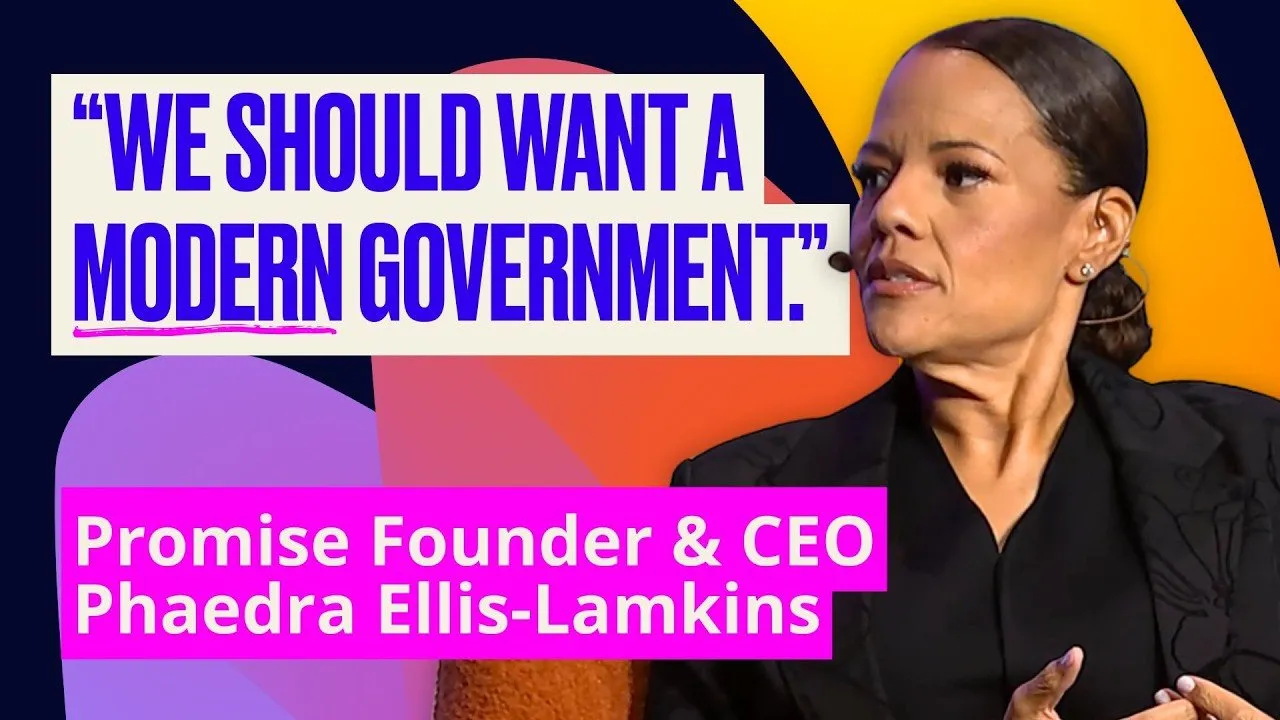
Promise, an AI-first software company, is revolutionizing how government delivers services to those who need them most. Founded by CEO Phaedra Ellis-Lamkins, the company focuses on transforming low-income programs, from Medicaid to food stamps, making them more efficient for governments and more dignified for citizens.
How the Technology Works
The system leverages data that government agencies already possess—tax information, employment records, utility payment history, and program enrollment data. Using AI, Promise can identify when citizens qualify for assistance programs and automatically reach out to them.
"We can look and see you're behind on your utility bill. We can look and see that you already are on food stamps. So, we can reach out to you and say you should be receiving aid. It's a better experience for that person. It gives them dignity."
Instead of requiring citizens to visit offices, bring documentation, and prove their need repeatedly, the system can verify eligibility automatically and deliver assistance directly.
Dramatic Cost Savings and Efficiency Gains
The financial impact of this technology is staggering. Ellis-Lamkins shared that one state client was spending $34 of every $100 on program administration—a massive inefficiency that Promise reduced to just 6% immediately, with plans to bring it down to 1%.
Beyond Cost Reduction
The efficiency gains extend beyond simple cost cutting. Promise can audit six months of government payments in just 90 seconds—work that previously required consulting firms charging $1.5 million and teams of analysts working for months.
This technological capability addresses a market reality that few discuss: consulting firm Deloitte alone generates $6 billion annually from state Medicaid programs, highlighting the massive opportunity for technological disruption in government services.
Bipartisan Appeal of Better Government
One of the most striking aspects of Promise's success is its bipartisan appeal. Ellis-Lamkins notes that Republican governors have been among her best clients, drawn to the efficiency and cost savings the technology provides.
"It is ironic to me that we think that you have different political perspectives, that you either believe in efficient government or you don't. But we should all want a cheaper, better government that treats people well."
Redefining Patriotism
The Promise approach challenges the false choice between caring about government efficiency and wanting government to serve people well. Ellis-Lamkins argues that wanting government to work effectively should be seen as patriotic, not partisan.
Republican governors from Florida to Virginia to Mississippi have embraced these solutions because they deliver on conservative principles of efficiency while also achieving progressive goals of better serving vulnerable populations.
Restoring Dignity to Government Services
Beyond the impressive cost savings and efficiency gains, Promise addresses a more fundamental problem: the dehumanizing experience of accessing government assistance.
Eliminating the "Time Tax" on Poverty
Current systems impose what Ellis-Lamkins calls a "time tax" on poor people, requiring them to take time off work to apply for assistance, wait for appointments, and navigate bureaucratic processes. This creates a cruel paradox where society tells people to work while simultaneously forcing them to stop working to access help.
Citizens often express disbelief when they receive automated assistance, with some initially suspecting scams because they're so unused to government working efficiently on their behalf.
Real Impact on Families
The human impact is profound. Ellis-Lamkins shared a recent Google review from a client describing how a single mother struggling with bills woke up to find her utility bill automatically paid, eliminating weeks of bureaucratic stress and allowing her to focus on work and family.
The Future of AI-First Government
Ellis-Lamkins envisions a future where government operates "AI-first," with human intervention reserved only for critical decision-making points. This represents a fundamental shift from current systems that rely heavily on manual processes and human gatekeepers.
Addressing Job Displacement Concerns
While acknowledging that increased automation will eliminate some government jobs, Ellis-Lamkins argues that the focus should remain on building efficient systems that serve people well, rather than preserving inefficient processes to maintain employment.
"There's not enough people advocating for the government to work for poor people. And why are poor people responsible for figuring out where people go to work who make it harder for them and more expensive for us?"
Expanding Beyond Social Services
The technology's applications extend far beyond social services. Ellis-Lamkins envisions AI transforming all government agencies—from the DMV to healthcare billing systems—eliminating the bureaucratic nightmares that citizens currently endure.
Conclusion
The transformation of government through AI represents one of the most significant opportunities to improve both fiscal efficiency and human dignity in public service delivery. Companies like Promise are proving that we don't have to choose between effective government and compassionate government—technology can deliver both.
As Ellis-Lamkins demonstrates, this isn't about politics; it's about building systems worthy of the people they serve. Republican and Democratic leaders alike are recognizing that modern government should leverage the best available technology to serve citizens effectively and efficiently.
The question isn't whether AI will transform government—it's happening now. The question is whether we'll embrace this transformation quickly enough to realize its full potential for creating a government that truly works for everyone.






%20%7C%20Summit%202025)