Table of Contents
In a world obsessed with peak performance and relentless optimization, many find themselves caught in a bewildering paradox: the harder they strive for success, the more elusive genuine satisfaction becomes. This pervasive drive, often masked as a quest for self-improvement, can quietly transform into a productivity addiction, stripping joy from achievement and tethering self-worth to an endless cycle of future goals. How can we navigate this tension, achieving meaningful accomplishment without sacrificing our present well-being or succumbing to the relentless pressure to always be "on"?
Key Takeaways
- Embrace Paradoxical Productivity: True accomplishment often flourishes not from hyper-control and tension, but from a relaxed engagement and a state of flow.
- Untangle Self-Worth from Achievement: The "insecure overachiever" perpetually finds success becoming a new minimum, leading to relief rather than joy.
- Liberation in Finitude: Accepting that we cannot control everything and have "already failed" in the grand scheme can be profoundly liberating, reducing anxiety.
- Prioritize Authentic Interest: Genuine engagement, guided by intrinsic interest rather than external validation or rigid systems, fuels sustainable creativity and satisfaction.
- The Wisdom of "Settling": Finitude means every choice involves trade-offs; consciously "settling" is about accepting downsides and committing, rather than chasing an illusion of perfect, downside-free options.
- Navigate Congruence Shifts: Personal growth often involves periods of "incongruence," where old strategies no longer serve, and new ones are still forming, requiring patience rather than a return to past patterns.
The Paradox of Productivity: Accomplishment and Ease
The conventional wisdom often dictates that achieving "the best" requires relentless striving, hypervigilance, and an almost obsessive focus. Yet, a deeper look suggests that true excellence, or at least being "really, really good," often emerges from a more relaxed and less controlling state. There's a subtle but profound distinction between setting high standards and succumbing to the ambient anxiety that can bleed into one's personality.
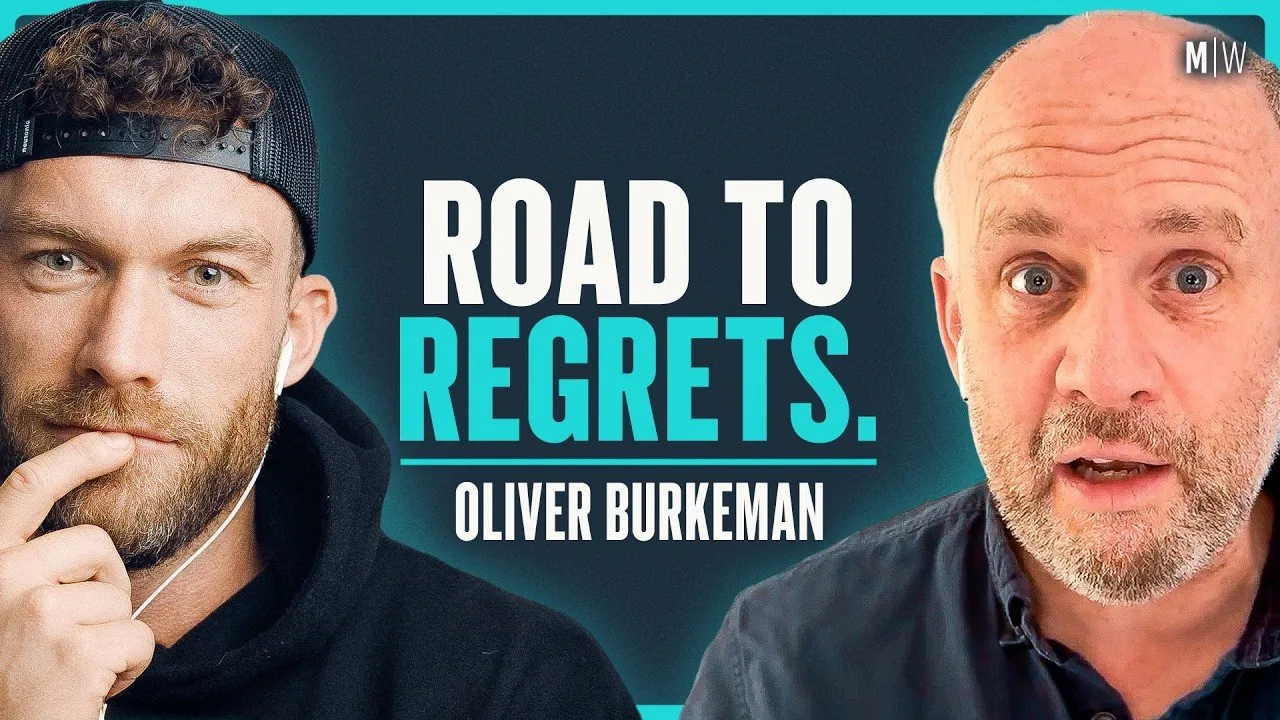
Oliver Burkeman, author of Meditations for Mortals and The Imperfectionist newsletter, argues against the false dichotomy of choosing either a relaxing life or an accomplished one. His experience suggests the opposite: "The more relaxed I can be, the better I am at things."
Flow Versus Control
People who truly excel in their fields are frequently found in a state of flow, completely immersed in their activity, rather than consciously controlling every micro-movement. This is about letting go, losing oneself in the action, rather than sitting back and micromanaging the process. The intense effort to "make sure things go well" often backfires, creating tension, clenching, and an awful self-conscious space where nothing works fluidly. Embracing the activity and surrendering to its demands allows for a more natural and effective performance.
The Insecure Overachiever: The Treadmill of Self-Worth
A fundamental challenge for many driven individuals is the struggle to pursue goals without inextricably tying their self-worth to the outcome. Caring deeply about a goal inherently risks disappointment if it isn't met, and for the insecure overachiever, this disappointment often morphs into a harsh value judgment about themselves.
The Curse of Competence
Psychology offers the concept of the "insecure overachiever"—individuals who achieve impressive success, yet do so primarily to "fix something about themselves" or "fill a void." Their accomplishments, though lauded by society, are often driven by a deep-seated feeling that they must succeed to justify their existence. This creates a relentless cycle where any achievement instantly becomes the new minimum standard, rather than a cause for celebration.
As the host observes, referencing a John Bellion lyric: "If the higher I climb is the further I fall, then why love anything at all?" This phenomenon transforms success from a moment of joy into mere relief, the abatement of fear rather than a congratulation of self-love. A critical question to ponder, therefore, is:
"When things go well, is your presiding sensation one of joy or one of relief?"
The answer often reveals whether one is truly enjoying the journey or merely escaping the terror of perceived failure.
The Liberation of Finitude: Embracing Life's Inevitable "Failure"
A potent antidote to the insecure overachiever's endless striving lies in a radical acceptance of life's inherent limitations and the inevitability of "failure." This isn't a call to passivity but a profound shift in perspective.
The Plane Has Already Crashed
Burkeman uses a powerful metaphor: we often go through life "braced" for a plane crash, terrified of failing, as if bracing could prevent the inevitable. However, a more accurate view might be that the "plane has already crashed." We are already on the desert island, in the smoking wreckage, and life is simply about doing what we can with what's in front of us. This perspective, far from being depressing, is incredibly invigorating. It liberates us from the desperate clinging to a cliff face, the white-knuckle attempt to not fail, because failure—in the sense of not achieving perfect standards or doing everything we wish—is already a given of the human condition.
The Power of "Do It Anyway" and "You Might As Well"
Given our finite time and control, the wisdom of "do it anyway" or the more British "you might as well" emerges. This isn't about reckless abandon but about accepting uncertainty and acting despite it. Elizabeth Gilbert beautifully encapsulates this:
"You're scared to let go or to surrender because you're afraid of losing control, but you never had control. All you had was anxiety."
This realization shifts the stakes, revealing that we often have less to lose than we imagine. The tragic truth, as the host notes, is reaching the end of life and realizing you had nothing to lose but feared it all along.
This acceptance also applies to pursuing cherished goals. As Oliver Burkeman states:
"Life's duties will never be out of the way. And so if you really mean it, when you say you'd like to write a novel or spend more time with your aging parents... at some point you're just going to have to start doing it."
There is no future utopia where the decks are clear; action must begin now, amidst life's inherent messiness.
Beyond Control: Navigating Life with Authentic Interest
Our innate need for control often serves as a strategy to manage the intense vulnerability of being human. We pursue feelings of being "on top of" life, whether through rigid productivity systems or by numbing ourselves with distractions. This constant future-gazing, living just an hour or even 20 minutes ahead, prevents us from truly inhabiting the present moment.
The Folly of Engineered Enjoyment
Attempting to "engineer" fun or enjoyment often proves futile because the moment an experience is done for an outcome other than itself, it ceases to be genuinely enjoyable. Instead, a more fruitful approach is to allow authentic interest to guide our days. Many insecure overachievers harbor a deep distrust in themselves, believing that if they only did what they wanted, they'd collapse into inaction. However, for those already driven, this self-permission often unlocks harnessed energy.
Letting productivity be guided by "what I feel like doing" can be a revelation. It not only harnesses intrinsic motivation but also reveals that even "obligatory" tasks can become enjoyable when approached with a willingness to keep commitments. As Burkeman notes:
"Actually, what people want is to read, watch, listen to things from people who are really alive with interest in what they're in and what they're talking about and dealing with."
This "aliveness" is the ultimate point, fostering genuine connection and sustained engagement, particularly in creative endeavors where "audience capture" can otherwise lead creators astray from their authentic voice.
The Perils of Inauthentic Success and the Wisdom of "Settling"
In our increasingly digitally mediated world, the pursuit of a controlled, curated image of success has taken on new dimensions. This is starkly evident in the use of AI to generate "authentic" human expression.
The "Fraud" of AI-Generated Authenticity
Imagine using AI to craft a heartfelt message to a partner. While the immediate outcome might be positive, the sender experiences a profound sense of fraudulence. The gratitude received is for a curated response, not their genuine genesis of thought. True relationship often happens in the "repair that follows saying the wrong thing," a process bypassed by AI. This highlights a broader trend where the ability to edit and refine communications fosters an environment of self-assessment and manipulation, rather than raw, human connection.
Embracing "Settling" as a Conscious Choice
The concept of "settling" often carries negative connotations, particularly in romantic relationships. However, a more profound understanding reveals that finitude means we are always settling, always making trade-offs. Every choice, every commitment to a person or a path, involves accepting certain downsides in exchange for security, depth, or other benefits. The illusion of "keeping options open" is itself a form of settling, albeit one that foregoes the benefits of deeper commitment and accepts a different set of negative consequences, such as indecision or a lack of profound connection.
The key is not to avoid settling, but to recognize that it is an unavoidable aspect of the human condition. The choice lies in deciding which trade-offs to make, rather than holding out for a mythical perfection that doesn't exist.
Navigating Incongruence: Evolving Beyond the Hard Charger
For individuals who have wrapped their identity around being a "hard charger" or "highly congruent," the journey toward a more relaxed, present-focused life can feel deeply destabilizing. This often manifests as a "Type A problem" for "Type A people"—a struggle to switch off and relax, often receiving little sympathy because their outward success belies inner turmoil.
The Midlife Crisis as Evolution
The traditional understanding of a midlife crisis, when viewed through a psychological lens, isn't necessarily a negative breakdown, but rather a necessary period of transition. It's when strategies that served in early adulthood—like tirelessly working to establish oneself—begin to lose their efficacy. Remaining "completely congruent" throughout one's life can, in fact, be a disaster, akin to someone in their late 50s clinging to the attitudes of their late 20s. Growth necessitates periods of shedding old identities and embracing new ways of being.
The Chasm of Incongruence
During these transformative phases, one might experience a "complete loss of congruence," feeling floppy, flaccid, and directionless. This can be particularly challenging when surrounded by highly congruent individuals, leading to feelings of inferiority and a dangerous temptation to force oneself back into an old, outgrown "shell."
However, these periods of unclarity, though unpleasant, are often generative. They are moments where the old ways are falling away, and new ones haven't yet been fully figured out. The challenge is to simply "stay," to not nervously tamper or abandon the process, but to allow the intuitive sense of growth to guide the way. True agency, it turns out, is often acquired when one can relax the need for control, releasing the notion that one's basic worth requires a specific outcome. As James Hollis observes, the goal of really good therapy is simply to make life more interesting to you—a profound yet often underestimated aspiration.
Conclusion
The relentless pursuit of productivity and achievement, while often lauded, can paradoxically lead to a disconnect from genuine joy and a corrosive tying of self-worth to external outcomes. By embracing the liberating truths of finitude, accepting life's inherent uncertainties, and allowing authentic interest to guide our path, we can move beyond the anxieties of hyper-control. The journey may involve navigating periods of disorienting incongruence, but it ultimately leads to a more embodied, present, and profoundly alive experience of being human.