Table of Contents
In the modern software landscape, the lines between engineering, product management, and design are blurring. Today's most effective developers are moving beyond simple implementation to become product-minded engineers. These professionals don’t just write code; they define the vision, empathize with the user, and take full ownership of the product's impact. As AI continues to change how we build, this "product-first" mindset has shifted from a competitive advantage to a professional necessity.
Key Takeaways
- Definition of a Product Engineer: They are motivated by user impact rather than just technical elegance, bridging the gap between "what" needs to be built and "how" it functions.
- The Role of Taste: Developing a refined sense of quality—conceptual and aesthetic—is a learnable skill that acts as a key differentiator in crowded markets.
- Rituals for Growth: Establishing habits like "Quality Wednesdays" or dedicated developer flows helps teams proactively identify defects and align on user needs.
- The AI Shift: AI agents are automating low-level tasks, allowing engineers, designers, and PMs to ship faster and iterate on ideas without waiting for long, synchronous development cycles.
Defining the Product-Minded Engineer
At its core, a product engineer is an engineer with product-management instincts layered on top. While a traditional "code-minded" engineer might prioritize the complexity of a system or the elegance of a library, the product engineer asks, "What problem are we solving for the user, and why does this solution matter?"
Moving Beyond Front-End and Back-End
The industry has long pigeonholed developers into front-end or back-end roles, but this distinction is becoming outdated. A product-minded engineer views any interface—whether it is a user-facing dashboard or an internal API—as a product. Every module has an interface, a user (often another developer), and a requirement to be intuitive and reliable. By focusing on the user’s journey rather than just the technical implementation, engineers become far more effective at building tools that people actually want to use.
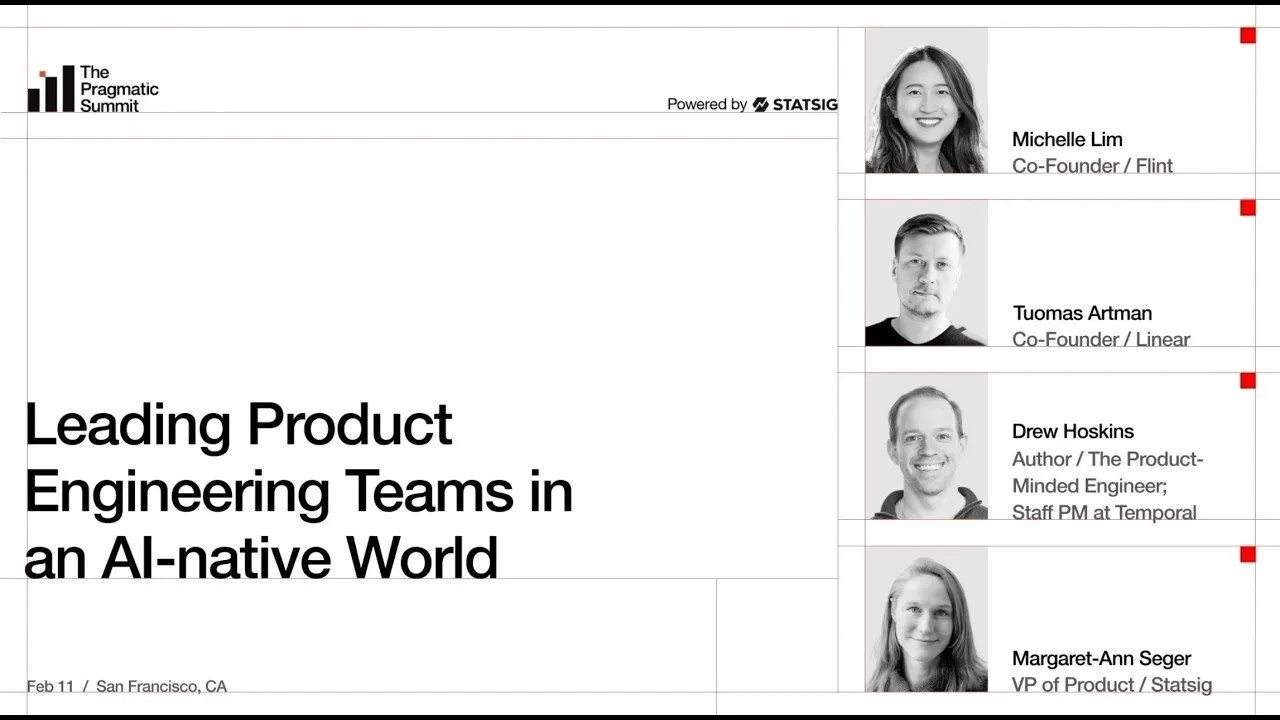
"A product-minded engineer cares at least as much about what and why as they care about how." — Drew, Staff PM at Temporal
Cultivating "Taste" as a Competitive Edge
In a world of AI-generated code and bloated software, taste is the ultimate differentiator. It is not a mystical quality reserved for a select few; it is a craft developed through exposure and intentional practice. Whether you are building an issue tracker like Linear or a terminal like Warp, the goal is to create an experience that feels "magic" to the user.
How to Interview for Taste
Companies like Linear don't just rely on theoretical questions; they treat hiring as a collaborative process. By bringing candidates on-site to work on real, shippable projects, teams can observe how a candidate handles design decisions and user-centric problems in real-time. The best candidates don't just lean on existing patterns—they adapt their thinking to the specific constraints and unique requirements of the new problem at hand.
Building Product Muscle Through Rituals
Leadership plays a critical role in fostering these instincts. It isn't enough to tell an engineering team to "care about the user." Instead, managers should implement specific rituals that make quality and user empathy part of the daily workflow.
Strategies for Team Alignment
- The Feedback Loop: Use call recording tools to feed customer insights directly into Slack channels, allowing engineers to hear the raw, unvarnished feedback from their users.
- Dedicated Quality Time: Implement "Quality Wednesdays," where engineers spend time finding and fixing small, non-critical defects that often go unnoticed in a sprint-heavy environment.
- Developer Flows: When reviewing new features, require engineers to write out the "user journey" step-by-step. This often helps the engineer identify gaps in logic before a single line of code is written.
"If you don't know what you're looking for, you will simply miss it and you won't even know that you made a mistake." — Thomas, CTO of Linear
The AI-Native Development Workflow
In 2026, the velocity of product engineering has increased exponentially. AI assistants are no longer just "code completion" tools; they are autonomous agents that handle small bug fixes and polish issues in the background. This allows human engineers to focus on high-level architecture and deep product strategy rather than tedious maintenance.
Democratizing Shipping
Perhaps the most significant change is how non-engineers are interacting with the codebase. Designers and PMs, once limited to static mockups, are now using AI tools to ship their own functional previews and minor UI updates. This eliminates the "bottleneck of implementation," allowing the entire team to iterate toward a higher-quality product without waiting for long, synchronous engineering cycles.
Conclusion
The transition toward product-minded engineering is not just about writing code; it is about taking full responsibility for the user's success. Whether it is through rigorous defect hunting, spending time on sales calls, or leveraging AI to move faster, the goal remains the same: building products that are not just functional, but genuinely delightful. By shifting the focus from the mechanics of the build to the impact on the user, engineers can secure their place as the primary architects of value in an AI-native world.