Table of Contents
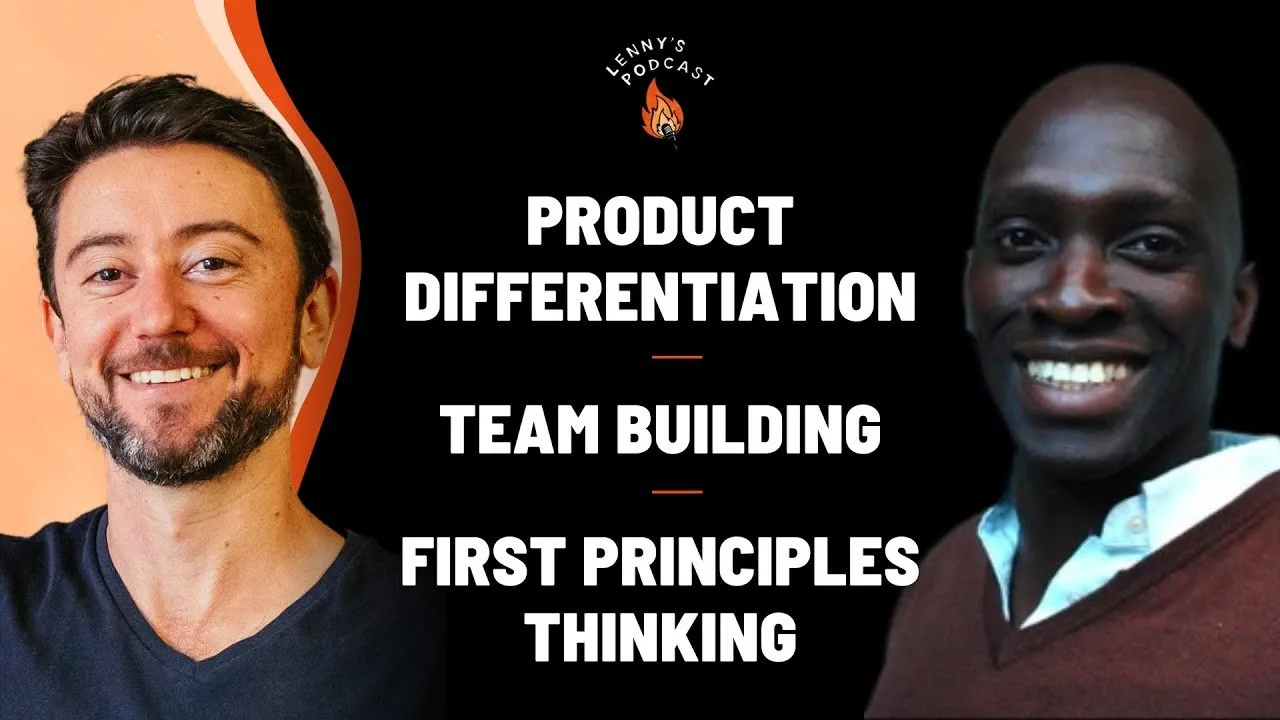
Building a successful consumer product is notoriously difficult. For every success story, countless others fail to gain traction, especially when entering a market dominated by an established player. Yet, Cash App managed to do just that, carving out a massive user base in the shadow of Venmo. How? The answer lies in a disciplined approach to differentiation, a relentless focus on the user experience, and a unique philosophy on team building. We're diving deep into the frameworks and first-principles thinking of Ayo Omojola, who co-created and scaled Square's Cash Card and now serves as Chief Product Officer at Carbon Health.
Key Takeaways
- Effective product differentiation requires being both different from and better than competitors in a way that genuinely matters to your target users. Simply being different or incrementally better is not enough to win.
- Successful "startups within a startup" are often built by small, senior, and tightly-knit teams that are shielded from organizational friction and empowered with trust and autonomy by leadership.
- Embrace first-principles thinking by questioning assumptions and digging into the details until you reach the fundamental truths of a problem. Don't blindly accept answers from experts without understanding the "why" behind them.
- Hiring former founders can inject a high-output, problem-solving mindset into your team. However, be prepared for them to challenge inefficiencies and for potentially higher attrition as they seek new challenges.
- Hiring is a long game. Building genuine relationships and adding value to potential candidates' lives over months or years creates a pipeline of talent that is eager to work with you when the right opportunity arises.
The Cash App Formula for Beating the Competition
When Cash App entered the scene, the peer-to-peer payment space was already dominated by Venmo. To succeed, the team couldn't just build a slightly better version; they had to fundamentally change the game. This required a rigorous focus on what made them truly different and superior in the eyes of the consumer.
Differentiating with "Different and Better"
Ayo Omojola explains that true differentiation is a two-part equation: you must be both different and better. It's a surprisingly difficult balance to strike.
Being different is not enough...being better is not enough...it has to be better...in a way that matters to the end user.
It's easy to build something different by simply observing the market and creating the opposite. It's also relatively easy to make something "better" by adding features or charging more. The magic happens when you identify a dimension of "better" that solves a core user pain point your competitor is ignoring. For Cash App, that dimension was speed.
The Power of 'Instant'
While Venmo transactions often took days to settle into a user's bank account, Cash App focused relentlessly on making money available instantly. This wasn't just a minor feature; it was their core differentiator.
“When someone says hey why are you better than venmo I'd be like try and send me a dollar that I can use now and there's only one app you could do it with,” Ayo recalls. This singular focus on instant access—from peer-to-peer payments to selling stocks or Bitcoin—became the theme that cut through the market clutter. It was a clear, tangible benefit that mattered deeply to users.
Building a Startup Within a Startup
Many large companies attempt to foster innovation by creating "startups within a startup," but most fail. Cash App is a rare exception. Ayo attributes its success to several key factors that allowed the team to operate with focus and autonomy.
- Small, Senior Teams: When Ayo joined, the Cash App team was only about 11 or 12 people, and it remained small for a long time. The team was composed of tenured, trusted individuals, which minimized communication overhead and maximized trust.
- Leadership as a Firewall: Leaders like Brian Grassadonia were effective at shielding the team from the broader organizational friction and politics of Square. This allowed them to prioritize the consumer's needs in every tradeoff, even when it caused internal tension with the company's merchant-focused core business.
- Forced Discipline: Unlike a true startup, an internal venture doesn't have the existential fear of running out of money. To counter this, Square’s leadership, particularly Sarah Friar, enforced rigorous discipline around headcount and resource allocation, forcing the team to justify every hire and expenditure. This ensured that the team's size never outpaced its actual success and potential.
When you're a startup you actually worry about paying the people who work for you and when you are inside the company you just don't.
A Playbook for Building High-Performance Teams
Ayo's approach to team building is as unconventional as his approach to product. He focuses on identifying specific archetypes and playing the long game, building relationships far in advance of any open role.
The Case for Hiring Founders
Ayo actively seeks out and hires former startup founders, even those whose companies failed. He believes they possess a unique combination of ambition, resilience, and a "chip on the shoulder" that drives them to excel. These individuals are adept at navigating ambiguity and taking ownership.
However, this strategy comes with distinct trade-offs:
- They Expose Waste: Founders have a low tolerance for inefficiency. They will immediately identify and call out any organizational waste or bureaucracy, which forces the organization to be better but can create friction.
- They Have Higher Attrition: Ambitious people don't stay put for long. Founders are likely to stay for two or three years before moving on to lead another team or start their next company. The trade-off is a period of exceptionally high output for a shorter tenure.
Despite the challenges, Ayo is "100 percent certain the thesis was right," as it levels up the entire team and creates a culture of high performance.
The Long Game of Hiring: Building Relationships
Ayo’s core hiring philosophy is to "pick the people that they pick when." This means identifying talented individuals he wants to work with and then investing in a relationship long before a role is available. He operationalizes this by constantly meeting new people and asking a simple question: how can I add value to your life right now?
This could mean making an introduction, offering advice, or connecting them to an opportunity. It's a strategy of giving without expecting an immediate return. Over time, this builds a network of talented people who see him as a valuable connection and are open to working together when the time is right. It transforms hiring from a transactional process into a relational one.
Mastering Complexity with First-Principles Thinking
In highly regulated and complex industries like fintech and health tech, surface-level knowledge isn't enough. True innovation comes from going deep, questioning every assumption, and understanding the system from the ground up.
Why You Must Go Deeper Than the Experts
Ayo warns against blindly trusting "experts," who are often just the most tenured people in a specific domain. Their knowledge can be based on outdated information or context that no longer applies. The only way to find the truth is to keep pushing.
You can't stop till you get to the end.
This means the person in the execution role—whether it's you or someone on your team—must become the true expert. They need to be in command of all the details. This involves reading the regulations yourself, understanding the technical limitations, and articulating precisely what will break if you deviate from the established path. Value is often lost when the person doing the work isn't fully in command of the details.
From Card Manufacturing to Database Fields
This philosophy was born from practical experience. When developing the first Cash Card, the team was unsatisfied with the quality from standard card vendors. Ayo’s solution was to visit card manufacturing factories himself to understand the entire process, from plastics to laser engraving. This deep dive allowed the team to create a physically distinct and high-quality product by exploring thousands of combinations of materials and machine settings.
He applies this same rigor today at Carbon Health, questioning things as granular as why a specific database field is left null. While these questions might seem tedious to others, they uncover hidden assumptions and prevent ambiguity that can cause problems at scale. It's about ensuring every part of the system is intentional and understood.
Navigating Highly Regulated Industries
Ayo's career trajectory from fintech at Cash App to his role as Chief Product Officer at Carbon Health seems like a significant jump, but he views it through the lens of a common challenge: mastering complex, regulated environments.
From Fintech to Health Tech: A Pattern of Regulation
Instead of seeing himself as just a "fintech person," Ayo reframed his expertise as being "good at regulated businesses." He realized the muscle he built at Cash App—dissecting regulations with lawyers, compliance, and engineers to find innovative product paths—was transferable. This mindset opened the door to tackling the immense challenges in healthcare, an industry with its own dense web of rules and legacy systems.
Advice for Health Tech Founders
For founders looking to break into healthcare, Ayo offers a sobering piece of advice: success is often network-dependent. The industry is built on established relationships, and deals can be won or lost based on who you know. Founders without deep industry connections must be incredibly crisp about their value proposition to identify the exact decision-maker they need to reach.
Carbon Health found a way to bypass some of this by being a direct-to-consumer business, leveraging co-founder Eren Bali's deep experience building Udemy. By building their own full-stack platform—from the software providers use to the patient-facing app—they control the entire experience, allowing for innovations like integrating continuous glucose monitor data directly into their EMR for proactive diabetes care.
Conclusion
Building a category-defining product isn't about a single silver bullet. As Ayo Omojola's journey shows, it's the result of a compounding set of principles: a relentless pursuit of meaningful differentiation, the courage to go deep and question everything, and a deliberate, long-term approach to building a team of owners. Whether you're in fintech, health tech, or any other complex space, these frameworks provide a powerful blueprint for turning ambitious ideas into reality.