Table of Contents
The Shifting Landscape of AI and Employment
As artificial intelligence continues to integrate into the corporate world, the debate over its impact on the labor market has moved from speculative theory to immediate reality. While major enterprises, including Atlassian, have confirmed workforce reductions citing shifts in required skill sets due to AI, industry experts and economists are questioning whether these layoffs are driven by technological necessity or represent a strategic pivot to shore up balance sheets following periods of over-hiring.
Key Points
- Atlassian recently cut roughly 10% of its workforce, with CEO Mike Cannon-Brooks noting that while AI does not replace entire roles, it necessitates a fundamental change in the required skill mix.
- Market analysts argue that some "AI-driven" layoffs may be masking deeper issues, such as a need to correct bloated post-pandemic cost structures and satisfy a new investor focus on free cash flow.
- New research from Anthropic and the European Central Bank suggests that while certain sectors face high exposure to automation, companies that actively embrace AI are paradoxically more likely to hire new staff rather than shrink their workforces.
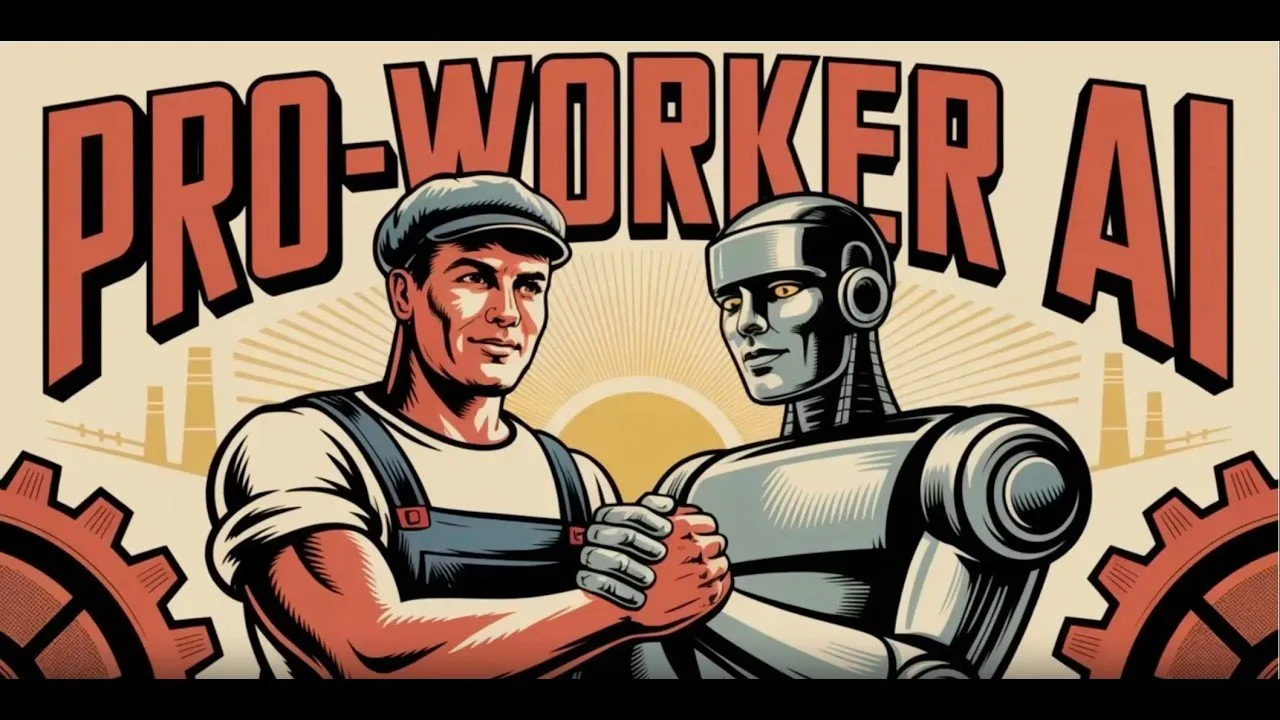
- MIT researchers Daron Acemoglu, David Autor, and Simon Johnson propose a framework for "pro-worker AI" that prioritizes technologies which augment human expertise rather than simply automating tasks.
The Anatomy of AI-Driven Layoffs
The narrative that AI is the primary catalyst for current software industry layoffs is increasingly contested. Financial commentators suggest that companies are utilizing "AI cover" to address more elemental economic pressures. According to recent market analysis, many tech firms are grappling with valuations that have reset to focus on free cash flow, forcing them to address cost structures that were inflated during the pandemic-era hiring boom.
The dilemma for many firms remains the balance between rising talent costs and the need to protect margins. When companies face high dilution from stock-based compensation and a lack of organic revenue growth, layoffs often become the primary instrument for maintaining financial viability. AI, in this context, serves as a convenient justification for a structural recalibration that was likely inevitable regardless of new technological capabilities.
Beyond Automation: A Pro-Worker Paradigm
The discourse is beginning to shift toward how society can steer development toward "opportunity AI"—the use of technology to expand business capabilities rather than simply doing the same work with fewer people. In their recent paper, Building Pro-Worker Artificial Intelligence, researchers from MIT highlight that technological change is not monolithic; it exists on a spectrum ranging from pure automation to new-task creation.
"While AI's capacity to automate work is substantial, we argue that its potential to serve as a collaborator by extending human judgment, enabling new tasks, and accelerating skill acquisition is equally transformative and currently underexploited," the researchers state.
The authors categorize technologies based on their impact on labor productivity and human expertise. They argue that the current market over-indexes on automation because of misaligned incentives, such as firms seeking to reduce reliance on unionized labor or developers building for existing corporate demand. To counter this, they suggest government policy could play a significant role by leveraging large-scale public investments in sectors like healthcare and education to incentivize the development of tools that keep the worker "in the loop."
Preparing for the Future of Work
Despite public pessimism—with 63% of Americans expressing concern that AI will decrease the number of available jobs—some empirical evidence suggests a more optimistic trajectory. A report from the European Central Bank found that firms in the Eurozone utilizing AI were 4% more likely to increase their staff levels. This supports the historical economic view that new task creation often counterbalances the "creative destruction" of automation.
Addressing the transition will require a new "grand bargain" between the public and private sectors, a point recently emphasized by former Commerce Secretary Gina Raimondo. She advocates for a system where employers lead in defining essential skills and governments provide the safety nets and modular education credentials necessary to help workers move between roles. As the economy evolves, the most successful organizations will likely be those that transition away from viewing AI strictly as an efficiency tool and toward utilizing it as a platform for growth and innovation.