Table of Contents
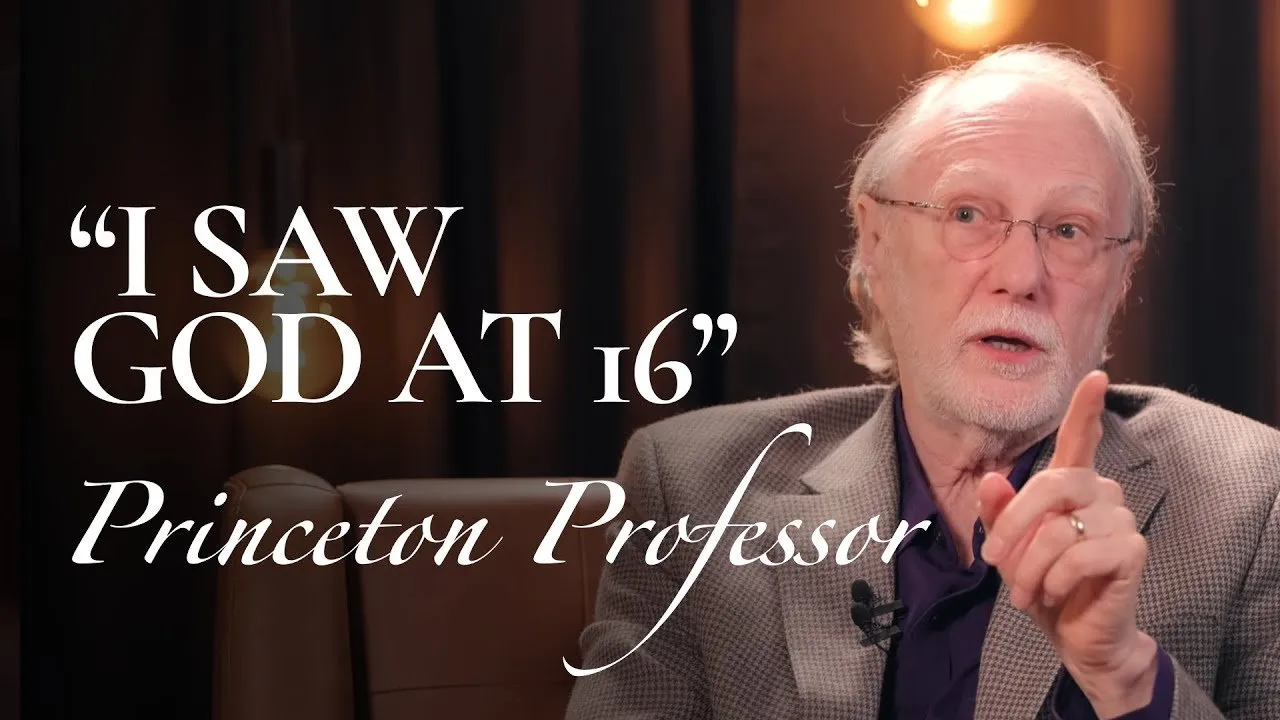
Is consciousness merely a chemical byproduct of the brain, or is it something far more fundamental to the universe? For centuries, the prevailing scientific worldview has been materialism—the belief that matter is the only reality. However, a growing body of empirical data from serious scholars at institutions like Princeton, Duke, and the University of Virginia is challenging this paradigm. Princeton historian and scholar Dale Allison argues that "metanormal" experiences—from near-death encounters to inexplicable moments of lucidity in the dying—suggest that our current framework for understanding reality is incomplete. The evidence suggests we may be on the verge of a shift in understanding as radical as the realization that the Earth revolves around the sun.
Key Takeaways
- Materialism operates like a dogma: Much of modern skepticism functions similarly to religious fundamentalism, often ignoring or suppressing empirical data that contradicts the materialist worldview.
- Veridical NDEs offer compelling evidence: Near-death experiences where patients report verifiable details (like surgical instruments or conversations) while clinically unconscious challenge the idea that the brain produces consciousness.
- The "Antenna" model of consciousness: The brain may function more like a receiver (radio/TV) than a generator, explaining why consciousness can intensify even when brain function is compromised.
- Skepticism has religious roots: Surprisingly, modern atheism and skepticism trace their lineage back to the Protestant Reformation’s theological rejection of Catholic miracles.
- Sensitivity varies by individual: Just as some people are musically gifted, some individuals are "thinner" and more permeable to metanormal experiences, while others remain "thick" and unaffected.
The Dogma of Materialism and Suppressed Data
One of the most provocative claims in the study of the metanormal is that science, particularly in its materialist form, often behaves less like an open inquiry and more like a rigid belief system. When confronted with data that defies physical explanation, the reaction from the scientific establishment is frequently one of anger or dismissal rather than curiosity.
Dale Allison notes that significant research, such as the ESP experiments conducted by J.B. Rhine at Duke University in the 1930s, produced statistically significant results that have never been adequately explained by chance. Yet, critics often resort to accusations of fraud without evidence, simply because the data contradicts their worldview.
Materialism is often a dogmatic position, and it's like fundamentalism. So you explain away contradictory data.
This dismissal creates a "file drawer phenomenon," where successful studies on metanormal phenomena are ignored or unpublished because they don't fit the accepted narrative. The result is a curated reality that systematically excludes anomalies, regardless of how well-documented they are by secular, serious scholars.
Evidence from the Edge of Life and Death
Perhaps the most challenging data for the materialist framework comes from the medical field, specifically regarding Near-Death Experiences (NDEs) and end-of-life phenomena. These are not merely subjective hallucinations; they often contain "veridical" elements—details that the patient should not have known but did.
Veridical Near-Death Experiences
In operating rooms around the world, patients who are clinically dead or under deep anesthesia have reported viewing their surroundings from a perspective outside their bodies. They describe specific surgical tools, the color of a doctor’s shoes, or conversations happening in adjacent rooms. Allison points to the work of Bruce Greyson at the University of Virginia, who has documented numerous cases where patients reported details—such as mustard on a doctor’s tie—that were impossible for them to see physically.
When a patient claims to have seen a leg amputation in the room next door while they were undergoing their own surgery—and hospital records confirm it—the "hallucination" hypothesis begins to crumble. Skeptics often argue that these are statistical outliers or lucky guesses, but the sheer volume and specificity of reports from medical professionals suggest otherwise.
Terminal Lucidity
Another phenomenon that disrupts the materialist model is "terminal lucidity." This occurs when patients with severe neurodegenerative diseases, such as advanced Alzheimer’s or brain tumors, suddenly regain clarity, memory, and personality shortly before death.
Under a strict materialist view, where consciousness is an emergent property of brain tissue, a brain physically destroyed by disease should not be capable of producing complex, lucid consciousness. Yet, hospice workers and family members frequently report these moments of "rallying." If the hardware is broken, how is the software running so perfectly? This anomaly suggests that consciousness may not be entirely dependent on the integrity of the brain tissue.
The Antenna Analogy
To make sense of this, scholars often utilize the "transmission" or "antenna" model, popularized by William James. In this analogy, the brain is not a factory producing consciousness, but a receiver tuning into it.
You have a television set and you watch a program and if you take an axe and hit the TV, well, there's no program anymore, but the TV isn't the source of the program.
If the brain acts as a filter or a reducing valve, then damaging the brain (via drugs, near-death states, or meditation) might actually widen the bandwidth, allowing more consciousness in, rather than shutting it down. This explains why moments of low brain activity often correlate with hyper-real, intense spiritual experiences.
The Spectrum of Sensitivity: "Thick" vs. "Thin" People
Why do some people see ghosts, experience precognition, or have mystical encounters, while others go their entire lives without a single unexplainable event? Allison proposes a distinction between "thick" and "thin" people.
"Thick" individuals are insulated from the transcendent; they live firmly in the material world. "Thin" individuals, however, seem to have a more permeable boundary between themselves and the metanormal. This isn't necessarily a moral distinction—it may be genetic, sociological, or simply a variation in human constitution, much like athletic or musical ability.
These experiences are often private and subjective, yet they carry a weight of reality for the experiencer that is undeniable. Whether it is a shared vision of a glowing Tibetan master or a daughter’s prophetic dream about a church service, these events are woven into the fabric of reality for "thin" people, even if they remain invisible to the "thick" observers standing right next to them.
The Unexpected Origins of Modern Skepticism
We often assume that atheism and skepticism arose purely from scientific advancement. However, historical analysis suggests that the modern materialist mindset is actually an unintended offshoot of Protestant theology.
During the Reformation, Protestant leaders needed to distinguish their authority from the Roman Catholic Church. Since Catholicism relied heavily on miracles (healing relics, apparitions of Mary, levitating saints) to validate its truth claims, Protestants adopted a stance of "cessationism"—the belief that miracles stopped after the biblical era.
Modern form of skepticism, materialism, atheism came from Protestants.
By systematically debunking contemporary miracles to undermine Catholic authority, Protestantism laid the groundwork for Enlightenment thinkers like David Hume. Over centuries, this theological skepticism evolved into secular skepticism. The argument shifted from "miracles only happened in the Bible" to "miracles never happen at all," birthing the modern materialist worldview.
Navigating the Ethical and Spiritual Implications
If we accept that the metanormal is real, does it prove a specific religion is true? Not necessarily. Levitation, glowing figures, and miraculous healings appear across all traditions—Christianity, Buddhism, Sufism, and even in secular contexts. A levitating saint does not prove Catholic dogma any more than a levitating monk proves Buddhist cosmology.
However, these experiences do carry weight. While the "metanormal" world seems to contain a mix of good, bad, and indifferent forces (much like our physical world), the most profound experiences—those of radical, transcendent love—often come with an implicit ethical imperative.
Encounters with this "fundamental good" frequently leave experiencers with a conviction that reality is ultimately benevolent, despite the presence of evil. For the seeker, this suggests that while no single tradition owns the truth, the universe bends toward a reality of connection and love. As we navigate this "big buzzing confusion" of existence, the rational response may not be rigid skepticism, but a humble, pragmatic openness to the mystery.
Conclusion
The evidence for a reality beyond the material is vast, historical, and persistent. From the surgical wards of modern hospitals to the private experiences of families, the "metanormal" refuses to be explained away. While we may not have a unified theory that explains every anomaly, the data invites us to step out of the dogmatic certainty of materialism. It challenges us to listen to the "thin" people among us and consider that the universe may be far stranger, and perhaps more wonderful, than our current science allows.