Table of Contents
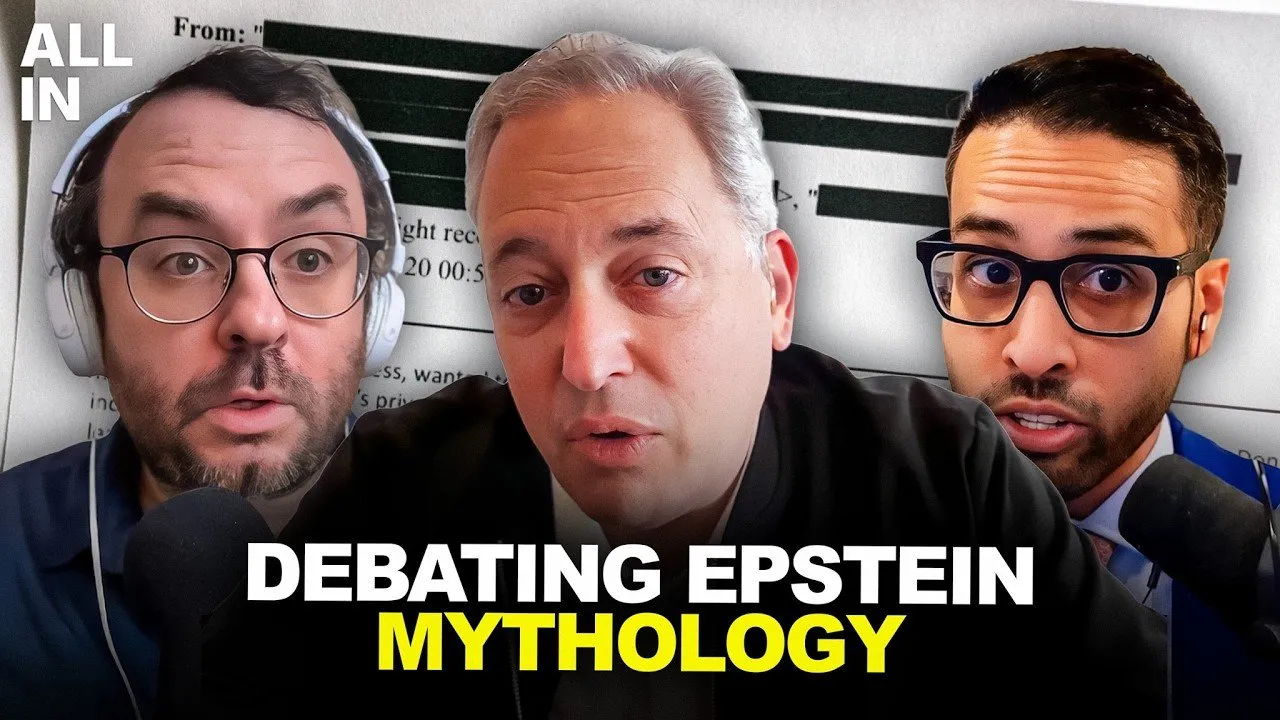
The Jeffrey Epstein case continues to dominate the cultural zeitgeist, fueled by the ongoing release of unredacted files and high-profile legal developments. What began as a local solicitation case in Florida has metastasized into a global scandal involving royalty, tech titans, and political dynasties. While the public remains transfixed by the most salacious details, a deeper conflict exists between those who view the story as an indictment of a corrupt "Epstein class" and skeptics who argue the narrative has devolved into a modern-day moral panic. Understanding the nuances of these competing perspectives is essential for anyone seeking the truth behind the headlines.
Key Takeaways
- Financial Nexus: Critics argue Epstein’s true power lay in his expertise in money laundering and tax evasion for the global elite, rather than purely sexual blackmail.
- Legal Myth vs. Reality: Skeptics highlight a lack of physical evidence for many "maximalist" claims, such as the existence of a "global pedophile ring" or confirmed rapes on Epstein’s island.
- Incentivized Litigation: The creation of massive settlement funds by JP Morgan and Deutsche Bank has led to what some call a "billion-dollar industry" for purported victims.
- The Hoffman Discrepancies: Recent data analysis suggests that tech mogul Reid Hoffman’s relationship with Epstein was significantly more extensive than his public statements indicated.
The Financial Architecture of Power
While the media often focuses on the sexual crimes, analysts like Saagar Enjeti contend that Epstein’s primary utility to the elite was his financial acumen. Enjeti suggests that Epstein arose under suspicious conditions in the 1980s, potentially honing money laundering and tax evasion strategies that ensnared billionaires like Leslie Wexner and Leon Black. This financial "razor’s edge" made him useful to various intelligence networks and foreign governments.
The Bitcoin Connection
One of the more surprising revelations in recent files is Epstein's early interest in cryptocurrency. As early as 2011, Epstein was reportedly reaching out to figures in the tech world to discuss Bitcoin’s potential for moving money surreptitiously. This foresight into decentralized finance reinforces the view that Epstein was a master of financial obfuscation long before Bitcoin entered the mainstream.
The Case of Prince Andrew
The recent arrest of Prince Andrew in the UK, ostensibly for the mishandling of trade secrets, has been viewed by many as a proxy for the broader Epstein scandal. During his tenure as a UK trade advisor, Andrew allegedly forwarded non-public information to Epstein. This suggests the relationship was not merely social but involved the exchange of high-level state intelligence under the guise of financial consulting.
Deconstructing the "Epstein Mythology"
Journalist Michael Tracey offers a starkly different interpretation, arguing that much of the Epstein story is built on "mythological nonsense" and "algorithmic slop." Tracey posits that the media and public have entered a state of collective hysteria similar to the "Satanic Panic" of the 1980s, where speculation replaces forensic evidence.
The Evidentiary Standard
Tracey points out that despite the common label of "convicted pedophile," Epstein’s 2008 plea involved a 17-year-old victim. He argues that many of the most frequent claims—such as Bill Clinton visiting the island or the existence of a sophisticated blackmail recording system—are based on the testimonies of individuals who have previously recanted or admitted to fictionalizing their accounts in search of book deals.
"This is the worst story of my adult lifetime in terms of the media coverage... people will come to realize that they were bamboozled on a mass scale."
The Settlement Industry
A significant factor in the proliferation of these claims, according to skeptics, is the sheer volume of money now available through civil settlements. With JP Morgan and Deutsche Bank paying out hundreds of millions of dollars, the legal bar for being classified as a "victim" has arguably shifted. Tracey highlights that these settlement funds are often non-adversarial, meaning claimants are not subjected to cross-examination, which may incentivize the "retroactive classification" of consensual adult encounters as sex trafficking.
The Reid Hoffman Files
One of the most scrutinized figures in the recent document releases is LinkedIn co-founder Reid Hoffman. Citizen journalist Kevin Bass, using AI-driven analysis of the latest file drops, suggests a major discrepancy between Hoffman’s public apologies and the documented reality of his interactions with Epstein.
Extent of Contact
In 2019, Hoffman claimed his interactions with Epstein were few and strictly for fundraising for the MIT Media Lab. However, Bass identifies hundreds of initiations between the two parties, including dozens of in-person meetings and overnight stays at Epstein’s various properties. The data indicates that Hoffman may have served as Epstein’s primary gateway into the Silicon Valley elite, far exceeding a casual philanthropic association.
The Partisan Weaponization
The scrutiny of Hoffman has been complicated by his role as a major Democratic donor. Some analysts argue that by aggressively attacking political rivals like Donald Trump and Elon Musk regarding their own Epstein ties, Hoffman is attempting to "seek protection" within a partisan tribe. This reflects a broader trend where the Epstein scandal is used as a "partisan battering ram" rather than a search for objective justice.
The Problem of High-Value Redactions
The public’s frustration with the "Epstein Files" often stems from the extensive redactions that remain. While some redactions protect the identities of genuine victims, others are viewed as a shield for "the Epstein class"—a group of ruling elites who operate above the standard rule of law. The lack of transparency regarding figures like Leslie Wexner, who granted Epstein power of attorney over his vast fortune, continues to fuel theories of intelligence-related cover-ups.
The Intelligence Theory
The "Epstein maximalist" position suggests that Epstein was an intelligence asset running a vast compromise operation. Supporters of this theory point to Epstein’s use of a false Austrian passport, his connections to arms traffickers like Adnan Khashoggi, and surveillance equipment allegedly installed by foreign entities in his properties. Critics, however, argue that while Epstein certainly socialized with intelligence figures, the leap to "global blackmail ring" remains unsupported by concrete proof.
Conclusion
The Jeffrey Epstein saga is a complex tapestry of genuine criminal misconduct, elite financial maneuvering, and opportunistic legal battles. Whether one views the case through the lens of institutional corruption or as a cautionary tale of media-driven hysteria, the need for rigorous, evidence-based inquiry has never been greater. As more files are unsealed, the goal must remain a clear-eyed assessment of the facts, stripped of partisan weaponization and mythological embellishment. Only through such scrutiny can the public distinguish between those who were victims, those who were complicit, and those who were merely adjacent to one of the 21st century's most enduring mysteries.

![Is it Really Worth Holding Altcoins in 2026? [The Truth]](/content/images/size/w1304/format/webp/2026/02/is-holding-altcoins-in-2026-worth-it.jpg)