Table of Contents
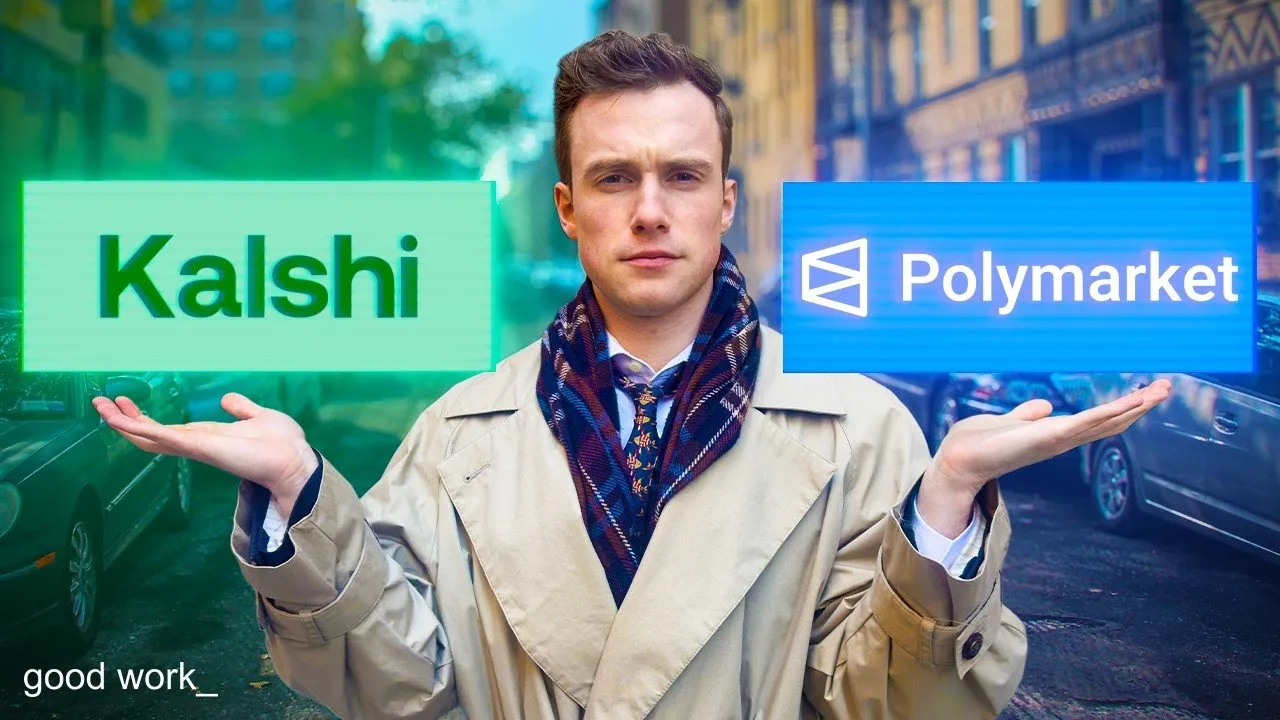
Open any major prediction market today, and you are greeted with an infinite scroll of real-world possibilities. You can stake capital on routine financial metrics, sure, but you can also wager your savings on whether Logan Paul’s Charizard card will sell for a record price, or arguably more existential questions, such as when the U.S. might strike Iran or if Jesus Christ will return before 2027. While these questions may seem disparate, they share a home on platforms like Polymarket and Kalshi.
These two companies are spearheading a massive boom in the "event contract" space. With valuations hitting the billions and partnerships extending to major organizations like the NHL and Google, prediction markets are rapidly transitioning from niche economic experiments to mainstream financial tools. However, as these platforms process over a billion dollars in volume, a fundamental question remains: are we looking at the future of financial forecasting, or simply a legalized, regulatory-approved casino?
Key Takeaways
- Explosive Growth: Platforms like Kalshi and Polymarket have reached multi-billion dollar valuations, processing massive weekly volumes and securing partnerships with entities like Google and the NHL.
- The "Wisdom of Crowds": Proponents argue these markets offer superior predictive data compared to traditional polls by incentivizing experts and insiders to monetize their knowledge.
- Regulatory Drift: Unlike sports betting apps which are regulated state-by-state, prediction markets operate federally under the CFTC by classifying bets as "event contracts" or derivatives.
- The Gambling Debate: Despite legal distinctions, user behavior—particularly regarding sports contracts—mirrors gambling, raising ethical concerns about financial nihilism and incentivizing negative real-world outcomes.
The Rise of the Prediction Economy
We are currently living in a prediction market world. While the concept has existed for decades, the scale has shifted dramatically in the last year. Companies like Polymarket and Kalshi have evolved into financial heavyweights, launching massive ad campaigns and integrating their data directly into the fabric of the internet. Notably, Google has begun integrating Kalshi’s probability data directly into search results, signaling a major shift in how the public consumes news and forecasts.
The financial interests backing this sector are significant. Venture capital firms and investment banks see "information as money." The core thesis is that prediction markets capture valuable data that traditional analysis misses. By allowing people to put money behind their beliefs, these markets theoretically distill the noise of the news cycle into a single, tradeable probability.
From Academia to "Mucho Profit"
This industry wasn't always a multi-billion dollar juggernaut. It began in 1998 as a fringe academic experiment at the University of Iowa. The Iowa Electronic Markets were created to study what could be learned by letting people bet on presidential elections. The Commodity Futures Trading Commission (CFTC)—the federal body that oversees derivatives trading—permitted the experiment strictly because it was small-scale and for non-profit academic purposes.
Today’s landscape is strikingly different. The "non-profit" limiters have been removed. Modern platforms have effectively argued that they are the spiritual successors to these academic markets, but with the volume and profit motives of Wall Street.
The Wisdom of Crowds vs. The Experts
The fundamental argument for the utility of prediction markets is the "wisdom of crowds." The theory posits that a large group of people backing their opinions with cash will approximate the truth better than a smaller group of pundits or pollsters. This isn't just about the number of bettors; it is about who is betting.
Unlike a telephone poll, prediction markets incentivize those with inside information or genuine expertise to participate. If a trader knows something the market doesn't, they stand to profit by correcting the price. This dynamic was highlighted during the 2024 presidential election. While traditional forecasting models and polls largely depicted the race as a toss-up, prediction markets identified a clear lead for Donald Trump well ahead of the final tally.
Polymarket CEO Shane Copelan has expressed supreme confidence in this model, suggesting these markets are the most accurate forecasting tool mankind currently possesses.
Regulatory Drift: How Is This Legal?
To the average observer, wagering on the outcome of a Knicks game on Kalshi looks identical to placing a bet on FanDuel. However, the legal frameworks governing them are entirely different. Sports betting apps must slog through complex lobbying efforts to legalize their operations state-by-state. Prediction markets, however, have bypassed this by operating under federal regulation via the CFTC.
The legal argument relies on classifying these wagers not as "bets," but as derivatives or event contracts. Historically, derivatives exchanges like the Chicago Board of Trade allowed farmers and buyers to hedge against the future price of grain. Kalshi and Polymarket argue they are simply modernizing this concept. Instead of hedging corn prices, users are hedging against political outcomes, interest rates, or cultural events.
The Concept of Drift
Legal experts describe the current state of affairs as "regulatory drift." Ilya Beylin, a professor of business law at Seton Hall Law School, explains that financial products often evolve step-by-step away from their original purpose.
"You start at a place where something makes a lot of sense... and products, financial products... change. At each step, the new one sort of resembles the status quo, but the steps get further and further from that core purpose."
The CFTC operates under the mandate that these contracts must have an "economic consequence." While this is easy to diagnose for Federal Reserve interest rate cuts or the price of Bitcoin, the connection becomes tenuous when discussing pop culture events or specific celebrity behaviors. Yet, because the regulatory framework focuses on the structure of the financial instrument rather than the subject matter, the market has expanded to cover almost everything.
The Blurred Line Between Investing and Gambling
Despite the high-minded talk of hedging economic risk, user behavior suggests that for many, this is simply a new venue for gambling. This is perhaps most evident in the sports category. At one point in late 2025, approximately 90% of the fees Kalshi collected came from sports trades.
The platforms themselves have occasionally struggled to maintain the distinction. Early marketing campaigns explicitly used language claiming that "sports betting is now legal," a stance they have since distanced themselves from. However, common sense dictates that when a retail trader liquidates a 401k to bet on a CEO’s earnings call speech patterns, the line between "investing" and "gambling" has largely evaporated.
Even professional traders within the space acknowledge the reality. One trader, who boasts over half a million dollars in career earnings on these platforms, noted that while skill and edge exist—similar to poker or stock trading—arguing that it isn't gambling is a losing battle.
"If you’re arguing that it’s not gambling, you’ve got a tough battle ahead of you... But something like poker or prediction markets or the stock market, there’s ways to give yourself an edge."
Ethical Concerns and Financial Nihilism
Beyond the legal semantics, there are deeper ethical questions regarding what these markets incentivize. Kyla Scanlon, an economics commentator, points to the dangers of "financial nihilism"—a sentiment where individuals feel the only way to get ahead in a difficult economy is to make high-risk bets on chaotic outcomes.
There is also the issue of commodifying tragedy. Markets currently exist for geopolitical conflicts, assassinations, and government overthrows. By placing a price tag on these events, society risks desensitization. Furthermore, these markets create direct financial incentives for insider trading or, in worst-case scenarios, manipulating real-world events to cash in on a bet.
When mainstream news outlets partner with these platforms, they validate the odds as a "consensus reality." This creates a feedback loop where the betting odds influence public perception, which in turn drives more betting. While prediction markets offer undeniable utility in aggregating data, the shift toward betting on "everything" suggests the industry is capitalizing as much on our collective addiction to speculation as it is on the value of the information itself.
Conclusion
Prediction markets represent a fascinating evolution in how we process information and value certainty. They have successfully macheted through the red tape of US gambling laws by wearing the suit and tie of Wall Street derivatives. While they offer a powerful tool for forecasting, they also expose the financial system's increasing reliance on speculation.
Whether these platforms will remain federally regulated financial exchanges or eventually face the crackdown typical of gambling operations remains the ultimate wager. For now, the window is open, and for better or worse, you can bet on it.