Table of Contents
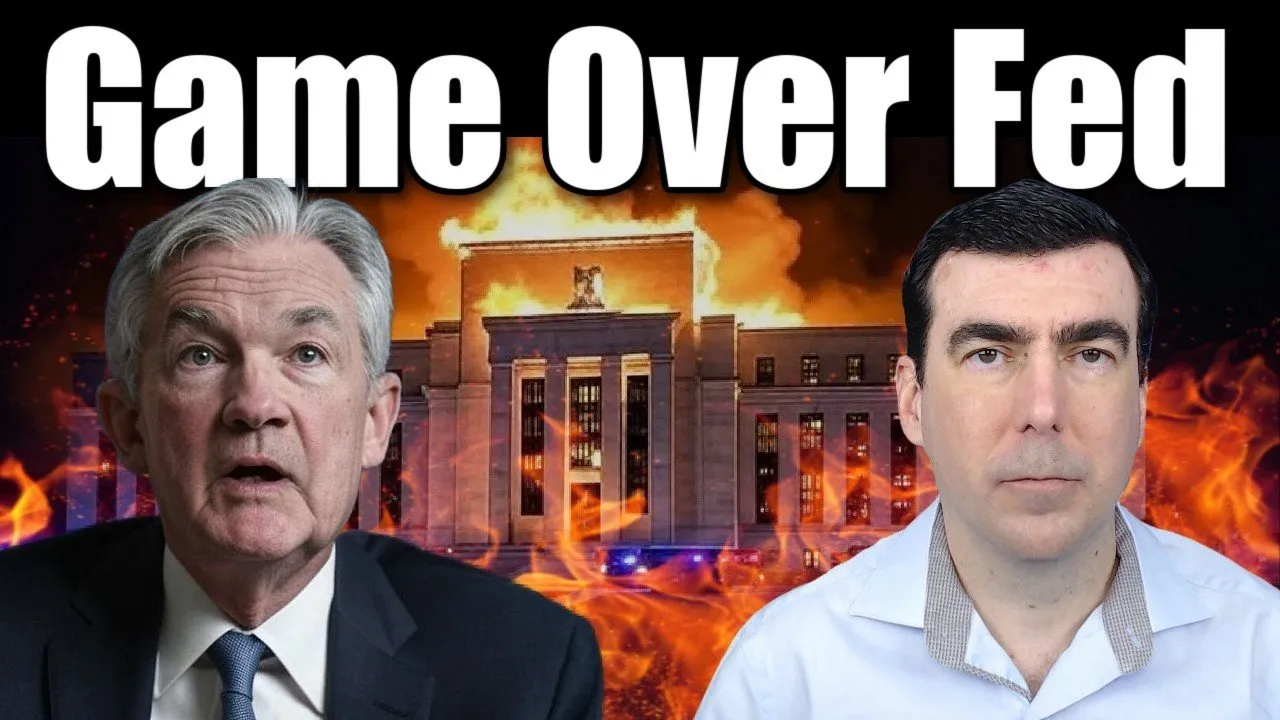
The Federal Reserve has maintained the federal funds rate at its current range of 3.5% to 3.75%, but a shift in policy projections has sparked concern among market analysts. While the central bank previously signaled two rate cuts for the year, updated forecasts now suggest only one, a move that critics argue exposes a fundamental policy miscalculation in the face of cooling labor metrics and persistent inflationary pressures.
Key Points
- The Federal Reserve has officially reduced its projected number of interest rate cuts for this year from two down to one.
- New data reveals a 0.7% rise in the Producer Price Index (PPI), suggesting that wholesale inflation is accelerating and will likely be passed to consumers.
- Market analysts point to a massive short position against the U.S. dollar, warning that any shift in central bank policy could trigger a market-wide "unwind."
- Rising energy costs, particularly diesel prices exceeding $5 per gallon, are exacerbating supply chain expenses and threatening consumer discretionary spending.
The Fed's "Lose-Lose" Scenario
The Federal Reserve finds itself at a critical inflection point, struggling to balance a weakening labor market with stubborn inflation. Despite official claims that the economy is expanding at a "solid pace," observers note that the last 10 months have seen net-negative non-farm payroll growth. The decision to scale back rate cuts reflects the Fed’s struggle to contain inflationary forces while attempting to avoid a recession.
"The Fed has made one of the biggest policy mistakes since the financial crisis. They are facing a lose-lose scenario where the Fed cannot come out ahead," says market analyst Steve Van Meter.
The core of the issue lies in the interplay between the Federal Reserve’s mandate and the broader global economy. With energy prices remaining elevated due to geopolitical tensions in the Middle East, the risk of "stagflation"—an environment characterized by stagnant economic growth and high inflation—has moved to the forefront of investor concerns. Should the Fed prioritize fighting inflation, they risk plunging the labor market into a deeper downturn.
Market Exposure and the Dollar Unwind
Financial markets are currently navigating a high-stakes trade skewed toward a "long euro, short dollar" position. Because the DXY (U.S. Dollar Index) is weighted approximately 57.6% toward the euro, the market’s reaction is heavily contingent on the upcoming policy announcements from the European Central Bank (ECB). A shift in the ECB's messaging regarding their own rate hike plans could force a rapid reassessment of dollar positions.
The PPI-CPI Pipeline
The recent jump in the Producer Price Index serves as a leading indicator for consumer costs. As businesses struggle with increased expenses for services, logistics, and raw materials—exemplified by the surge in vegetable prices and diesel costs—the ability to absorb these expenses is vanishing. Historical data suggests a clear lag effect: when wholesale costs rise, consumer prices follow, further eroding the purchasing power of an already wage-stagnant workforce.
Looking Ahead: Potential for Correction
Investors are advised to watch the correlation between the S&P 500 and the DXY closely. Historically, a weak dollar has buoyed equity markets, but an unwind of the current short-dollar trade could initiate a significant correction in stock valuations. For the average investor, the current environment necessitates a re-evaluation of risk.
As the ECB and other global central banks prepare to issue their policy updates, the potential for volatility remains high. Forward-looking market strategies suggest that institutional and retail investors alike are hedging against equity exposure by increasing allocations to cash or short-term treasuries, anticipating that if the dollar gains momentum, the broader market may face a period of forced deleveraging.