Table of Contents
Pixxel, a leader in hyperspectral earth imaging technology, is capitalizing on India’s expanding space budget and a surge in global defense demand to transition from a startup to a critical data provider for governments and major corporations. Following the recent Indian budget announcements, the company highlighted a strategic shift toward defense applications and underlined the necessity of government procurement to mature India's space ecosystem.
Key Points
- Budgetary Growth: The latest Indian budget increased allocations for the Department of Space, prioritizing human spaceflight and defense-related space applications.
- Technological Edge: Pixxel’s hyperspectral satellites function as an "X-ray for Earth," detecting invisible data points like methane leaks and crop diseases.
- Commercial Traction: The company secured approximately $100 million in contracts prior to its latest satellite launch, driven by demand from entities like NASA and the NRO.
- Investment Landscape: While early funding relied on international capital, new Indian policies and Deep Tech funds are beginning to bridge the local investment gap.
Budgetary Support and Defense Focus
The recent Indian budget reflects a strategic pivot in the nation's approach to space technology. While the budget did not introduce radically new incentives for the private sector, it reinforced commitment to existing long-term goals. The Department of Space received increased funding primarily directed toward the human spaceflight program—aimed at launching Indian astronauts—and the development of an Indian space station.
Significantly, the allocation reveals a growing intersection between space technology and national security. As nations increasingly view space as a domain for establishing technological superiority, India is routing a larger portion of its defense budget toward space applications. This shift has classified space technology as a "sunrise sector," enabling companies to access long-term loans, grants, and sovereign fund investments.
The Hyperspectral Advantage
Pixxel’s core differentiator lies in its hyperspectral imaging capabilities, which the company describes as a "health monitor for the planet." Unlike standard satellites that capture images in the visible red, green, and blue spectrums, hyperspectral cameras split light into hundreds of distinct bands. This granularity allows for the detection of phenomena invisible to the human eye and conventional cameras.
According to Pixxel’s leadership, existing multispectral radar satellites often miss critical environmental and industrial indicators. The company’s technology addresses this gap by identifying specific spectral signatures.
"If you wanted to see diseases in crops, pest infestations, or invisible methane leaks... a lot of these things were invisible to satellites up in orbit. It’s almost like an X-ray machine from space."
This capability has attracted a diverse range of clients, from agricultural firms monitoring crop health to energy companies detecting underground oil leaks and natural gas emissions.
Global Market Expansion and Funding
Despite being founded in India, Pixxel’s financial trajectory highlights the disparity between the Indian and Western investment ecosystems. In 2019, local venture capital for space hardware was scarce, necessitating a reliance on international investors from the United States and the United Kingdom for early growth. The company successfully raised significant capital, including a $27 million early round and a subsequent $60 million Series B.
The liberalization of India’s Foreign Direct Investment (FDI) policy has been a catalyst for the sector, though the company emphasizes that sustainable growth requires a shift in revenue models. While venture capital and private equity have fueled initial R&D, the next phase of ecosystem maturity depends on government procurement rather than just grants.
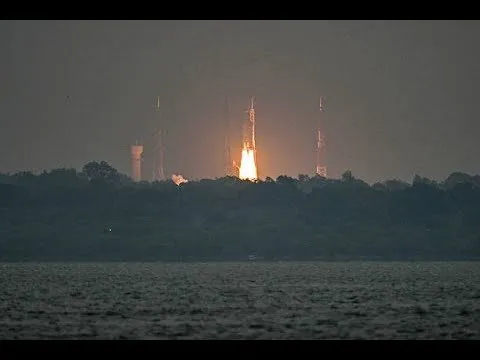
Commercially, the demand for high-fidelity space data is surging. Pixxel reported signing roughly $100 million in contracts even before the launch of its Firefly hyperspectral satellites. The client roster spans the globe, with North America and Europe currently serving as the largest markets. Notable engagements include work with NASA, the National Reconnaissance Office (NRO), and mining giant Rio Tinto.
As Pixxel continues to deploy its constellation, the company aims to deepen its market penetration in India while maintaining its strong foothold in Western defense and intelligence sectors. The focus remains on leveraging "planetary intelligence" to provide actionable insights for economic and environmental sustainability.