Table of Contents
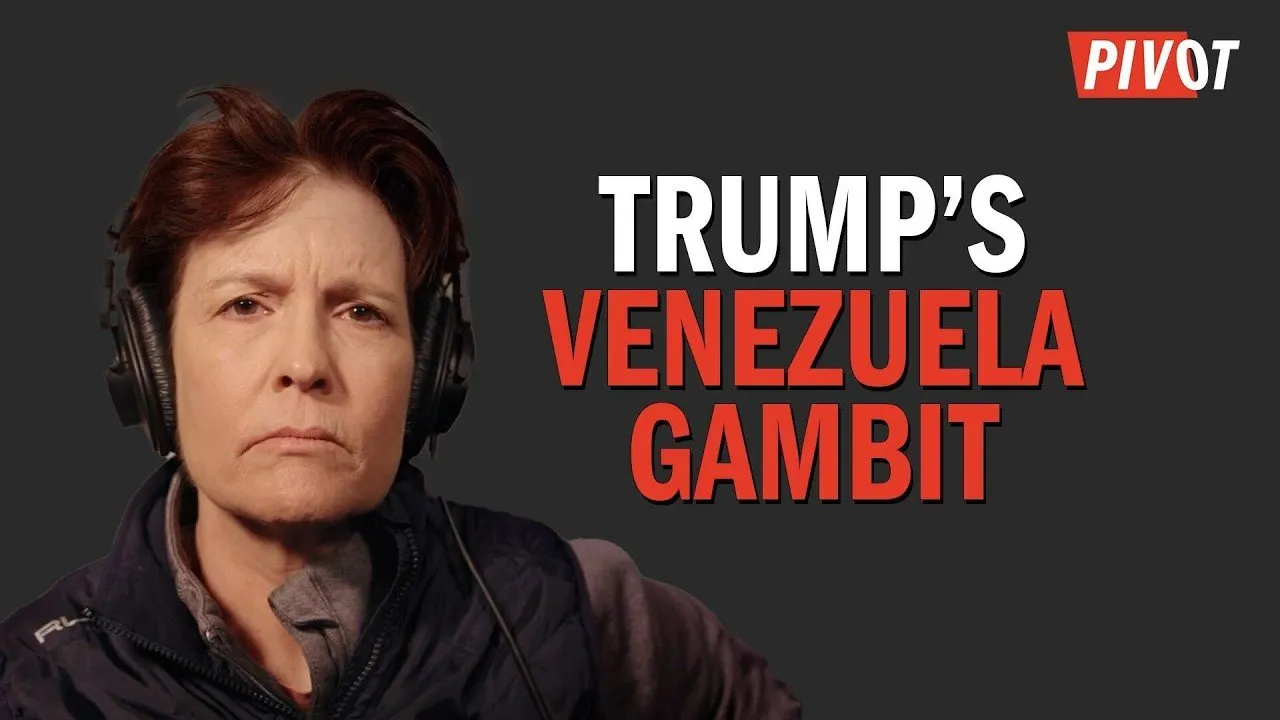
Welcome to 2026. In a special future-forward episode of Pivot, Kara Swisher sits down with a "supergroup" of analysts—Don Lemon, Stephanie Ruhle, and Brooke Hammerling—to dissect a chaotic geopolitical landscape, a shifting media culture, and an economy teetering on the edge of a new era. With Scott Galloway away at an undisclosed location, the panel dives deep into President Trump’s aggressive moves in Venezuela, the fracturing of the MAGA movement, and the surprising cultural dominance of low-budget streaming hits. It is a candid look at a world where political norms have eroded, and viral marketing dictates the zeitgeist.
Key Takeaways
- The "Donroe Doctrine" in Action: The U.S. has asserted control over Venezuela following the arrest of Nicolas Maduro, signaling a chaotic, resource-driven foreign policy that prioritizes short-term oil access over long-term stability.
- The Economy Remains K-Shaped: While the stock market and AI giants thrive due to deregulation, the average consumer faces rising costs and scarcity, creating a fragile economic reality dependent on Trump’s tariff wars.
- Cultural Shifts to Micro-Budget Hits: The massive success of the fictional show "Heated Rivalry" proves that low-budget, authentic storytelling (aided by viral TikTok marketing) is overtaking bloated Hollywood blockbusters.
- The Evolution of Musk and MAGA: While the MAGA movement shows signs of internal fracturing, figures like Elon Musk have pivoted from public antics back to behind-the-scenes industrial power accumulation.
The "Donroe Doctrine": Venezuela and the New Geopolitics
The headline dominating the discussion is President Trump’s declaration that the United States is officially "in charge" of Venezuela. Following the dramatic capture of Venezuelan President Nicolas Maduro and his wife—who are set to be arraigned in Manhattan on drug trafficking charges—the administration has signaled a aggressive shift in foreign policy. Kara Swisher dubs this the "Donroe Doctrine," a chaotic spin on the Monroe Doctrine.
While the panel agrees that Maduro was a tyrant, the methodology of his removal raises significant concerns regarding international law and due process. Don Lemon argues that the administration is setting a dangerous precedent where sovereign borders are ignored in favor of strongman tactics.
We’ve seen this movie before and we know the sequel is always worse.
The Business of Intervention
Stephanie Ruhle points out that despite the political theater, the underlying motivation appears to be explicitly transactional. Trump has openly admitted to consulting with American oil companies before and after the intervention, bypassing Congress entirely. This moves the U.S. closer to an autocracy where business interests dictate military action.
Wall Street’s reaction has been mixed but opportunistic. Investors are "long Venezuela" and state-owned oil assets, banking on immediate returns. However, Ruhle warns of the disconnect between short-term market enthusiasm and long-term governmental costs. While traders can sell their positions tomorrow, the U.S. government—and by extension, the taxpayer—is now saddled with the billions of dollars required to stabilize and rebuild the region.
The Absurdity of Modern Propaganda
In a bizarre cultural twist, the arrest of Maduro has spawned a wave of fashion memes on TikTok, with Gen Z focusing on his "Nike tech suit" and "goggles" during his capture. Brooke Hammerling notes that this trivialization of a geopolitical crisis highlights how disconnected digital culture has become from political reality. Maduro has been transformed from a dictator into a viral aesthetic, illustrating the power of social media to recontextualize—and arguably soften—authoritarianism.
The Economy: A K-Shaped Recovery and the AI Oligarchy
Moving beyond foreign policy, the domestic economic outlook for 2026 remains precarious. The panel describes the economy as distinctly "K-shaped," where the wealthy continue to accrue massive gains while the working class faces affordability crises in healthcare and consumer goods.
The Illusion of Market Health
While headline numbers might suggest growth, Stephanie Ruhle argues this is largely "astroturf"—artificial growth fueled by deregulation and federal spending that doesn't reach the average citizen. Small and mid-sized businesses are struggling to survive an environment of rising tariffs, while giant conglomerates front-load inventory to weather the storm.
The most significant consolidation of power lies within the tech sector. The "Magnificent Seven" and AI companies are operating in a regulation-free zone, amassing wealth and influence that rivals nation-states. Ruhle emphasizes that the narrative of "eating the rich" misses the mark; the target has shifted to a tiny sliver of mega-rich tech titans who now hold unprecedented sway over the federal government.
Culture Wars and Viral Hits: The "Heated Rivalry" Phenomenon
The cultural conversation of 2026 is dominated not by a billion-dollar Marvel movie, but by "Heated Rivalry," a low-budget Canadian drama about gay hockey players. The show’s massive success signals a turning point in entertainment economics and representation.
The Death of the Middle-Tier Budget
Produced for a fraction of the cost of a show like Stranger Things, "Heated Rivalry" proves that audiences are craving authenticity over spectacle. The "messy and authentic" vibe of independent media is winning out over over-thought, committee-designed blockbusters. This mirrors the shift in journalism, where independent creators and podcasters are gaining trust over traditional broadcast networks.
A New Kind of "Woke"
The panel notes that "Heated Rivalry" has achieved cross-demographic appeal, finding fans among straight women and sports enthusiasts alike. This represents a cultural evolution where LGBTQ+ themes are consumed as mainstream narratives rather than niche content. It suggests a "softening" of the culture wars, or perhaps a new iteration of social awareness that is less performative and more integrated into storytelling.
It’s not just that people are watching; it’s that straight men are talking about it.
The Political Horizon: MAGA Fractures and Democratic Shifts
Looking toward the 2026 midterms and beyond, Don Lemon predicts a significant fracturing within the MAGA movement. Infighting among right-wing media personalities and influencers suggests that the coalition is beginning to eat its own. The "America First" base is increasingly disillusioned by policies that prioritize global corporate interests over domestic issues like school quality in West Virginia.
The Future of the Democratic Party
The panel debates the direction of the Democratic opposition. While some argue for a "big tent" approach to capture the center, others believe the energy lies with progressives like AOC and Jasmine Crockett. The discussion highlights a tension between electability in swing states and the enthusiasm required to drive voter turnout.
Potential future leaders mentioned include:
- Gavin Newsom: Viewed as a likely presidential contender.
- Wes Moore: Suggested as a strong running mate for a balanced ticket.
- Amy Klobuchar: positioned as a potential Governor of Minnesota, representing the pragmatic center.
The Reinvention of Elon Musk
Finally, the conversation turns to the tech world's most polarizing figure, Elon Musk. Following the apparent failure of his "DOGE" (Department of Government Efficiency) initiative, Musk has receded from the chaotic "Space Karen" persona that defined his 2025.
The consensus is that Musk has learned the limits of political celebrity. While his reputation took a hit during his stint in government efficiency, his businesses—SpaceX and Starlink—have benefited immensely from his proximity to power. He has effectively transitioned into a "Wizard of Oz" figure: quieter, less public, but wielding vastly more structural power behind the scenes.
Conclusion
As 2026 unfolds, the United States finds itself in a period of extreme contrast. We see a government exercising raw power abroad while ignoring structural fragility at home. We see a culture that turns tyrants into fashion memes and indie queer dramas into global phenomena. Whether it is the consolidation of AI power or the fracturing of political coalitions, the overriding theme is one of disruption. As the panel notes, the old rules of Hollywood, Wall Street, and Washington no longer apply—and the "sequel" to the current political era is likely to be even more unpredictable than the first.