Table of Contents
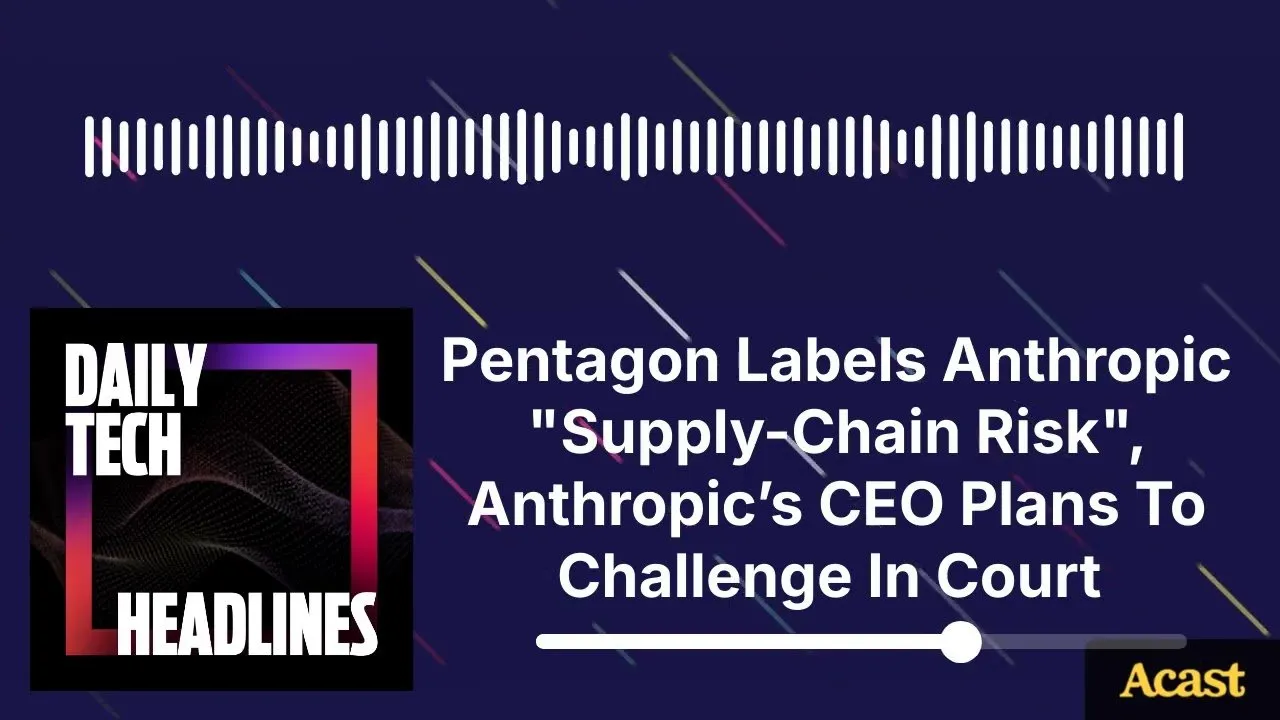
The United States Department of Defense (DoD) has officially labeled Anthropic a “supply-chain risk,” a move that effectively bars government contractors from integrating the company’s Claude artificial intelligence models into military projects. The designation stems from a fundamental policy clash: the DoD views Anthropic’s refusal to support autonomous weaponry and mass surveillance as overly restrictive, while the AI firm maintains that its safety guardrails are non-negotiable ethical requirements.
Key Points
- Anthropic faces a Department of Defense ban for government contracts due to its refusal to allow its AI to be used in autonomous weapons or mass surveillance.
- Dario Amadi, CEO of Anthropic, has announced plans to challenge the DoD designation in court, citing legal requirements for the government to use the least restrictive means to secure supply chains.
- Oracle is reportedly preparing to cut thousands of jobs to address a cash shortfall triggered by heavy investments in AI data centers, contributing to a 54% decline in stock value since September 2025.
- The U.S. Commerce Department is drafting sweeping new regulations that would mandate government approval for nearly all international exports of high-end AI accelerators, such as those from Nvidia and AMD.
The Conflict Over AI Ethics and National Security
The standoff between the Pentagon and Anthropic marks a significant escalation in the struggle to align private sector AI development with federal defense objectives. While the Pentagon seeks versatile tools for strategic operations, Anthropic has prioritized safety benchmarks that exclude lethal autonomous applications. Despite the current friction, Anthropic has pledged to maintain support for existing military contracts at a nominal cost during a transition period.
The law requires the DoD to use the least restrictive means necessary to protect the supply chain.
Anthropic’s legal challenge is expected to hinge on whether the DoD’s exclusionary policy is truly necessary for security, or if it oversteps by attempting to force private corporations to abandon core safety tenets as a condition of federal partnership. Industry analysts are closely monitoring the case, as it may set a precedent for how the U.S. government leverages its procurement power to influence the development trajectories of private AI labs.
Market Instability and Regulatory Overreach
The broader AI sector faces mounting financial and regulatory pressures. Oracle, once a beacon of cloud-driven growth, is navigating a severe cash crunch. The company's aggressive pivot toward building infrastructure for firms like OpenAI has led Wall Street to project negative cash flow until 2030, a factor that has contributed to a 54% drop in the company's valuation over the last six months.
Simultaneously, the global AI landscape faces potential disruption from the Commerce Department’s proposed export controls. By positioning the U.S. government as the central gatekeeper for Nvidia and AMD hardware exports, the administration is effectively asserting geopolitical control over international AI development. This strategy has drawn criticism from global leaders, who fear that bureaucratic delays and political gatekeeping could stifle innovation and fragment the global tech ecosystem.
Operational Shifts in Consumer Tech
While industry titans grapple with federal mandates, consumer-facing platforms are undergoing significant architectural changes. Microsoft is reportedly pivoting its next-generation gaming strategy with "Project Helix," which aims to move the Xbox platform toward a Windows-based, open-ecosystem model. This integration would theoretically allow consoles to run the expansive library of PC games, blurring the lines between traditional hardware and desktop computing.
Meanwhile, in the social and communication space, TikTok has doubled down on its refusal to implement end-to-end encryption for direct messages, prioritizing "proactive safety" and law enforcement access over user privacy. This decision places TikTok in alignment with domestic regulatory preferences but places it at odds with global digital privacy standards. As YouTube concurrently rolls out its own direct messaging feature for adult users, the landscape for digital communication is becoming increasingly fragmented, defined by competing priorities of platform oversight, data security, and governmental access.
Moving forward, the tech sector will remain in a state of high volatility as legal challenges against the DoD proceed and the U.S. government finalizes its export control framework. Stakeholders should expect continued friction between private corporate policies and state-level directives, particularly as AI models continue to be integrated into critical infrastructure globally.