Table of Contents
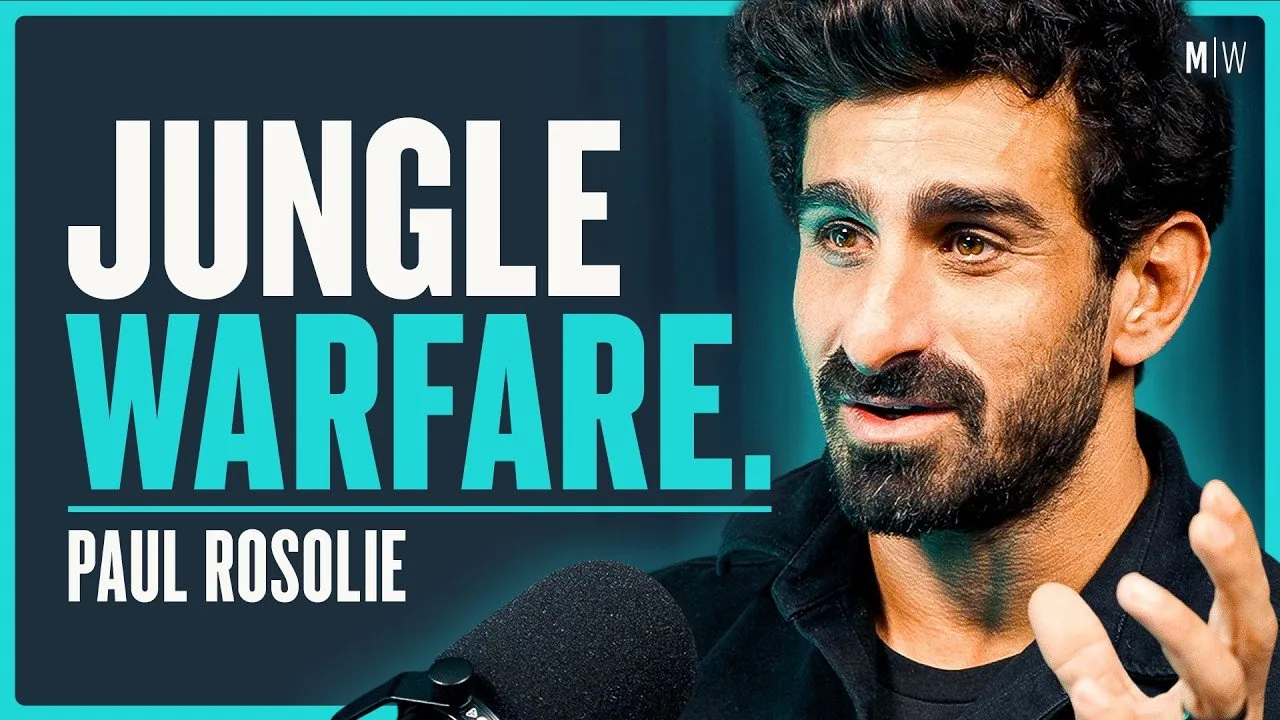
The Amazon rainforest is often romanticized as a pristine Eden or vilified as a green hell, but for conservationist Paul Rosolie, it is simply the most vital biological engine on Earth. From surviving a stingray attack that felt like "an electrical steak knife" to navigating the reputational fallout of a Discovery Channel controversy, Rosolie’s journey is one of extreme physical endurance and unwavering ecological dedication.
In a wide-ranging discussion with Chris Williamson, Rosolie opens up about the realities of jungle warfare, the mechanics of the "flying rivers" that sustain global agriculture, and his organization’s ground-breaking strategy to turn illegal loggers into conservation rangers. His story offers a stark look at the frontlines of the battle to save the world's largest rainforest before it reaches an irreversible tipping point.
Key Takeaways
- The danger of the Amazon is visceral and immediate: From stingray barbs that flay skin to bullet ants that induce a sense of impending doom, the jungle's defenses are potent, yet indigenous remedies often outperform Western medicine in treating these injuries.
- The "Flying Rivers" are essential for global survival: The Amazon trees pump 20 trillion liters of water into the atmosphere daily, creating an invisible river in the sky larger than the Amazon River itself. Losing the forest means breaking this hydrological cycle.
- Conservation requires economic realignment: Rosolie’s organization, Jungle Keepers, succeeds not by fighting loggers, but by hiring them—offering stable wages and purpose to those who previously destroyed the forest out of economic necessity.
- Narcotrafficking is a rising threat: The shift from illegal logging to coca production has introduced armed cartels into the deep jungle, placing conservationists on hit lists and requiring security details for protection.
- Uncontacted tribes are re-emerging: Recent encounters with the Mashco Piro tribe highlight the tension between ancient nomadic lifestyles and modern encroachment, necessitating a delicate approach to land protection without forced contact.
The Visceral Reality of Amazonian Wildlife
The Amazon is not merely a passive backdrop for adventure; it is a biotic force that demands respect. Rosolie describes the environment as a "throbbing, teeming, murdering mass of wildlife" where silence is non-existent. The dangers are not just hypothetical—they are excruciatingly physical.
Rosolie recounts a specific incident involving a stingray that underscores the difference between Western medical approaches and indigenous knowledge. While stepping into a stream, he was struck by a stingray barb, which he describes as being the size of a steak knife. The injury was not just a puncture; the animal wagged its tail inside the foot, flaying the skin from the meat.
It’s like having an electrical wire shoved into your veins. It was level 10... blinding pain.
Indigenous Medicine vs. Western Treatment
- The Failure of Western Medicine: Rosolie notes that standard Western treatments for such venom often result in systemic infection or permanent nerve damage because they do not effectively neutralize the specific toxins found in freshwater stingrays.
- The Efficacy of Jungle Remedies: Local guides utilized a specific tree bark, baked into a boiling hot poultice. While applying boiling heat to an open wound seems counterintuitive, the heat neutralizes the venom. Rosolie was back on his feet in two days, whereas others treated in hospitals often face months of rehabilitation.
- The Psychological Toll of Venom: Beyond physical pain, the jungle utilizes psychological warfare. Rosolie details the sting of the Bullet Ant, which does not cause physical damage as severe as a stingray but injects a neurotoxin that mimics the feeling of "impending doom," tricking the body into a panic state to force the intruder to leave.
The "Flying Rivers" and the Tipping Point
Moving beyond the personal dangers, Rosolie emphasizes the global existential threat posed by Amazonian deforestation. The popular statistic is that the Amazon produces 20% of the world's oxygen, but its role in the water cycle is arguably more critical. The rainforest functions as a massive biological pump.
- 20 Trillion Liters Daily: Through transpiration, the trees lift moisture from the soil into the atmosphere. This creates a "mist river" in the sky that transports water across the continent, watering the agricultural breadbaskets of South America and influencing weather patterns as far away as the United States.
- The Feedback Loop: The ecosystem generates its own rain. If too many trees are cut, the moisture levels drop, rain ceases, and the remaining forest dries out. This creates a feedback loop where the rainforest converts into a fire-prone savannah.
- The 20% Threshold: Scientists warn that losing 20% of the Amazon is the tipping point. We are currently hovering at that mark. Crossing it means the degradation becomes self-sustaining and irreversible, regardless of future human intervention.
There’s a larger invisible mist river above the Amazon rainforest than is on the ground in the Amazon River.
Jungle Keepers: A New Economic Model for Conservation
Traditional conservation often relies on top-down enforcement or charitable donations that get absorbed by administrative costs. Rosolie’s approach with his organization, Jungle Keepers, is radically different. It is built on the understanding that local destruction is driven by poverty, not malice.
Turning Enemies into Allies
The primary drivers of deforestation in the Madre de Dios region are often local men trying to feed their families. Logging is brutal, dangerous work that pays approximately $15 a day. Jungle Keepers intervenes by altering the incentive structure:
- Economic Competition: The organization hires active loggers and poachers, offering them higher wages, medical benefits, and safer working conditions to become rangers.
- Identity Shift: The transition is not just financial; it is psychological. Men who once wielded chainsaws now carry binoculars. They trade the identity of a destroyer for that of a protector, gaining status within their communities.
- Direct Action: Unlike large NGOs where donations often fund advertising, Rosolie asserts that Jungle Keepers focuses on land acquisition and ranger salaries. They purchase land rights directly from owners who are being pressured by illegal industries, effectively creating a shield of protected territory.
The Narco-Trafficking Threat
While converting loggers has proven successful, a darker threat has emerged in the Peruvian Amazon: cocaine production. As global demand remains high and enforcement tightens elsewhere, cartels have moved operations deep into the jungle, utilizing the remoteness to hide plantations and airstrips.
- The Violence of Cocaine: Unlike loggers, who are generally rural workers, narco-traffickers operate with military-grade weaponry and a willingness to kill. They view conservationists as direct threats to their supply chain.
- Living on a Hit List: Rosolie reveals that he and his lead ranger, JJ, have been explicitly targeted. Intelligence intercepted from arrested traffickers included instructions to "take them out" if seen. This has forced Rosolie to travel with armed security teams, fundamentally changing the nature of his work from biological exploration to a tactical defense of the land.
- The Donor Dilemma: This escalation creates a paradox for fundraising. When donors hear about the success of land protection, they are eager to help. When they hear about the presence of cartels, fear often causes them to pull back, viewing the situation as a "lost cause" exactly when resources are needed most to hold the line.
Resilience and the "Eaten Alive" Controversy
Rosolie’s career has not been without significant stumbling blocks. He addresses the infamous "Eaten Alive" Discovery Channel special, where he was marketed as a man who would be consumed by an anaconda. He describes the experience as a "betrayal" by the network executives.
At 24 years old, Rosolie agreed to the stunt under the promise that it would fund a massive biodiversity survey and highlight the plight of the Amazon. Instead, the network sensationalized the footage, implying he was eaten when he wasn't, leading to global ridicule and professional exile.
It destroyed my career professionally... But it was one of the best things that ever happened to me because now I can spot a false handshake a thousand miles away.
This failure forced him to abandon the path of a TV personality and return to the grassroots work of conservation. It taught him that resilience is the most critical skill in his field. The shame of the event stripped away his ego and forced him to focus entirely on the mission: saving the habitat, regardless of public perception.
Encounters with the Uncontacted
The Amazon remains one of the last places on Earth harboring uncontacted peoples—tribes that have lived in isolation for thousands of years. Rosolie recounts a recent, tense encounter with the Mashco Piro tribe that illustrates the fragile boundary between the modern world and the Stone Age.
The "Time Machine" Moment
During a patrol, over 100 members of the Mashco Piro appeared on a riverbank across from Rosolie’s team. This was not a fleeting glimpse of shadows in the forest, but a prolonged interaction.
- Ancient Warriors: The tribe members were naked, painted, and armed with seven-foot bamboo arrows capable of piercing a human body completely. Rosolie describes the surreal experience of waving to human beings who have no concept of the Sistine Chapel, the World Wars, or the internet.
- The Request: Surprisingly, the tribe initiated contact to ask for bananas and machetes. They communicated a clear message: "We are brothers," but also, "Stop cutting down our trees."
- The Danger: Despite the moment of connection, the situation remained perilous. The Mashco Piro are defensive and traumatized by historical atrocities like the rubber boom. Just days after this peaceful exchange, the same tribe fired a volley of arrows at a boat, critically injuring a ranger.
The Ethical Stance
Rosolie argues that the only ethical path is to protect their territory to ensure their isolation remains a choice. By securing the land through Jungle Keepers, they create a buffer zone that allows these tribes to exist without being forced into violent conflict or decimated by modern diseases to which they have no immunity.
Conclusion
Paul Rosolie’s work paints a picture of the Amazon that is far more complex than a simple nature documentary. It is a war zone involving economics, narcotics, biology, and anthropology. Yet, despite the threats of assassination, the pain of tropical injuries, and the overwhelming scale of deforestation, Rosolie remains optimistic.
He views this generation as the most important in human history—the only one with the agency to decide whether the Amazon survives or collapses. Through Jungle Keepers, he offers a pragmatic blueprint: empower the locals, secure the land, and protect the biological engines that keep the planet breathing. As Rosolie puts it, the search for meaning is only valid if you are willing to take action on what you find.