Table of Contents
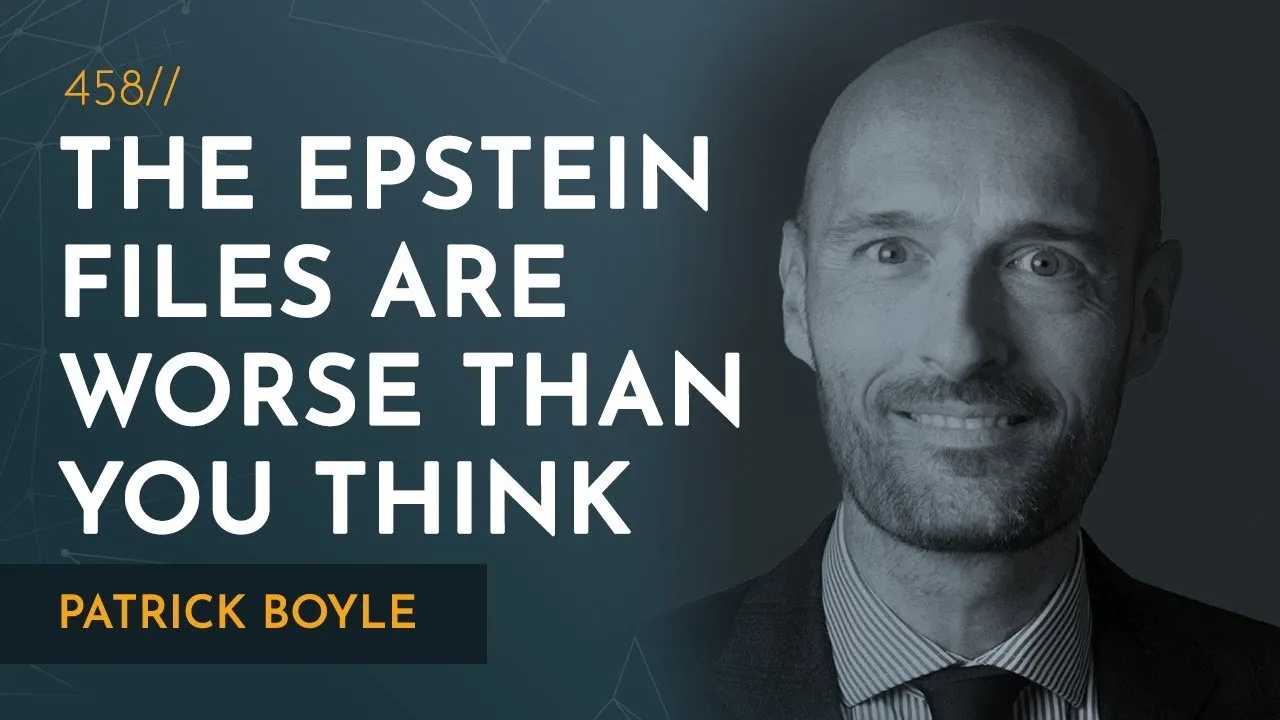
When a finance professor known for dry wit and technical analysis gets demonetized for discussing public court documents, it signals a shift in how digital media handles sensitive information. Patrick Boyle, a visiting professor at King's College London and a popular finance YouTuber, recently sat down with Demetri Kofinas on Hidden Forces to discuss two colliding worlds: the opaque financial history of Jeffrey Epstein and the equally opaque algorithms that govern online speech.
The conversation moved beyond the sordid details of the Epstein case into a broader examination of institutional failure. From the Department of Justice’s handling of redacted files to YouTube’s "computer says no" approach to moderation, the discussion highlighted a growing crisis in how the public accesses and processes information.
Key Takeaways
- The Financial Disconnect: Epstein’s career trajectory—a brief stint at Bear Stearns followed by massive, unexplained wealth—does not align with standard financial models or "tax advice" fees.
- Redaction Irregularities: Recent file releases seemingly violated court orders by redacting the names of potential perpetrators while leaving everyday associates exposed.
- The "One Man" Fallacy: An FBI email revealed in the documents suggests authorities were looking for ten co-conspirators at the time of Epstein’s arrest, contradicting the official narrative that he acted alone.
- Algorithmic Censorship: Demonetization acts as a soft censorship tool, discouraging creators from covering "ugly" news topics regardless of the content's accuracy or educational value.
- The Media Vacuum: The decline of centralized news has been replaced by algorithmic feeds that prioritize engagement over consensus, making it difficult for new, high-quality voices to break through.
The Economics of a Mystery
Before the demonetization, Boyle approached the Epstein scandal not as a crime reporter, but as a finance professional. The numbers simply didn’t add up. Epstein owned a private jumbo jet capable of seating hundreds and multiple islands, yet his known employment history was thin. He worked for a few years at Bear Stearns before launching his own firm.
The math of "tax advice" remains the glaring anomaly.
Boyle noted that billionaires like Leslie Wexner and top private equity figures paid Epstein hundreds of millions of dollars, ostensibly for tax consultation. In the legitimate financial world, top-tier tax advice from a leading law firm might cost $50,000 to $100,000. It does not cost the GDP of a small island nation.
This discrepancy leads to uncomfortable questions about the nature of these payments. Were they money laundering? Blackmail? While the government certainly has the investigatory powers to trace these funds—having seized millions of documents and possessing access to international banking data—the public narrative remains surprisingly incurious about the source of the money.
The Files: Worse Than You Think
The recent release of the "Epstein Files" was anticipated to provide clarity. Instead, it provided a case study in bureaucratic obfuscation. Boyle highlighted that while Congress demanded the release of files with only victims' names redacted, the actual release followed a different pattern.
Ghislaine Maxwell’s grand jury testimony, for instance, was almost entirely blanked out. Unless every single page consisted solely of listing victims, this suggests that the redactions were used to protect associates and potential co-conspirators. Even more disturbing were the physical phone messages recorded by secretaries, which logged calls stating, "I have young girls for Jeffrey." The names of the callers—the perpetrators—were redacted, directly violating the mandate to protect only the victims.
The Ten Co-Conspirators
Perhaps the most significant revelation buried in the documents was an internal FBI email sent on the day of Epstein's arrest. The email explicitly directed agents to round up "the 10 other co-conspirators."
This starkly contrasts with the public statements made by officials, including Kash Patel, who claimed upon reviewing the files that there was "nothing there" and that it was a conspiracy of one. The existence of an active FBI hunt for ten other individuals raises the question: If the authorities knew there were accomplices in 2019, why is Ghislaine Maxwell the only other person in prison?
"Epstein has somehow dodged every bullet. It's like the Matrix. And so is this a scandal that will go away? I don't think so... I think at this point almost if they came clean with everything people would go, 'Well they've told us that but what are they really hiding?'"
The Mechanics of Modern Censorship
Boyle’s attempt to cover these inconsistencies resulted in immediate backlash from YouTube’s automated systems. Despite his channel being an educational finance platform with no history of profanity or controversy, his video analyzing the files was demonetized. When he requested a human review, the decision was upheld within minutes without explanation.
This incident illustrates a mechanism often described as "algospeak" and soft censorship. Platforms don't necessarily ban content outright; they remove the financial incentive to produce it and suppress its reach. When a creator sees that covering political scandals or court documents leads to a 90% drop in revenue and views, they are incentivized to pivot to safer, less important topics.
This creates an environment where "free speech" technically exists, but the infrastructure needed to be heard is controlled by opaque, private interests. Boyle notes the "seating chart" dynamic, where tech elites and politicians jockey for position, potentially leading to a suppression of comfortable truths to maintain access and favor.
The Fragmentation of Reality
The conversation pivoted to the broader implications for the media landscape. We have moved from a world of centralized, broadcast media—which had its own flaws but offered a shared baseline of reality—to a fragmented world of algorithmic feeds.
In this new ecosystem:
- Discovery is passive: Audiences don't actively seek new viewpoints; they are fed content based on past behavior.
- Quality is secondary: The algorithm rewards engagement, which often favors outrage over nuance.
- Consensus is impossible: With everyone inhabiting a custom-curated information reality, forging political consensus or agreeing on basic facts becomes increasingly difficult.
The barrier to entry for new voices is paradoxically high. While the technology to broadcast is cheap, the ability to break through the algorithmic noise requires playing by rules that discourage deep, investigative work. As legacy institutions crumble and trust erodes, the digital replacements—governed by "black box" AI and corporate interests—have yet to prove they can support a healthy, informed democracy.
Conclusion
The intersection of the Epstein files and YouTube demonetization serves as a grim bellwether. It suggests a future where official narratives are protected not just by government secrecy, but by the incentive structures of the platforms where we consume information. When financial analysis of public court documents is deemed "inappropriate" by an AI, the public's ability to scrutinize power is quietly, but effectively, curtailed.
For independent creators like Boyle and Kofinas, the solution lies in resilience and network building—supporting quality content that prioritizes truth over "algospeak," regardless of the algorithmic headwinds.