Table of Contents
The media and technology landscapes are currently shifting with a velocity that feels both exhilarating and existential. From the high-stakes bidding war for Warner Bros. Discovery to Nvidia's gravity-defying earnings reports, the traditional power structures of Hollywood and Silicon Valley are being rewritten in real-time. As AI threatens to usher in a new era of "Ghost GDP"—where economic output grows while human labor is sidelined—industry leaders are forced to choose between aggressive consolidation and disciplined retreat. In this climate, the difference between a "nothing burger" and a "deal of the century" often comes down to who has the most equity to burn and the strongest stomach for risk.
Key Takeaways
- Paramount Wins the WBD Bidding War: In a move described as existential, Paramount beat out Netflix for Warner Bros. Discovery, signaling a massive consolidation effort backed by Larry Ellison’s capital.
- Nvidia's Historic Momentum: Despite missing out on the Chinese market due to regulations, Nvidia continues to dominate the AI sector, reporting revenue growth that defies the law of large numbers.
- The Rise of "Ghost GDP": New market theories suggest AI could lead to a scenario where productivity spikes while white-collar unemployment triggers a downward economic doom loop.
- Corporate and Political Accountability: From Anthropic’s standoff with the Pentagon to the ongoing fallout from the Epstein files, the intersection of ethics, safety, and leadership is under intense scrutiny.
The Media Merger: Paramount’s Existential Victory
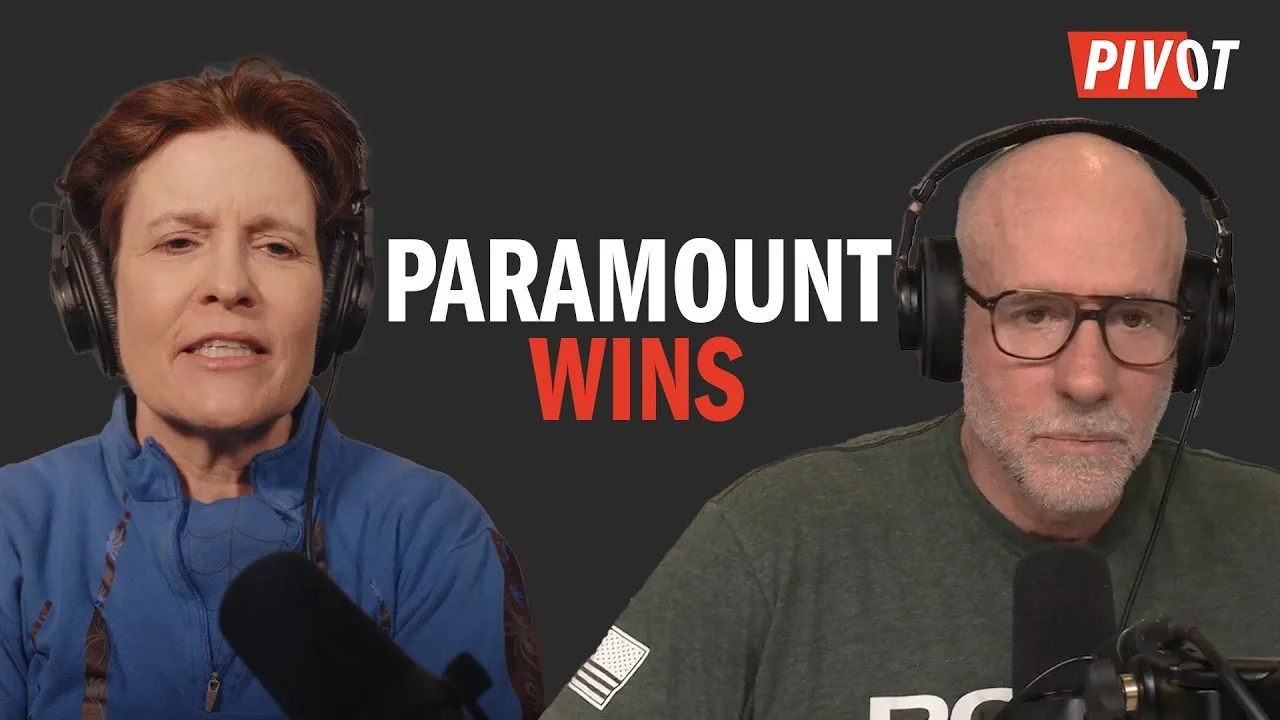
The long-standing battle for Warner Bros. Discovery (WBD) has reached a turning point, with Paramount emerging as the victor over Netflix. This wasn't merely a strategic expansion; for Paramount, it was a fight for survival. By upping its offer to $31 a share—a staggering leap from WBD’s recent lows near $7—Paramount has bet the house on scale. While Netflix maintained discipline, categorizing the deal as "nice to have" rather than a necessity, Paramount leaned into the scarcity value of legacy media assets.
The Zaslav Auction and Ellison’s Equity
David Zaslav, CEO of Warner Bros. Discovery, is being credited with running a masterful M&A process. By creating "deal heat" and pitting two titans against each other, he successfully inflated the company's valuation regardless of its immediate performance. The deal’s success hinges largely on the massive equity provided by Oracle co-founder Larry Ellison. As Puck’s Bill Cohen noted:
Paramount this is existential. Without this, they're just like an 11 billion company... now a pipsqueak in this landscape.
A Lumbering Giant or a New Powerhouse?
Critics argue that merging two struggling media entities creates a "bigger lumbering ship" rather than a more efficient one. The combined entity will face a mountain of debt—estimated at over $70 billion—and the daunting task of integrating massive news organizations like CBS and CNN. The success of this new Paramount will depend on whether its leadership, including David Ellison and Jeff Shell, can trim the bloat and successfully navigate a regulatory environment that remains unpredictable.
Nvidia and the AI Economic Paradox
Nvidia’s fourth-quarter earnings have once again shattered expectations, with revenue hitting $68 billion. The company’s data center business has grown 13-fold since the launch of ChatGPT. What makes these numbers truly remarkable is that Nvidia is achieving this growth even as it is effectively locked out of the Chinese market. It is currently trading at 24 times forward earnings, a valuation that suggests the market is still struggling to price its dominance correctly.
The Threat of "Ghost GDP"
While Nvidia prospers, a viral memo from Citrini Research has rattled Wall Street. The memo introduces the concept of Ghost GDP: a scenario where AI makes white-collar workers so productive that companies can initiate mass layoffs. This creates a negative feedback loop: unemployment spikes, consumer spending drops, and companies are forced to use even more AI to cut costs, leading to a "downward doom loop."
Moving Upstream in the AI Era
Despite the catastrophizing, there is a counter-argument focused on human adaptability. Historically, technology replaces "rote" work but allows humans to move "upstream" into more strategic, high-EQ roles. Just as word processing eliminated secretarial pools but created executive assistants, AI may eliminate junior legal research but increase the demand for strategic tax and estate planners. The challenge for the modern workforce is identifying whether their role can be automated or if they can use AI to provide higher-value services.
National Security and Tech Ethics
The tension between rapid AI development and government oversight recently culminated in a standoff between the Pentagon and Anthropic. Defense Secretary Pete Hegseth reportedly demanded "unfettered access" to Anthropic’s AI model, Claude, threatening to pull a $200 million contract if safety safeguards weren't rolled back. Anthropic’s refusal to cede to these demands highlights a growing rift between Silicon Valley's safety-first startups and the military's desire for tactical superiority.
Threats do not change our position... the company cannot in good conscience accede to the request.
This conflict underscores the fragility of private regulated competition. When the government begins picking winners and losers or demanding the removal of safety guardrails, it risks causing a flight of capital. Investors prize the U.S. market for its predictable rules; if those rules become subject to the whims of political leadership, the competitive advantage of American tech firms could erode.
The Social Impact of "Resist and Unsubscribe"
Scott Galloway’s "Resist and Unsubscribe" movement is gaining significant traction, moving from a digital campaign to a physical presence. With over 20 million social media views and a reported $242 million loss in market cap for targeted companies, the campaign is evolving. The next phase includes a live show in Minneapolis on March 8th at the Pantages Theatre, with all proceeds going to the Minneapolis Immigration Center.
The movement reflects a broader populist sentiment: a refusal to accept the impunity often granted to the ultra-wealthy. This sentiment is further fueled by the ongoing release of the Epstein files, which continue to reveal the deep-seated connections between global elites and illicit activities. Whether it is a boycott of tech products or a demand for special counsel investigations, the public is increasingly seeking to hold institutions accountable for their moral and ethical failings.
Conclusion
The current state of the economy is "weird," not because of a lack of growth, but because of the uneven distribution of its benefits. We are witnessing a divergence where the optimists—those investing in AI and massive mergers—continue to outperform the pessimists who fear a "zombie apocalypse." However, the path forward requires more than just capital; it requires a commitment to retraining the workforce and maintaining the integrity of our institutions. As we move into an era defined by AI and massive corporate consolidation, the winners will be those who can leverage new tools to move "upstream" while refusing to sacrifice safety and ethics for the sake of speed.