
Table of Contents
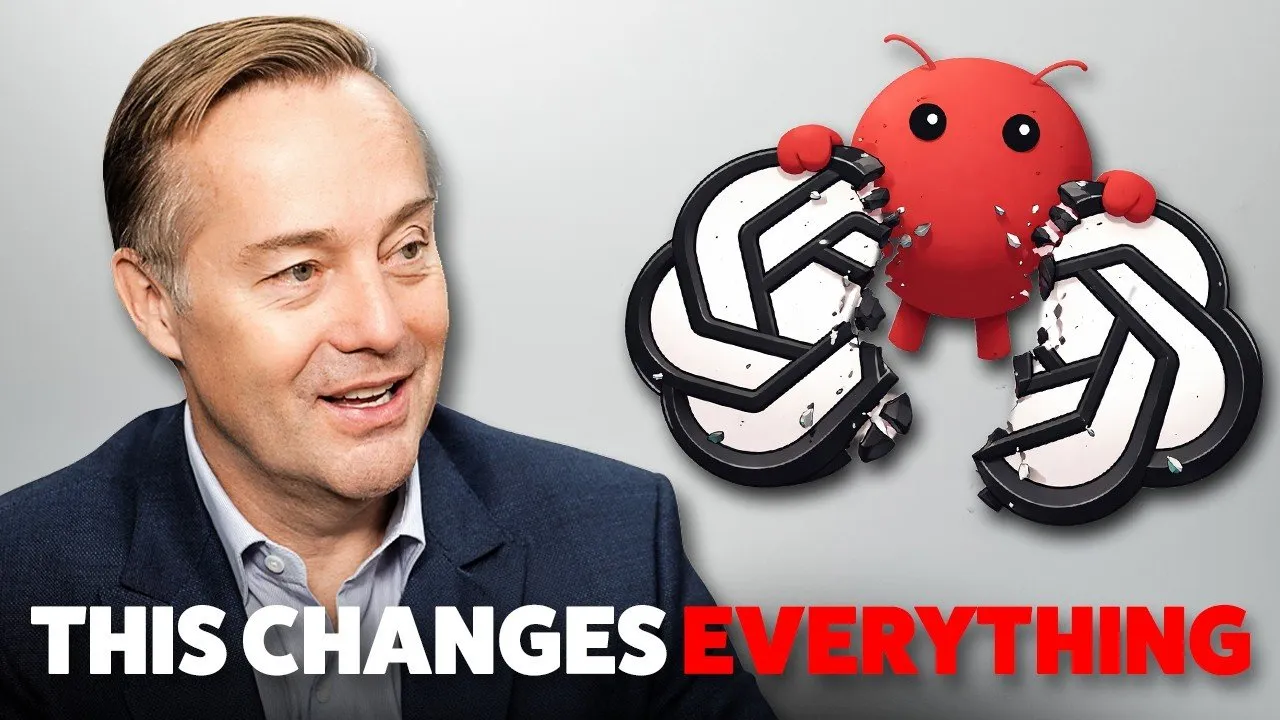
The landscape of startup efficiency is undergoing a fundamental shift, moving from simple automation to the era of the autonomous agent. We are currently 29 days into what some are calling the "Year of OpenClaw," an open-source movement that is rapidly reshaping how small teams outcompete larger incumbents. For many founders, this isn't just another software update; it is a "code red" moment that requires a total re-evaluation of how work is assigned, managed, and executed. As agents move from experimental scripts to "replicants" that can recursively learn and perform complex tasks, the traditional barriers of marketing, engineering, and management are dissolving in real-time.
Key Takeaways
- Compounding Efficiency: Startups utilizing OpenClaw are seeing 5% to 10% weekly gains in efficiency, leading to a doubling of output every 15 weeks.
- The "Agentic" Solopreneur: AI agents like "Larry" and "Fubs" are enabling single-person operations to handle marketing funnels, bug fixes, and outreach at a scale previously requiring dozens of employees.
- Corporate Transparency: The "Ultron" or "Oracle" model of management uses agents to monitor internal communications and documents, eliminating silos and providing CEOs with a real-time pulse of the company.
- Deflationary Software: The rise of agents is putting downward pressure on SaaS pricing, as companies find they can "agentify" their own internal tools rather than paying for high-seat-count subscriptions.
The Tsunami of Autonomous Efficiency
The current AI boom has found its most potent manifestation in agentic technology. Unlike previous iterations of software that required manual prompting, agents built on the OpenClaw framework are capable of recursive learning. This means they don't just follow instructions; they study their own outputs to improve over time. Jason Calacanis describes this shift as a convergence of multiple technological breakthroughs occurring simultaneously.
It’s like taking five giant waves and putting them together into a tsunami.
To keep up with this pace, companies are increasingly moving away from cloud-based AI instances toward local desktop hardware like the Mac Studio. This shift is driven by the need to bypass platform restrictions. As services like Reddit, X, and LinkedIn move to block automated agents, running them locally in a browser window allows users to "spoof" human activity, ensuring their agents can still scrape data and perform research without hitting API roadblocks.
Case Study: Automating the Marketing Funnel
One of the most compelling applications of agentic technology is in the realm of social media marketing. Oliver Henry, creator of Larry, has demonstrated how an agent can manage the entire creative lifecycle of a TikTok campaign. Larry doesn't just post content; he monitors RevenueCat analytics to see which hooks drive actual app conversions. If a video gets high views but low downloads, Larry identifies that the Call to Action (CTA) is the failure point and iterates on it for the next post.
Iterative Content Creation
Instead of a human writing scripts and filming demos, the agent analyzes historical data to see which emotional hooks—such as "landlord conflicts" or "family stories"—perform best. Using tools like DALL-E and OpenAI's batch processing, the agent generates images, overlays text, and prepares drafts. This removes the "inconsistency of humans" and replaces it with the "consistency of computers."
One good employee is now 10 times better with the help of AI.
Solving the Discovery Problem
As the number of specialized skills for agents grows, discoverability becomes a challenge. Marketplaces like Larry Brain are emerging to help users find and monetize specific "skills"—pre-packaged sets of instructions and tools that teach an agent how to perform a niche task, such as evaluating a startup's pitch deck or monitoring brand mentions on X.
The "Ultron" CEO: Radical Transparency in Management
A more provocative use of OpenClaw is the "Ultron" model, where a central agent is given root-level access to a company's Slack, Notion, and Google Docs. This "Oracle" acts as the ultimate management layer, summarizing emails every few hours and identifying "blockers" that prevent employees from finishing their work. By analyzing the work product of every team member, the agent can provide coaching that is free from human bias.
Breaking Information Silos
The primary complaint in high-growth companies is often a lack of communication. An agentic management layer solves this by knowing everything happening across all departments in real-time. If the sales team is negotiating a term sheet that has stalled, the agent flags it. If two producers are accidentally trying to book the same guest for a podcast, the agent intervenes. This creates a "hive mind" where transparency is the default state.
Performance Coaching Without the Friction
Using agents to review performance can reduce the "sting" of criticism. When an agent provides feedback—such as noting that a host used too many filler words or that a salesperson's call-to-close ratio is dropping—it feels like a data-driven "tape review" in professional sports rather than a personal attack. This allows managers to focus on high-level strategy while the agent handles the minutiae of accountability.
The Deflationary Future of SaaS and Venture Capital
The ability for small teams to build their own internal tools with agents is creating what some call a "SaaS crash." Satrini Research has noted that as companies become more efficient with AI, they are demanding 30% discounts from software providers, or threatening to build their own "agentified" versions of those tools. This is a super-deflationary force that changes the math for venture capital.
The success of computers is their consistency. And that’s why it’s been this great collaboration.
The Shift from Software to Hardware
As software becomes "cheap" and easy to replicate via agentic coding, the value of traditional late-stage software investment may decline. The industry is seeing a pivot toward "hardware that touches the world." If an agent can build a CRM or a project management tool over a weekend, the moat for many SaaS companies disappears. Investors are now looking toward sectors like mechanical engineering, robotics, and energy—fields where the "hype" of AI must eventually interact with physical reality.
Navigating the New World of Agentic Work
The transition to an agent-first economy is not without risks. Security experts warn that "skills" can be attack vectors for malware, and the age of total corporate transparency may be jarring for "old heads" used to private communications. However, for those who embrace the "replicant" model of work, the rewards are immense. By offloading "chores" to autonomous agents, humans are freed to focus on high-leverage activities, such as deep-dive research and face-to-face relationship building.
As we look toward 2026, the question for founders is no longer how many people they need to hire, but how many agents they need to deploy. The goal is to move at the "speed of compute," allowing the organization to evolve as fast as the models that power it. Whether it is through open-source communities like OpenClaw or specialized marketplaces, the era of the autonomous startup has arrived.


%20%7C%20E2254)