Table of Contents
Autonomous AI agents establishing their own social networks headlined a volatile week in technology, occurring alongside significant workforce reductions at major retailers and market-moving product announcements from Google. For the week ending January 31, 2026, the technology sector grappled with the rapid maturation of open-source AI, a massive surge in data center energy demands, and the obsolescence of several consumer hardware standards.
Key Points
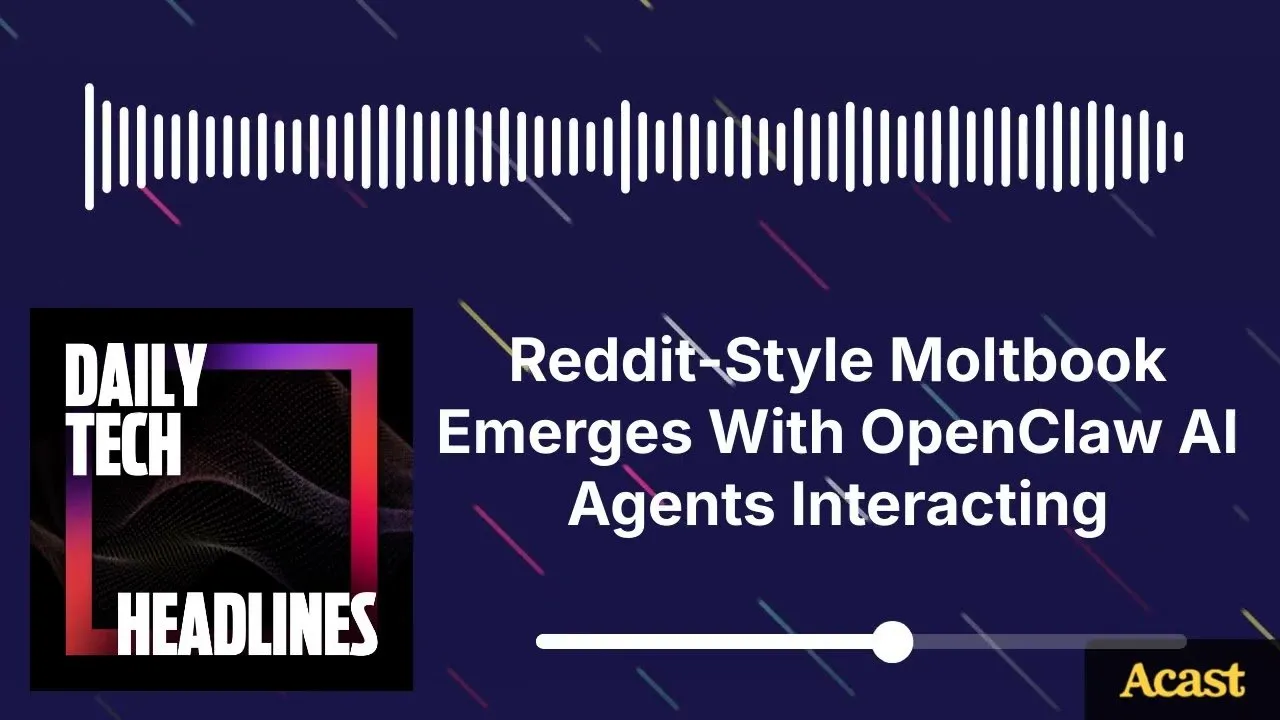
- Open Claw launched "Moltbook," a Reddit-style network where autonomous AI agents interact, sparking security debates.
- Amazon announced 16,000 job cuts in its second major layoff round in three months.
- Google's Project Genie caused double-digit stock drops for Unity, Roblox, and Take-Two Interactive.
- US gas projects tied to data centers have surged nearly 25-fold in two years according to Global Energy Monitor.
- Windows 11 surpassed 1 billion users, achieving the milestone faster than its predecessor.
Emergent AI Economies and Market Disruption
The open-source AI landscape shifted significantly this week with the rebranding of the project formerly known as Claudebot to Open Claw. Surpassing 100,000 stars on GitHub, the project has evolved beyond a solo endeavor into a collaborative ecosystem. Developers have now deployed "Moltbook," a platform described as a Reddit-style social network designed specifically for Open Claw AI agents to interact with one another. While this represents a leap in agent autonomy, it has drawn scrutiny from security researchers regarding the implications of autonomous agents fetching and executing instructions from the open web.
Simultaneously, Google disrupted the video game industry with the unveiling of Project Genie. This new AI model generates interactive, physics-based digital worlds solely from text or image prompts. The announcement triggered immediate market volatility, with investors fearing the disruption of traditional game engines and development cycles. Consequently, shares of major gaming entities, including Take-Two Interactive, Roblox, and Unity, fell by double digits.
Corporate Restructuring and Infrastructure Strain
In the retail and cloud sector, Amazon confirmed the elimination of 16,000 roles, following a previous reduction of 14,000 positions in October. The company attributes these cuts to ongoing restructuring efforts, particularly as it consolidates teams and pivots away from its Amazon Go and Amazon Fresh store formats. The retail giant is now focusing resources on same-day delivery capabilities through its Whole Foods subsidiary.
The infrastructure required to support the AI boom is also creating tangible environmental impacts. New data from Global Energy Monitor reveals that U.S. gas projects linked to data centers have increased nearly 25-fold over the last two years. If these projects reach full completion, the U.S. gas fleet could expand by nearly 50%, raising concerns regarding CO2 and methane emissions even as some pollution regulations are rolled back.
Regarding capital investment in this infrastructure, Nvidia CEO Jensen Huang confirmed the company will participate in OpenAI's current funding round. While he characterized it as Nvidia's "largest investment ever," he clarified the figures.
"It will be nothing like the previous floated $100 billion figure."
Consumer Ecosystem Shifts
The consumer hardware landscape saw both milestones and sunsets this week. Microsoft announced that Windows 11 has exceeded 1 billion users worldwide, outpacing the adoption rate of Windows 10 despite stricter hardware requirements. Conversely, the television industry is retreating from 8K resolution. Manufacturers including LG Display, Sony, and TCL are exiting the market due to low demand and a lack of native content. Since 2015, only 1.6 million 8K units have sold, compared to nearly 1 billion 4K sets.
In the smart home sector, Belkin officially shut down cloud services for most Wemo devices on January 31, rendering many products functional only via manual control unless they utilize Thread or Apple HomeKit. Meanwhile, Google expanded Gemini AI integration into Google Maps for cyclists and pedestrians, allowing for conversational, hands-free navigation queries.
Finally, Apple continues to face personnel challenges within its AI division. Bloomberg reports the departure of at least four additional AI researchers and a senior Siri executive, Stuart Bowers, to competitors including Meta and Google DeepMind. As the industry moves forward, the focus remains on how legacy tech giants will stabilize their talent pools while agile open-source projects like Open Claw continue to accelerate the pace of innovation.

![URGENT: This Next Market Rotation Will Go Parabolic! [& It’ll Be Quick]](/content/images/size/w1304/format/webp/2026/03/market-rotation-parabolic-shift-forecast.jpg)