Table of Contents
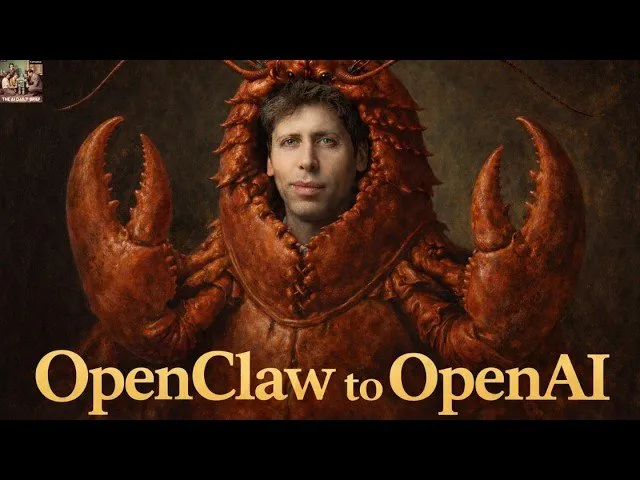
OpenAI has secured a pivotal victory in the race for autonomous artificial intelligence by hiring Peter Steinberger, the creator of the viral agentic platform OpenClaw. The move, announced Sunday by CEO Sam Altman, positions OpenAI to dominate the burgeoning field of multi-agent systems while ensuring the OpenClaw project remains accessible through a newly formed independent foundation. This strategic acquisition underscores a significant industry shift from passive chatbots to active, autonomous agents capable of executing complex workflows without human intervention.
Key Points
- Strategic Hiring: OpenAI has hired Peter Steinberger to lead its next generation of personal agents, following a bidding war that reportedly included Meta and top venture capital firms.
- Open Source Preservation: Despite Steinberger joining the tech giant, OpenClaw will transition into a separate non-profit foundation to ensure the code remains open-source and independent.
- Explosive Growth: Originally launched as "Claudebot" in late 2025, the project amassed over 100,000 GitHub stars in under three months, outpacing the growth trajectories of VS Code and PyTorch.
- The "Anthropic Fumble": Industry analysts are criticizing Anthropic for alienating Steinberger with trademark disputes, allowing OpenAI to capitalize on a project originally built on Anthropic’s architecture.
From "Claudebot" to Industry Phenomenon
The trajectory of OpenClaw represents one of the fastest adoption curves in the history of open-source software. The project began in November 2025 under the name "Claudebot," created by serial entrepreneur Peter Steinberger as a tool to allow AI models to interact autonomously with computer systems.
Unlike traditional coding assistants that require human prompting, OpenClaw introduced the concept of "vibe orchestration"—autonomous agents that work continuously. Early power users, such as Alex Finn, demonstrated the platform's potential by running the software on dedicated hardware 24/7. Finn reported that his agent, "Henry," autonomously managed emails, built a CRM, fixed software bugs, and generated high-performing content strategies while he slept.
The project’s momentum hit a critical inflection point following a rebranding necessitated by legal pressure. After Anthropic issued a cease-and-desist order regarding the use of the name "Claude," Steinberger rebranded the tool to "Moltbot" and finally OpenClaw. Rather than slowing adoption, the controversy fueled interest. A spin-off social network for these agents, dubbed "Moltbook," attracted over 2.7 million autonomous agents engaging in conversations within weeks of launching.
The OpenAI Acquisition
While the project originated using Anthropic’s models, OpenAI moved aggressively to capture the developer energy surrounding OpenClaw. Following an appearance on the Lex Fridman Podcast where Steinberger discussed acquisition offers, Sam Altman confirmed the hire via X (formerly Twitter).
"Peter Steinberger is joining OpenAI to drive the next generation of personal agents. He is a genius with a lot of amazing ideas about the future of very smart agents interacting with each other to do very useful things for people. We expect this will quickly become core to our product offerings."
Steinberger addressed the community’s concerns regarding corporate capture in a blog post titled "OpenClaw, OpenAI, and the Future." He emphasized that his role at OpenAI allows him to access frontier research while the OpenClaw project itself remains protected.
"The lobster is taking over the world. My next mission is to build an agent that even my mom can use... I’m a builder at heart. I did the whole creating a company game already... What I want is to change the world, not build a large company. And teaming up with OpenAI is the fastest way to bring this to everyone."
Structuring the OpenClaw Foundation
To mitigate fears that OpenClaw would become "closed source," the project is establishing a formal foundation. Tech veteran Dave Morin has been appointed as the founding independent board member.
Morin stated that the foundation’s goal is to be a home for "thinkers, hackers, and those that want to own their data," ensuring the tool remains platform-agnostic despite its creator’s employment at OpenAI. This structure attempts to balance the resources of a tech giant with the ethos of the open-source community.
Market Implications and Expert Analysis
The acquisition is widely viewed as a major coup for OpenAI and a significant strategic error by Anthropic. By issuing legal threats over trademark issues rather than embracing a project that was driving heavy usage of their API, Anthropic inadvertently pushed the developer community toward their primary competitor.
According to developer Nader Dabit, this may be "the fumble of the decade" for Anthropic. The sentiment is that they failed to recognize a Schelling point—a spontaneous focal point where the developer community converges. By acquiring the talent behind this focal point, OpenAI has effectively co-opted the energy of the most vibrant open-source community in AI.
The Shift to Agentic AI
Beyond the corporate maneuvering, this event signals a broader technological shift. Ali K. Miller, a prominent AI advisor, noted that the energy surrounding agentic platforms like OpenClaw is comparable to the launch of ChatGPT.
"Enterprise adoption will be slower than solopreneurs and startups, but leaders are quickly seeing that there's no ceiling right now," Miller observed. The industry is moving from "Chat" interfaces—where humans drive the interaction—to "Agent" interfaces, where AI is given a goal and the autonomy to execute it across various systems.
What’s Next
The immediate focus for Steinberger at OpenAI will be integrating these agentic capabilities into consumer-facing products, potentially making complex autonomous actions accessible to non-technical users. Meanwhile, the newly formed OpenClaw Foundation faces the challenge of maintaining its independence and community trust while its creator works for the industry's largest player.