
Table of Contents
The Future of Open Source: How the OpenClaw Foundation is Building for Longevity
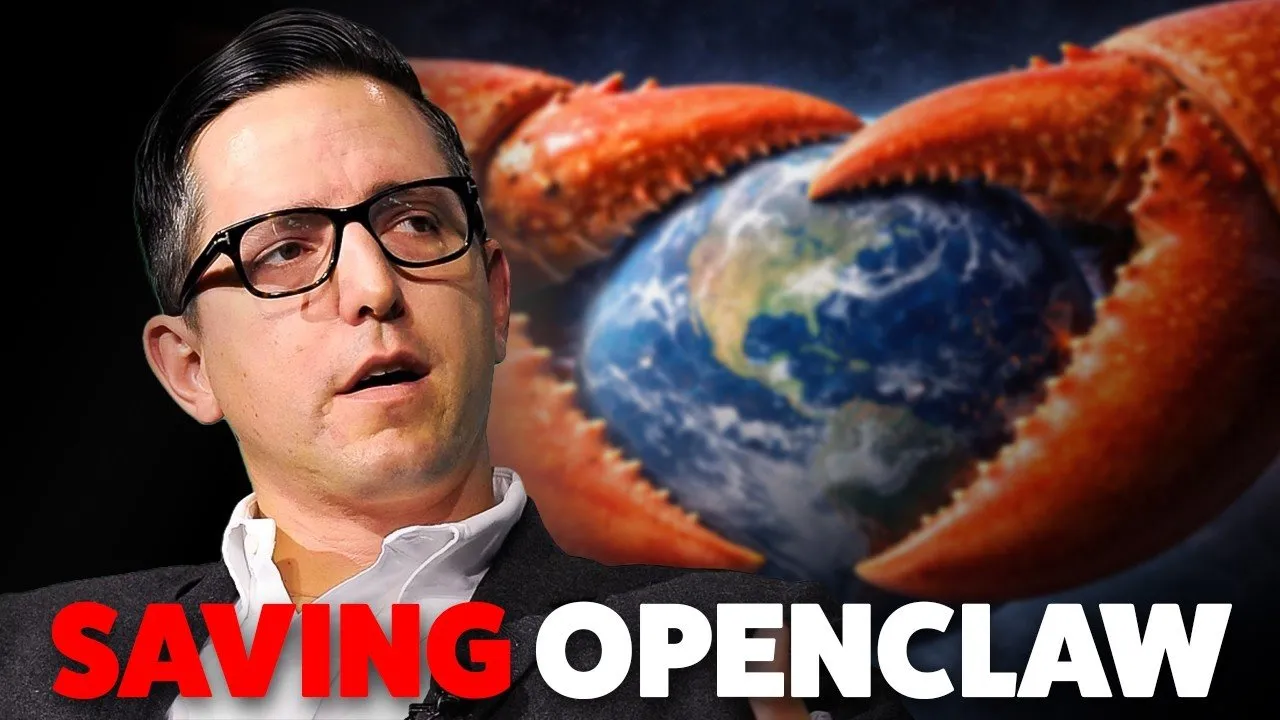
The tech landscape shifts rapidly, but every few decades, a piece of technology emerges that fundamentally alters how we build, interact, and solve problems. The recent explosion of OpenClaw—a project that has quickly climbed to the top of GitHub, surpassing legendary repositories like React and Linux—is one such moment. As the project transitions from a grassroots developer phenomenon to a formal, governed entity, the industry is watching closely. Dave Morin, the first board member of the newly minted OpenClaw Foundation, joined us to discuss why this technology has captured the hearts of developers and how the foundation plans to ensure it remains a neutral, robust platform for the future.
Key Takeaways
- The "Claw-pelled" Phenomenon: Users describe a "recursive" and "unreasonable hospitality" experience when using OpenClaw, noting that it proactively builds software and manages complex tasks autonomously.
- Foundation Governance: By establishing a 501(c)3 non-profit, the OpenClaw Foundation aims to act as the "Switzerland of AI," protecting the project from corporate capture and ensuring long-term stability.
- The Importance of Orchestration: For founders, the greatest opportunity lies at the orchestration layer—building systems that manage agents rather than just competing with base models.
- Data Sovereignty: Running an AI locally on a machine, as opposed to solely in the cloud, provides a vital counterbalance for users who want to protect proprietary or sensitive data.
Why OpenClaw Resonates with the Developer Community
The term "claw-pelled" is quickly becoming a standard descriptor for the moment a developer realizes the sheer utility of this agentic tool. Unlike traditional chatbots that require constant hand-holding, OpenClaw demonstrates a level of initiative that feels like working with a high-level assistant. Whether it is reverse-engineering hardware interfaces or building complex CRMs on the fly, the model’s ability to act proactively is a game-changer.
The Power of Recursion and Memory
What sets OpenClaw apart is its "heartbeat"—a mechanism that allows the system to perform recurring tasks autonomously. By assigning the bot a heartbeat, developers can move beyond simple cron jobs into a realm where the software feels alive and responsive to its environment. This, combined with a persistent memory structure that stays on the user's local machine, allows for a truly personalized AI experience that does not rely on transient cloud sessions.
"It feels like it's looking out for you and wants to help you proactively, and that's a new kind of experience for software products." — Dave Morin
The Foundation: Protecting the Public Good
History has shown that when an open-source project gains massive momentum, it is often at risk of being subsumed or restricted by the corporations that support it. The OpenClaw Foundation was formed to prevent that outcome. By structuring it as a non-profit, the team is modeling the organization after successful precedents like Linux and Apache.
Maintaining Technical Direction
While the Foundation provides the governance and legal structure to protect the ecosystem, the core technical vision remains with the founder, Peter. The Foundation is not intended to control the project’s direction but rather to support it, handle security, and foster a stable environment where contributors can collaborate without fear of the project being "rug-pulled" or gated behind corporate mandates.
Strategies for Founders in an Agentic World
Many founders today are understandably anxious about which ideas will be rendered obsolete by AI. The key to surviving this transition, according to Morin, is moving away from basic, vertical "co-pilots" and focusing on the orchestration layer. Companies that provide the framework for managing multiple agents will hold significant value as AI becomes a standard employee-like asset for businesses.
Unique Data Sets as a Moat
Founders should ask themselves one critical question: Is my product creating a distinctly new data set that the general-purpose models do not have access to? Those who can capture proprietary real-world or digital data will have a distinct advantage. Furthermore, building agents that perform "human-level" tasks—such as automated marketing AB testing or customer support triage—allows solo entrepreneurs to achieve the output that previously required a much larger team.
Conclusion
OpenClaw represents a shift toward personal, autonomous AI that respects user sovereignty. By fostering an open ecosystem backed by a non-profit foundation, the community is building a bedrock for the next generation of software. For developers and investors alike, the message is clear: the opportunity lies in building on top of a stable, neutral platform where you own your data and maintain control over your agents. As we look toward the future, the ability to orchestrate these tools effectively will be the defining skill of the next era of entrepreneurship.



%20%7C%20E2257)