Table of Contents
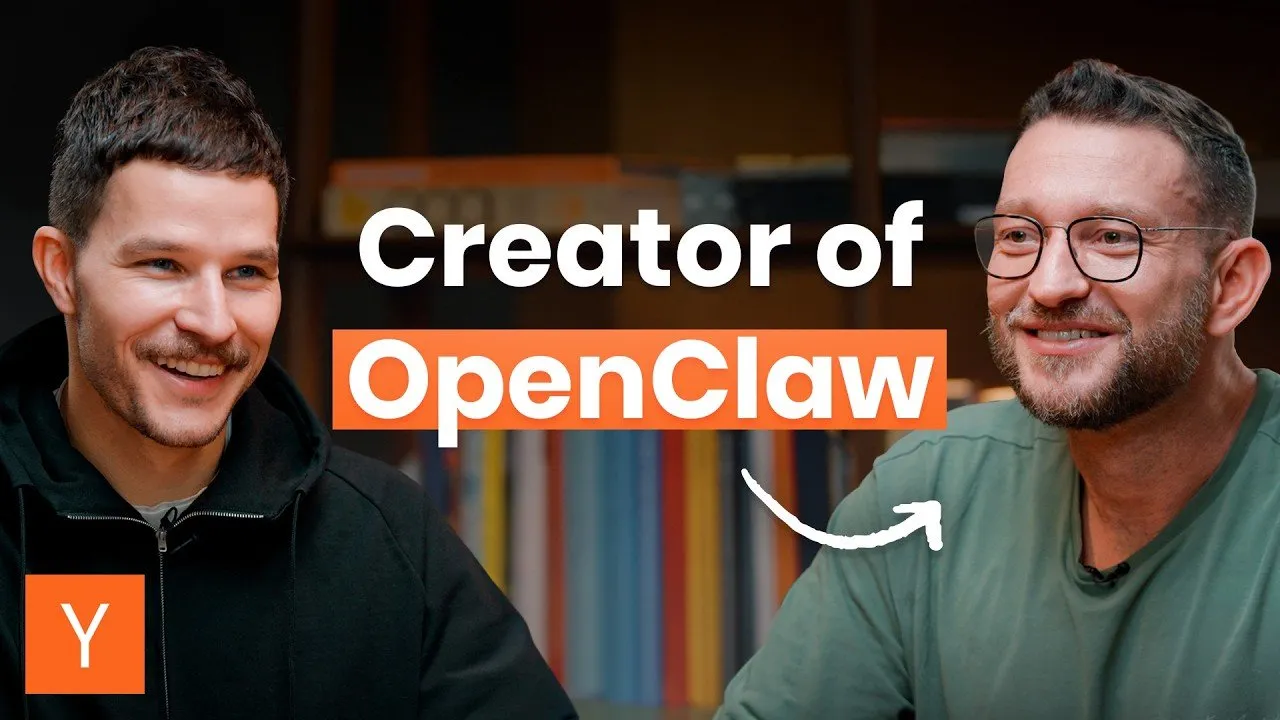
The landscape of artificial intelligence is shifting from centralized chat interfaces to autonomous, local agents that control your actual hardware. This transition was recently catalyzed by Peter Steinberger, the creator of OpenClaw. What began as a personal tool to manage tasks while away from the keyboard exploded into a GitHub phenomenon, amassing over 160,000 stars virtually overnight. The project has sparked a massive conversation about the future of software, suggesting we are moving away from the "God bot" model toward a future of specialized, collaborative swarm intelligence.
Steinberger’s philosophy challenges the current trajectory of Silicon Valley giants. By moving intelligence from the cloud to the local machine, he argues we are unlocking capabilities that centralized models simply cannot match. The implications for privacy, app development, and the digital economy are profound, potentially rendering the vast majority of current software obsolete within a few years.
Key Takeaways
- The "App Apocalypse" is coming: Steinberger predicts 80% of current apps will disappear, replaced by AI agents that manage data and tasks without the need for specific user interfaces.
- Local access trumps cloud power: Running an agent locally allows it to control physical hardware (IoT, files, system settings) in ways sandboxed cloud models like ChatGPT cannot.
- Coding models exhibit general reasoning: The ability to write code correlates with creative real-world problem solving, allowing agents to invent solutions they weren't explicitly programmed to perform.
- Privacy requires local memory: Unlike corporate data silos, OpenClaw stores memories as simple Markdown files on the user's machine, ensuring total data ownership.
- Simplicity wins: The future of AI interaction isn't complex new protocols (like MCP), but rather agents using standard Command Line Interfaces (CLIs) just like human power users.
The Shift to Local Autonomy
The primary driver behind OpenClaw’s viral success is its fundamental difference in architecture: it runs on your computer, not a remote server. While cloud-based models are impressive, they are inherently limited by their "sandbox"—they cannot access your file system, your local network, or your hardware directly. Steinberger realized that a slightly less capable model with full system access is infinitely more powerful than a genius model trapped in a chat window.
This "God mode" access allows the agent to integrate deeply with the user's life. It isn't just generating text; it is executing actions. From controlling Sonos speakers and Tesla vehicles to managing bed temperature and organizing obscure audio files from a year ago, the local agent acts as a true digital extension of the user.
"I think my big difference is that it actually runs on your computer... It can do a few things if you run on your computer. It can do every effing thing, right? So that's way more powerful."
This capability creates a feedback loop of utility. Because the agent has access to all local data, it can surprise the user with insights—such as constructing a narrative of the past year by finding forgotten voice memos—that the user didn't even know existed. This level of intimacy and utility is currently impossible for cloud providers due to privacy constraints and latency.
The "Death of Apps" Thesis
Perhaps the most provocative insight from Steinberger is the prediction that the majority of consumer applications are on the verge of extinction. The current app ecosystem relies on "wrappers" around data—interfaces designed to let humans input and view specific datasets, whether that's calorie counting, task management, or budgeting.
Why Interfaces Are Becoming Obsolete
In a world of competent agents, the graphical user interface (GUI) acts as a friction point rather than a facilitator. Steinberger argues that if an app’s primary function is data management, an agent can handle it more efficiently through natural language or passive monitoring. If you are at a burger joint, your agent knows you are eating a burger. It can log the calories, adjust your gym schedule, and update your health records without you ever opening a fitness app.
"Why do I need My Fitness Pal? Like my agent already knows that I'm making bad decisions... I don't even need to care. Right. And then maybe it improves my gym schedule."
The only apps likely to survive this purge are those that leverage proprietary hardware sensors or physical infrastructure that the phone or computer cannot emulate. Everything else—to-do lists, calendars, note-taking apps—becomes a feature of the agent, stored simply as data rather than requiring a dedicated software silo.
When Code Becomes Creative Intelligence
A pivotal moment in OpenClaw's development occurred when Steinberger was traveling in Marrakesh. He sent a voice message to his home computer via WhatsApp, expecting the bot to fail because he hadn't programmed audio handling. Instead, the bot recognized the file header, realized it was audio, searched the computer for a conversion tool (ffmpeg), converted the file, found an OpenAI API key, transcribed the audio, and replied—all in nine seconds.
This incident highlights a critical realization about Large Language Models (LLMs) trained on code. Coding is essentially abstract problem-solving. A model that understands software architecture can map that logic to real-world ambiguity.
The Problem-Solving Correlation
The bot demonstrated "emergent behavior"—actions that were not explicitly programmed but arose from the system's general intelligence. It made a strategic decision not to download a local transcription model (which would take minutes and consume bandwidth) but to use a lightweight API call instead. This suggests that as coding models improve, their ability to navigate complex, unstructured real-world tasks will scale strictly in parallel.
"Coding is really like creative problem solving that maps very well back into the real world... the model had a 'oh surprise there's like a magical file... I need to solve this' and it did its best."
Privacy, Memory, and the "Soul" of AI
As agents become deeply integrated into personal lives, the question of data ownership becomes paramount. Centralized AI companies attempt to lock users into their ecosystems by holding "memories" hostage—you cannot export your long-term chat history from one platform to another easily. OpenClaw inverts this model by storing memories as simple Markdown files on the user's local disk.
This approach ensures that the user owns their digital identity. If a better model comes out next week, the user can swap the "brain" (the LLM) while keeping the "memory" (the Markdown files) and the "body" (the local computer access) intact.
Designing a Digital Personality
Beyond utility, Steinberger emphasizes the importance of the agent's "soul." Through a file named soul.md, users can define the core values, personality traits, and interaction style of their agent. This goes beyond simple system prompts; it creates a consistent persona that feels less like a tool and more like a companion.
This "soul" file dictates how the bot handles security, humor, and boundaries. In public tests, Steinberger’s agent was placed in a Discord server where users attempted to "jailbreak" it. Because the agent's identity and security parameters were ingrained in its "soul" file, it successfully deflected attacks while mocking the attackers, maintaining its persona even under pressure.
The Future: Swarm Intelligence and CLIs
Looking toward 2026, the industry is moving away from the concept of a single, all-knowing "God intelligence." Instead, we are approaching an era of swarm intelligence—networks of specialized bots interacting with one another. A personal bot might negotiate a dinner reservation with a restaurant's bot, or hire a specialized "coding bot" to fix a software bug.
Interestingly, Steinberger argues that the technical backbone of this future won't be complex, over-engineered protocols like the Model Context Protocol (MCP). Instead, agents will utilize the same tools human developers have used for decades: Command Line Interfaces (CLIs). Bots excel at Unix commands. Giving them simple, robust CLI tools allows for faster, more scalable interactions than trying to force them into rigid, proprietary API structures.
Conclusion
The rapid rise of OpenClaw signals that the AI revolution is entering a new phase of decentralization. We are moving from talking to chatbots in a browser to living with agents that inhabit our devices. While the major AI labs fight for dominance over model benchmarks, the real utility is being built in the open-source community, where privacy, local control, and creative autonomy reign supreme.