Table of Contents
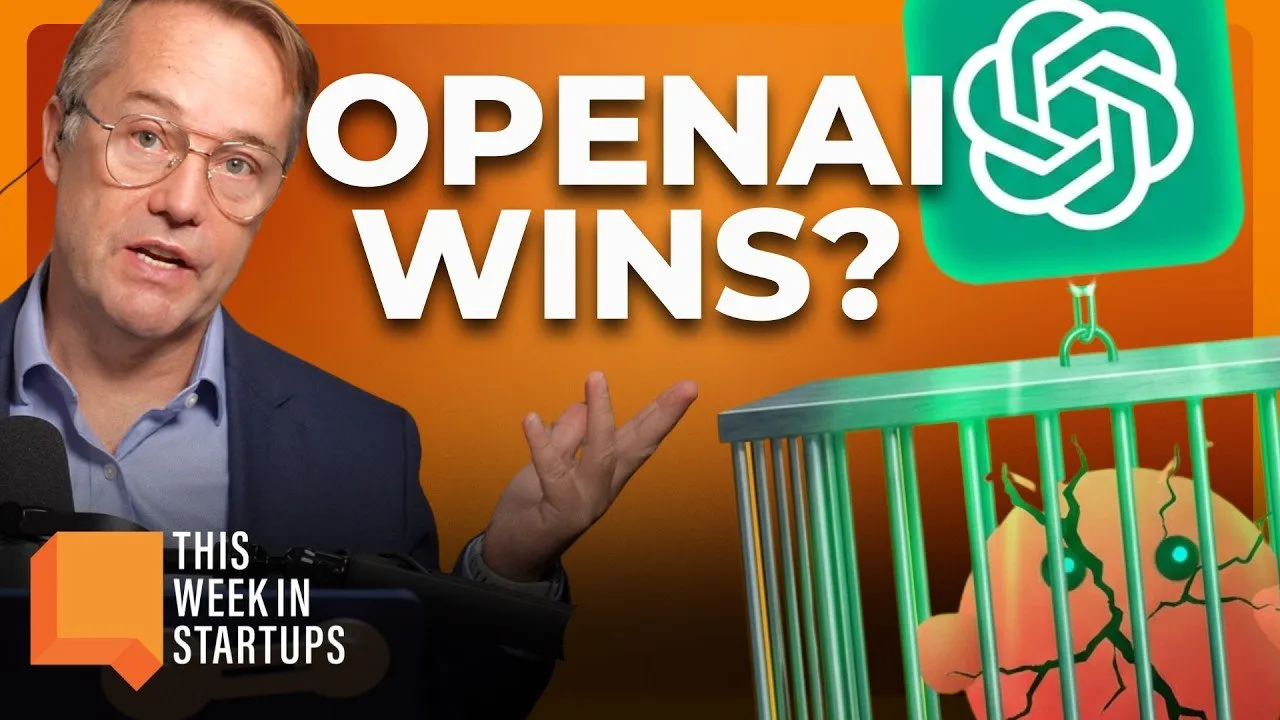
The landscape of artificial intelligence shifted dramatically this week with the breaking news that OpenAI has acquired the rapidly growing open-source project, OpenClaw. What started as a grassroots phenomenon in the developer community has, in less than a month, been absorbed by the industry's heaviest hitter. But this acquisition is about far more than consolidation; it signals a fundamental war for the interface of AI itself. As founders and developers scramble to interpret Sam Altman’s latest move, the implications for open-source independence, the death of traditional user interfaces, and the ethical frontiers of digital cloning are coming into sharp focus.
Key Takeaways
- The Battle for the Interface: OpenAI’s acquisition of OpenClaw suggests a defensive strategy to prevent open-source agents from commoditizing foundational models.
- The Death of UI: Early adopters are moving toward an "app-less" world where bespoke agents replace traditional software interfaces.
- Infinite Agency: For founders, AI agents represent a return to "rugged individualism," allowing non-technical operators to build complex tools without writing code.
- Digital Immortality Dilemmas: The controversy surrounding "AI Scott Adams" highlights the unresolved legal and ethical conflicts between a creator's public wishes and their estate's rights.
The OpenAI Acquisition: Strategic Masterstroke or Open Source Betrayal?
The tech world is currently divided over the acquisition of OpenClaw. For many in the open-source community, the move feels like a rug pull—a co-opting of a project that promised to democratize AI agency. However, for others, it is viewed as a massive, inevitable exit for a founder who built a unicorn-level product in under 60 days. Estimates suggest the deal could involve a mix of cash and stock incentives ranging between $250 million and $500 million, a figure necessary to beat competitive offers from top-tier venture firms like Sequoia or Andreessen Horowitz.
The Cynical View: Protecting the Distribution Monopoly
The most critical interpretation of this deal is that OpenClaw posed an existential threat to OpenAI’s business model. As OpenClaw evolved, it began to function as the operating system for AI interaction. Users were no longer visiting ChatGPT or Claude directly; they were using OpenClaw agents to interface with those models via API.
This dynamic commoditizes the model providers. When the interface is controlled by an open-source agent, that agent can ruthlessly optimize for cost, switching between OpenAI, Anthropic, or local models like Llama based on price and performance. By acquiring the interface, OpenAI protects its distribution channel. The fear is that OpenClaw will be assimilated into ChatGPT, turning a customizable power tool into a simplified, locked-down consumer feature.
The Optimistic View: Talent and Alignment
Conversely, the acquisition may be a talent play. By bringing OpenClaw’s creator, Peter, into the fold—potentially alongside a foundation led by figures like Dave Morin—OpenAI ensures they remain at the bleeding edge of agentic workflows. Even if the primary goal is defensive, the integration of OpenClaw’s "mechanic in the car" philosophy could vastly improve the utility of OpenAI’s consumer products, shifting them from chatbots to true digital coworkers.
Practical Magic: How Founders Are Replacing Apps with Agents
Beyond corporate maneuvering, the true revolution is happening at the user level. Early power users are demonstrating that we are entering a post-app era. The traditional concept of software—icons, menus, and rigid user interfaces—is being rendered obsolete by agents that can generate bespoke solutions on the fly.
The "App-less" Future
Jesse Jana, a founder turned homeschooling parent, exemplifies this shift. Rather than relying on existing educational software, she utilizes OpenClaw to dynamically generate curriculum, log lessons via voice notes, and even code custom applications on her phone. Notably, she built a distraction-free YouTube video player to curate content for her children, bypassing the algorithmic "slop" of the native platform.
Software used to be expensive. Now I can just chat on my phone with my OpenClaw... and I built this. I can choose streams... and my OpenClaw is actually going through and finding and pointing my app at videos that fit that content stream.
This suggests a future where the "UI" is simply a conversation. Users no longer need to find an app that fits 80% of their needs; they instruct an agent to build a tool that fits 100% of their needs.
The Agent as a Mechanic
Heaton Shaw, CEO of Crazy Egg, describes the shift as moving from buying a car to buying a "car with a mechanic built-in." He utilized OpenClaw to build a sophisticated personal CRM and competitive intelligence database in minutes—a task that previously required expensive SaaS subscriptions and manual data entry. By treating the AI not just as a content generator but as a recursive system that can improve its own skills, founders are achieving levels of productivity that were previously impossible for solopreneurs.
The Psychology of the AI Gold Rush
There is a distinct psychological driver behind the obsession with tools like OpenClaw: Agency. The current wave of AI adoption is fueling a resurgence of "rugged individualism" in the tech sector.
Much like the Gold Rush or the early days of the internet, the barrier to entry for creating value has collapsed. A non-technical founder can now execute complex technical tasks—from scraping websites to building databases—simply by directing an agent. This creates a compounding advantage for those willing to endure the technical friction of early adoption.
This "agency" is addictive. It transforms the user from a passive consumer of software to an active architect of their own digital environment. The ability to wake up with an idea and have a working prototype by lunch, without writing a line of code or hiring a developer, is the ultimate leverage for the modern entrepreneur.
The Digital Afterlife: The Case of AI Scott Adams
As agents become more capable of replicating human tasks, they are also becoming capable of replicating humans themselves. The emergence of an "AI Scott Adams"—a digital clone of the late Dilbert creator hosting a daily podcast—has sparked a fierce debate regarding digital rights and ethics.
John Arrow, the creator behind the project, argues that he is fulfilling the explicit public wishes of Adams, who allegedly spoke about desiring digital immortality through AI. However, the project faces significant headwinds, including a ban from YouTube and backlash from fans who view it as ghoulish or unauthorized by the estate.
He said, "If you want to have this person say things I didn't say, that's okay with me, too. I hereby authorize it in public so that you can use as many as you want..." There are dozens of these things.
The Right to Publicity vs. Artistic Expression
This scenario exposes a legal gray area that will define the next decade of media. While "Right to Publicity" laws generally protect an estate's commercial interests for decades after death, the lines blur when dealing with parody, artistic tribute, or the decedent's own public statements.
The consensus emerging from industry experts is that while technical replication is possible, moral and legal legitimacy requires one of two things: explicit blessing from the family, or a clear "parody/tribute" framing that prevents consumer confusion. As AI fidelity increases, society will need to develop new frameworks—potentially resembling "Do Not Resuscitate" orders—specifically for "Do Not Replicate" requests to manage digital rights post-mortem.
Conclusion
We are currently operating in the "Wild West" of the AI era. Whether it is the corporate consolidation of open-source projects like OpenClaw, the collapsing cost of software creation, or the ethical minefield of digital cloning, the rules are being written in real-time. For founders and operators, the message is clear: those who embrace the friction and stake their claim now will possess a distinct advantage as the operating system of the world gets rewritten.