Table of Contents
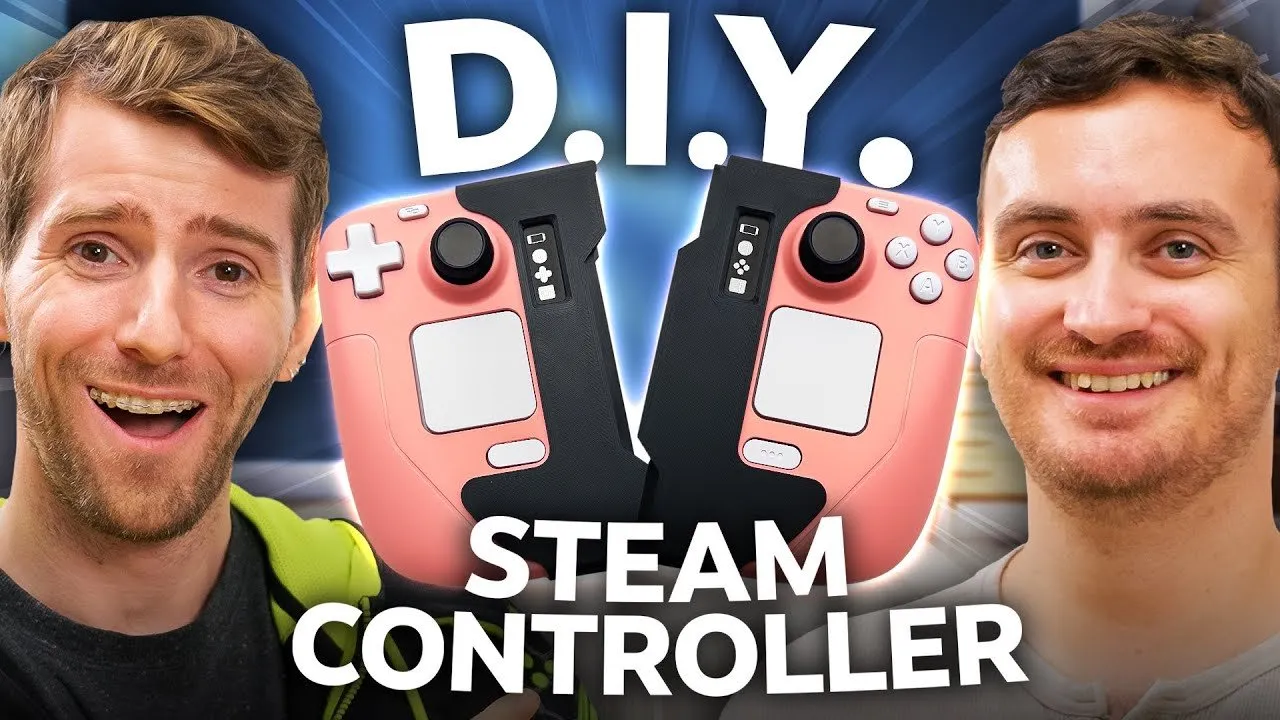
Electrical engineer and hardware enthusiast Tommy B has unveiled the Open Split Deck, a fully functional, open-source wireless controller designed to fill the market gap left by Valve’s discontinued Steam Controller. Showcased on a recent Linus Tech Tips segment, the device combines custom-engineered printed circuit boards (PCBs) with official Steam Deck components to offer a modular, ergonomic input solution that functions as two independent halves or a single unified gamepad.
Key Points
- Modular Design: The controller features a split-chassis architecture, allowing users to use the halves independently for better ergonomics or magnetically snap them together.
- Open Source Availability: All PCB designs, firmware, and 3D printing files have been released on GitHub under the project name "Open Split Deck."
- High-End Components: The build utilizes Hall effect joysticks, linear resonant actuator (LRA) haptics, and a Nordic Semiconductor MCU.
- DIY Barrier: With a parts cost estimated between $250 and $300 and required soldering skills, the device is targeted at advanced hardware enthusiasts.
Bridging the Gap Until Steam Controller 2
While rumors suggest Valve is targeting a 2026 release for an official successor to its hardware, the Open Split Deck offers an immediate solution for enthusiasts dissatisfied with current market options. The project was born out of a desire for a controller that integrates the precision of trackpads with the ergonomic flexibility of a split design—a feature set currently absent in mainstream PC peripherals.
According to the creator, the device is not merely a placeholder but a distinct product with unique capabilities. By allowing the controller to separate into two wireless units that communicate with a single USB dongle, it offers ergonomic advantages similar to the Nintendo Switch Joy-Cons but with the fidelity of PC-grade hardware.
"I think mine is unique enough to coexist with the Steam product. It's got some features that the Steam one doesn't... [specifically that it] splits in half and still works. Two independent halves communicating to the same dongle."
Technical Engineering and Custom Hardware
The architecture of the Open Split Deck is a hybrid of off-the-shelf components and custom engineering. The core processing is handled by a Seeed Studio XIAO nRF52840 Sense Plus, a microcontroller chosen for its Bluetooth capabilities and battery management features. To replicate the signature feel of Valve’s hardware, the build incorporates official Steam Deck replacement parts sourced from iFixit, specifically the button membranes and structural elements.
However, the most complex aspect of the build involved the trackpads. Since official Steam Deck trackpads cannot be purchased as standalone components easily, Tommy B engineered a custom solution from scratch. The result is a capacitive touch surface utilizing a 6x6 electrode grid. Through analog interpolation, this grid achieves a resolution of approximately 1,000 x 1,000 points, offering granular control suitable for mouse emulation and gesture inputs.
Additional hardware specifications include:
- Hall Effect Joysticks: Sourced from GuliKit to prevent stick drift and ensure longevity.
- LRA Haptics: Advanced vibration motors that provide precise feedback comparable to modern smartphones, rather than the spinning weights found in traditional gamepads.
- Magnetic Locking: A custom interface allows the two halves to snap together securely for traditional two-handed play.
Market Implications and DIY Economics
The Open Split Deck highlights the growing capability of the "maker" community to produce hardware that rivals commercial prototypes. However, the project also underscores the economic challenges of small-scale manufacturing. The creator estimates the total bill of materials (BOM) to be between $250 and $300 USD. This high price point is driven by the need to purchase individual components at retail prices, including the Hall effect sticks and custom PCBs.
Despite the cost, the controller offers modularity that mass-produced units cannot match. Users can swap out ergonomic grips, adjust the angle of the controller halves, and repair individual components with ease. The device runs on custom firmware that supports dual-input modes, allowing it to function as a standard gamepad or a mouse-and-keyboard emulator for strategy games and desktop navigation.
"It's that extra layer of interaction you get that I think makes my controller stand out... If you're not that into the trackpads or the game doesn't benefit from it, you can just completely ignore them. But there's no reason you have to use them."
Future Development
The project is currently in an experimental phase, with the creator acknowledging that the software and assembly process are still being refined. Current limitations include the lack of a physical power switch—relying instead on sleep modes—and the complexity of soldering surface-mount components.
Looking ahead, the open-source nature of the project invites community collaboration to refine the firmware, reduce power consumption, and potentially lower costs through group buys of custom parts. The design files and build guide are available on GitHub for those willing to undertake the assembly process.