Table of Contents
Despite recent speculation regarding the potential dismantling of smartphone manufacturer OnePlus, the brand remains operationally stable, offering a rare case study in corporate survival within the volatile mobile hardware market. While rumors of the company's demise appear unfounded, OnePlus has fundamentally altered its business model, successfully transitioning from a niche "flagship killer" to a mainstream competitor by systematically alienating its original enthusiast fanbase to secure mass-market viability.
Key Points
- Survival Strategy: OnePlus has successfully navigated the difficult transition from enthusiast niche to mass market, a leap that has bankrupted competitors like Essential and Nextbit.
- Strategic Pivot: The company gradually abandoned its low-cost, high-spec identity in favor of mainstream features like IP ratings, carrier partnerships, and premium pricing.
- Market Realities: The shift highlights the "enthusiast trap," where early adopters—though vocal—represent a small, fickle consumer base that prevents scalable growth.
- Homogenization: Modern OnePlus devices, such as the OnePlus 15, have largely merged with the design and software philosophy of parent company Oppo, prioritizing stability over distinctiveness.
The 'Flagship Killer' Disruption
To understand the current trajectory of OnePlus, one must examine its entry into the market in 2014. Facing a duopoly dominated by Samsung and Apple, OnePlus launched the OnePlus 1 with a disruptive value proposition: top-tier Snapdragon 800-series specifications for $300—roughly half the price of contemporary flagships. By utilizing an invite-only purchase system and minimizing marketing spend, the company created artificial scarcity and viral hype among technology enthusiasts.
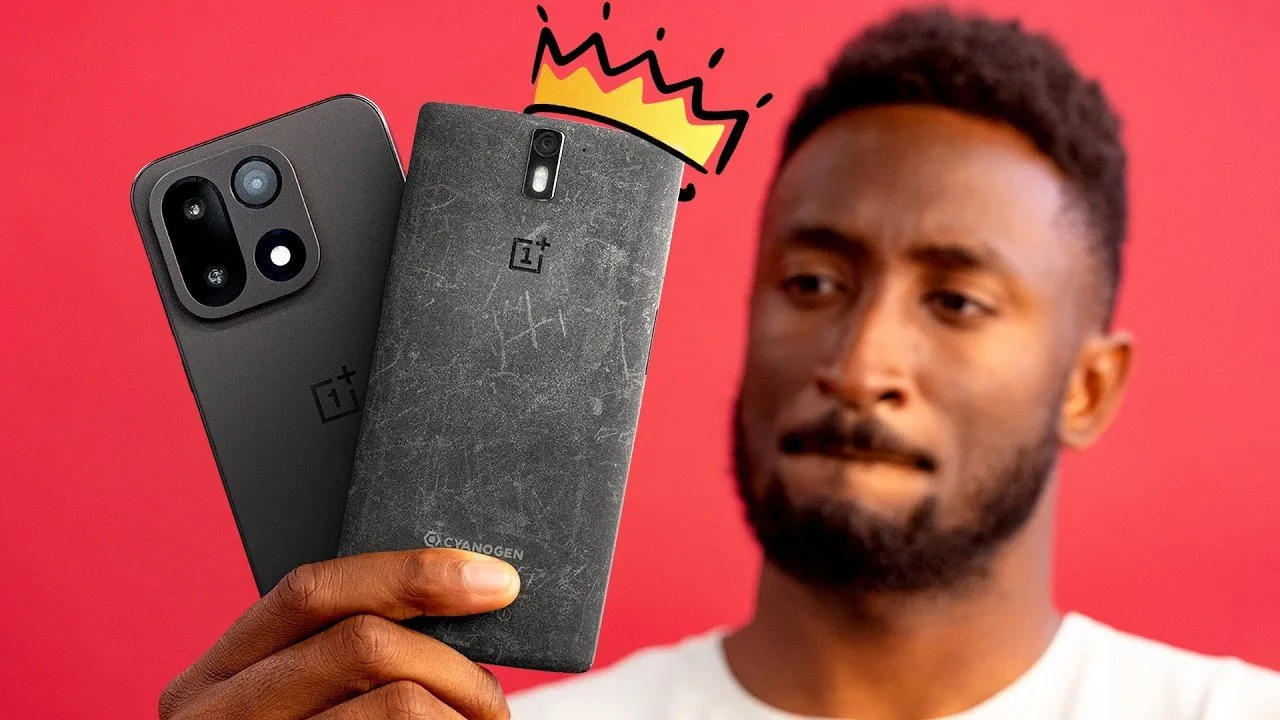
This approach captured the attention of early adopters, a demographic prioritizing raw performance and clean software, specifically the CyanogenMod operating system. However, this initial success created a precarious business paradox. The company had captured the hearts of a customer base that tech analyst Marques Brownlee describes as "the worst customer group imaginable" for a company aiming to scale.
"They are the most hype right now, but they're also the most picky. They have the highest standards and they're somehow the least loyal because if something else pops up with slightly better specs, they'll just leave and buy that instead."
Navigating the Pivot to Mass Market
The "arc" of OnePlus serves as a blueprint for hardware survival. History is littered with brands like Nextbit, Essential, and Asus that failed to bridge the gap between niche appeal and broad consumer adoption. To survive, OnePlus engaged in a slow, deliberate pivot away from enthusiast-centric features toward mass-market requirements.
Mainstream consumers prioritize availability in carrier stores, official waterproofing (IP ratings), and recognizable camera partnerships over raw "bang-for-the-buck" value. Consequently, OnePlus began integrating these features while steadily increasing prices, eventually reaching the $900 premium tier. This strategy required a trade-off: the unique identity that built the brand had to be sacrificed to appeal to the average consumer who seeks safety and reliability over experimental technology.
The Era of Homogenization
The transition became most apparent following the departure of co-founder Carl Pei and the deeper integration with parent company Oppo. The distinct "OxygenOS" software, once lauded for its speed and minimalism, began to mirror Oppo’s "ColorOS." Hardware designs shifted from the unique pop-up cameras of the OnePlus 7T Pro—widely considered the brand's peak among enthusiasts—to generic glass slabs indistinguishable from competitors.
This homogenization was not a failure of design, but a calculated business decision. By adopting the characteristics of established market players, OnePlus secured its position as a viable alternative for the general public, even as it became arguably irrelevant to the tech enthusiasts who championed its launch.
Implications for the Industry
The survival of OnePlus validates the theory that "betrayal" is a necessary component of scaling a hardware startup. Companies attempting to maintain enthusiast purity, such as Asus with its Republic of Gamers (ROG) line or the Zenfone series, have faced significant headwinds. The discontinuation of the compact Zenfone and the struggles of the ROG line demonstrate that the mass market does not reward enthusiast-focused optimizations.
OnePlus has effectively executed a "speedrun" of this corporate lifecycle. While the current OnePlus 15 is reviewed as a competent, smooth device with fast charging, it lacks the disruptive nature of its predecessors. It is a "safe" recommendation for the average user, signifying that the company has successfully traded fervor for stability.
Future Outlook
Looking ahead, OnePlus appears poised to continue its iterative approach. While rumors persist regarding the cancellation of niche products—such as a sequel to their foldable device or a compact flagship—the release of a OnePlus 16 seems inevitable. The company’s trajectory suggests a continued focus on safeguarding its position within the mass market rather than innovating for the fringe.
For emerging brands, including Carl Pei’s new venture, Nothing, the OnePlus narrative serves as a critical case study. It demonstrates that while enthusiasts are essential for launching a brand, abandoning their specific demands is often the only path to long-term corporate solvency.