Table of Contents
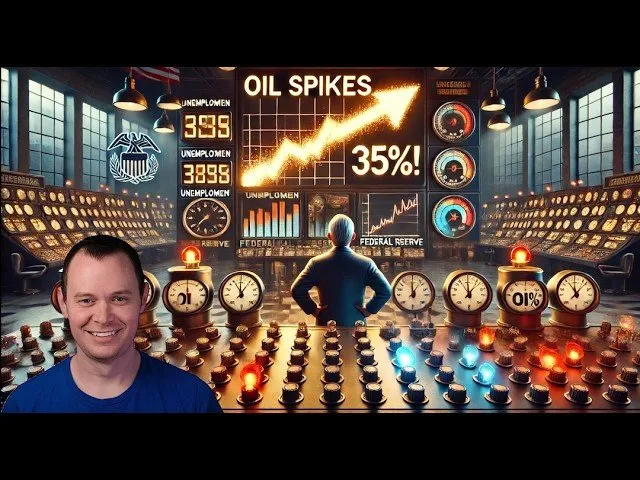
The global financial landscape is facing a significant test as crude oil prices recently experienced their largest single-week rally since West Texas Intermediate (WTI) trading began in 1983. Moving from $67 to over $91 in just seven days, this sudden surge has reignited concerns regarding the stability of the current business cycle. While some market participants focus on absolute price levels, historical data suggests that the rate of change in energy costs often acts as a primary catalyst for economic shifts. As we navigate a late-cycle environment, the interplay between rising oil prices, Federal Reserve policy, and risk-asset volatility warrants a closer look at the mechanisms driving our economy.
Key Takeaways
- The Rate of Change Matters: Rapid spikes in oil prices, rather than just their absolute value, pose the greatest threat to inflation data and economic stability.
- Late-Cycle Vulnerabilities: We are currently in a late business cycle environment where energy supply shocks and geopolitical tensions can accelerate economic downturns.
- The Fed’s Policy Dilemma: Despite weakening labor market data, the Federal Reserve remains cautious about cutting rates due to the risk of resurgent inflation triggered by energy costs.
- Distinguishing Noise from Reality: Distinguishing between "doomerism" and macroeconomic realism is vital, especially when interpreting market corrections within established four-year or business cycles.
The Mechanics of a Late-Cycle Environment
The business cycle is often governed by a specific feedback loop that defines the transition from growth to recession. A healthy expansion typically sees companies growing earnings and hiring staff. Conversely, a contraction begins when companies initiate layoffs, reducing consumer demand, which subsequently forces further earnings declines and additional labor cuts. Currently, the economy has not entered this aggressive downward spiral. However, the S&P 500 has exhibited significant stagnation, mirroring historical patterns that precede deeper corrections. When assets move sideways for extended periods—much like Bitcoin has in past cycles—it often signals an exhaustion of momentum that leaves the market vulnerable to external shocks.
"The risk is that because oil is spiking and we're getting this larger drop in the stock market, we're about to find out if this is going to cause any type of negative feedback loop."
Energy Prices as a Catalyst for Recession
While energy prices constitute only a fraction of the Consumer Price Index (CPI), their propensity to spike by 30% to 50% annually makes them a potent driver of inflation. Historical evidence shows that in many past business cycles, including 1990, 2001, and 2008, crude oil spikes served as the "beginning of the end."
The Impact on Federal Reserve Policy
The Federal Reserve operates under a dual mandate: price stability and maximum employment. When non-farm payroll data comes in weaker than expected, the logical assumption might be an imminent rate cut. Yet, the Fed is hesitant. If policymakers believe inflation is poised to spike due to energy costs, they are forced to keep interest rates elevated, even at the cost of weakening the labor market further. This reaction function increases the risk of a hard landing, as the Fed may remain too restrictive for too long.
Managing Risk in Volatile Markets
Investors often confuse market realism with pessimism. Maintaining a disciplined approach during a late-cycle environment does not require abandoning the market, but it does necessitate a shift in strategy. During these periods, assets that are highly sensitive to liquidity often struggle.
The Role of Energy Stocks
One effective hedge during these periods has been exposure to energy stocks. As oil prices rise, energy companies often see improved fundamentals. However, it is essential to remember that energy stocks are typically among the final sectors to top out. Even if a correction begins in the broader market, energy sectors may remain resilient for months, providing a buffer that other risk assets cannot offer.
"There is a difference between being a doomer and being realistic. Not all business cycles have to end with 50% drops in the stock market."
Wealth Preservation vs. Speculation
Midterm years in the current cycle have demonstrated a consistent, almost mathematical adherence to previous trends. When analysts suggest that "alt-season" or broad rallies are imminent despite clear macroeconomic headwinds, it often serves as a distraction from the underlying cycle position. As noted in historical data, being a "price cheerleader" who dunks on dissenters during counter-trend rallies is a high-risk gamble.
"There's a difference between managing risk and being a price cheerleader who dunks on people anytime there's a counter trend rally."
Conclusion
We are currently operating within a precarious late-cycle environment where the cushion provided by a potential "soft landing" is being eroded by geopolitical volatility and energy spikes. While a recession is not an immediate certainty, the warning signs—rising oil prices, stagnant equity momentum, and a tightening Fed stance—cannot be ignored. Successful navigation of these markets requires a focus on long-term data over short-term noise, prioritizing wealth preservation, and understanding that the "beginning of the end" of a business cycle is often a slow, drawn-out process rather than a single-day event. Remaining objective about these macro forces is the best defense against market volatility.

![Will The Crypto Rally Actually Continue? [These Are My Picks]](/content/images/size/w1304/format/webp/2026/03/will-the-crypto-rally-continue-my-picks.jpg)