Table of Contents
The convergence of traditional finance (TradFi) and the crypto ecosystem is no longer a distant hypothesis—it is an active structural shift. With the New York Stock Exchange (NYSE) exploring 24/7 trading and major institutions moving on-chain, the conversation has moved beyond asset prices to the very "plumbing" of our capital markets.
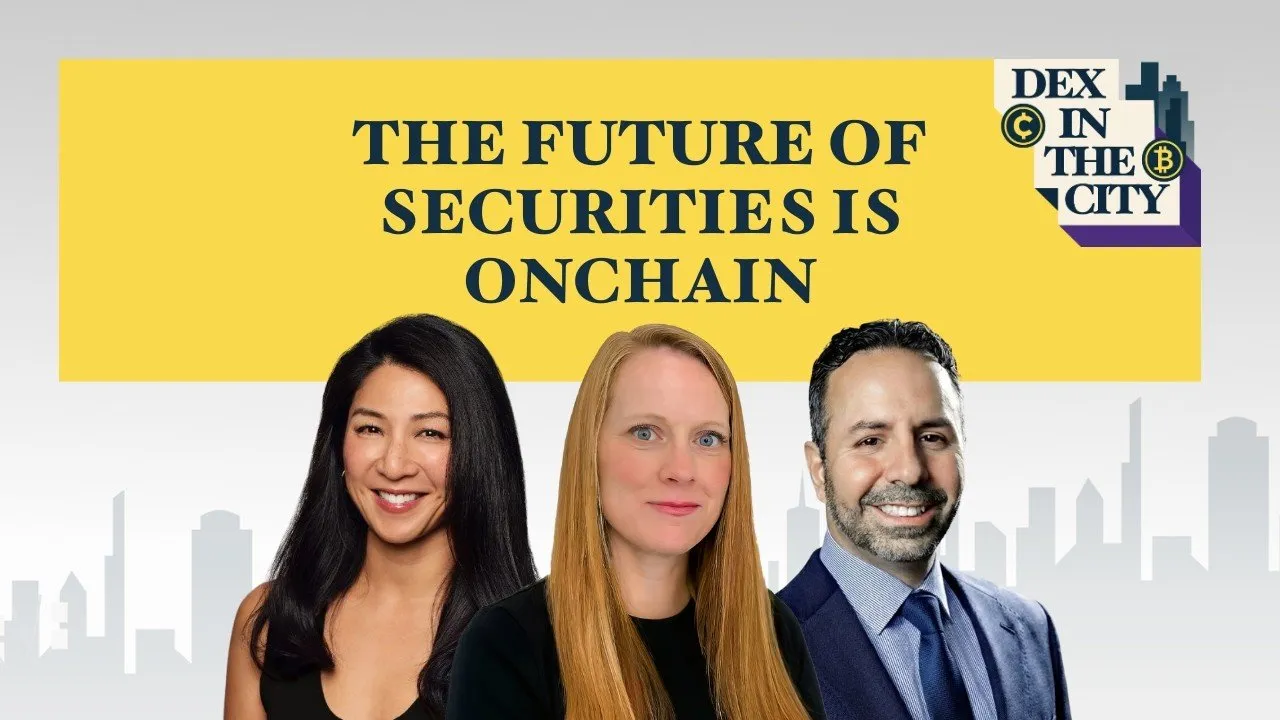
In this analysis, we explore insights from Alex Sosos, General Counsel at Superstate and a former attorney for the SEC’s Division of Trading and Markets. Drawing from his unique experience bridging the gap between federal regulation and Web3 innovation, we dissect what the shift to tokenized equity means for investors, regulators, and the legacy institutions scrambling to adapt.
Key Takeaways
- The "Plumbing" Matters: Understanding tokenization requires looking beyond the SEC’s Enforcement Division to the Division of Trading and Markets, which oversees the mechanical infrastructure of settlement and clearing.
- Tokenization Models Vary: Not all tokenized assets are created equal. There is a distinct difference between "receipt tokens" (similar to ADRs) and digitally native shares managed via transfer agents.
- Incumbents are Mobilizing: Major players like the DTCC and NYSE are no longer sitting on the sidelines; they are actively building sandboxes and platforms to integrate blockchain technology to avoid becoming obsolete.
- Regulatory "Form-Fitting": The future of regulation may move away from blunt instruments like broker-dealer registration toward "form-fitting" rules that recognize the transparency and atomic settlement capabilities of blockchain.
- Parallel Systems: We are likely entering an era where legacy off-chain markets and new on-chain markets run in parallel, allowing competition to determine the superior infrastructure.
The Regulatory Plumbing: Inside the Division of Trading and Markets
To understand why the digitization of stocks is such a heavy lift, one must understand the internal architecture of the Securities and Exchange Commission (SEC). While the headlines are often dominated by the Division of Enforcement, the true mechanics of market structure are governed by the Division of Trading and Markets.
While the Division of Corporation Finance handles disclosures and IPOs (the Securities Act of 1933), Trading and Markets oversees the secondary trading of securities (the Securities Exchange Act of 1934). This division manages the "plumbing" of the U.S. capital markets—the exchanges, clearing agencies, and self-regulatory organizations (SROs) that ensure trades settle correctly.
The challenge for crypto innovation is that these foundational laws were written in the 1930s to regulate a paper-based system. The current push for tokenization is effectively an attempt to upgrade the wheels of the car while it is moving down the highway.
There was this really big congressional action in 1975 called the 75 Amendments... explicitly created... the national market system. It says there needs to be a national market system that has interconnectivity... that is exactly what blockchain technology is right now.
Why Tokenize? Beyond Efficiency
If the regulatory hurdles are so high, why are issuers and institutions pursuing tokenization? The value proposition extends far beyond simple cost-cutting. Tokenizing assets provides them with "crypto superpowers," fundamentally changing how they can be used in a portfolio.
Programmability and Utility
Tokenized securities offer atomic settlement, which eliminates the counterparty risk inherent in the standard T+1 or T+2 settlement cycles. However, the true unlock lies in programmability. Once an asset is on-chain, it can be integrated into smart contracts, allowing for use cases such as:
- DeFi Integration: Using tokenized treasury bills or equities as collateral in decentralized lending protocols.
- Instant Settlement: Reducing the capital costs associated with waiting for funds to clear.
- Self-Custody: Giving investors direct ownership and mobility of their assets, rather than holding them beneficially through a broker.
Different Approaches to Tokenization
As the market matures, distinct models for bringing real-world assets (RWAs) on-chain are emerging. It is critical for investors to understand the legal nuances between them.
The "Receipt Token" Model
Some issuers use a model similar to American Depositary Receipts (ADRs). In this scenario, the investor holds a token that acts as a receipt for shares held elsewhere, often in a jurisdiction outside the United States. While this allows for exposure, it introduces counterparty risk and does not always convey direct governance rights to the token holder.
The "Native" Transfer Agent Model
Entities like Superstate and Securitize are pioneering a "Back to the Future" approach. By acting as the transfer agent, these firms maintain the official shareholder register directly. When a token moves from Wallet A to Wallet B, the smart contract automatically updates the master record of ownership.
This model revitalizes the role of the transfer agent, which had been diminished by the centralization of the Depository Trust Company (DTC). It allows for a compliant, regulatory perimeter where the issuer knows exactly who holds their securities, while still enabling the peer-to-peer transfer benefits of blockchain technology.
The Incumbents Enter the Chat: NYSE and DTCC
The most significant signal of validity for the tokenization space is the entry of legacy financial giants. The New York Stock Exchange (NYSE) and the Depository Trust & Clearing Corporation (DTCC) have historically held monopolies on trading and settlement, respectively. Their recent moves suggest an "evolve or die" mindset.
DTCC's Sandbox
The DTCC recently acquired a "no-action" letter from the SEC to operate a sandbox for tokenized securities. This allows them to experiment with digital representations of assets without adhering to every stricture of Regulation Systems Compliance Integrity (Reg SCI) immediately. While this is a positive step for innovation, it also highlights a defensive strategy to retain their central role in clearing and settlement.
NYSE's Shift to 24/7 Trading
The NYSE’s exploration of 24/7 trading on a blockchain-based platform is a direct acknowledgment that the traditional 9:30 AM to 4:00 PM trading window is antiquated. In a global, digital economy, markets do not sleep. By leveraging distributed ledger technology, the NYSE aims to offer the liquidity and accessibility of crypto markets within a regulated wrapper.
The "Project Crypto" Theory: Rethinking Regulation
There is a compelling theory that the current regulatory friction regarding crypto isn't just about digital assets—it is a Trojan Horse for a broader rethinking of market structure. This concept, often referred to as "Project Crypto," suggests that blockchain is merely the catalyst for questioning whether existing intermediaries are necessary.
Current regulations, such as those governing broker-dealers, are often "blunt instruments" designed to mitigate risks like misappropriation and conflicts of interest. However, blockchain technology solves many of these risks intrinsically through transparency and self-custody.
Project Crypto is a means to an end of taking a more holistic view of not necessarily using blunt instruments, but form-fitting operations to the risks that they actually present.
If a wallet allows a user to self-custody assets and interact directly with a protocol, does it need to be regulated as a broker-dealer? Proponents argue that we should move toward "form-fitting" regulation—rules that address actual risks rather than forcing new technology into 90-year-old boxes.
Conclusion: A Future of Parallel Systems
We are unlikely to see a sudden "flip of the switch" where TradFi vanishes and everything moves on-chain overnight. Instead, we are entering a period of parallel systems. Traditional certificated securities and book-entry shares at the DTCC will coexist alongside tokenized, programmable assets.
This competition is healthy. It allows the market to decide which infrastructure offers better liquidity, lower costs, and superior utility. While incumbents like high-frequency trading firms may resist the change due to the profitability of the current inefficiencies (such as those found in Reg NMS), the trajectory toward a faster, more transparent market structure appears inevitable.