Table of Contents
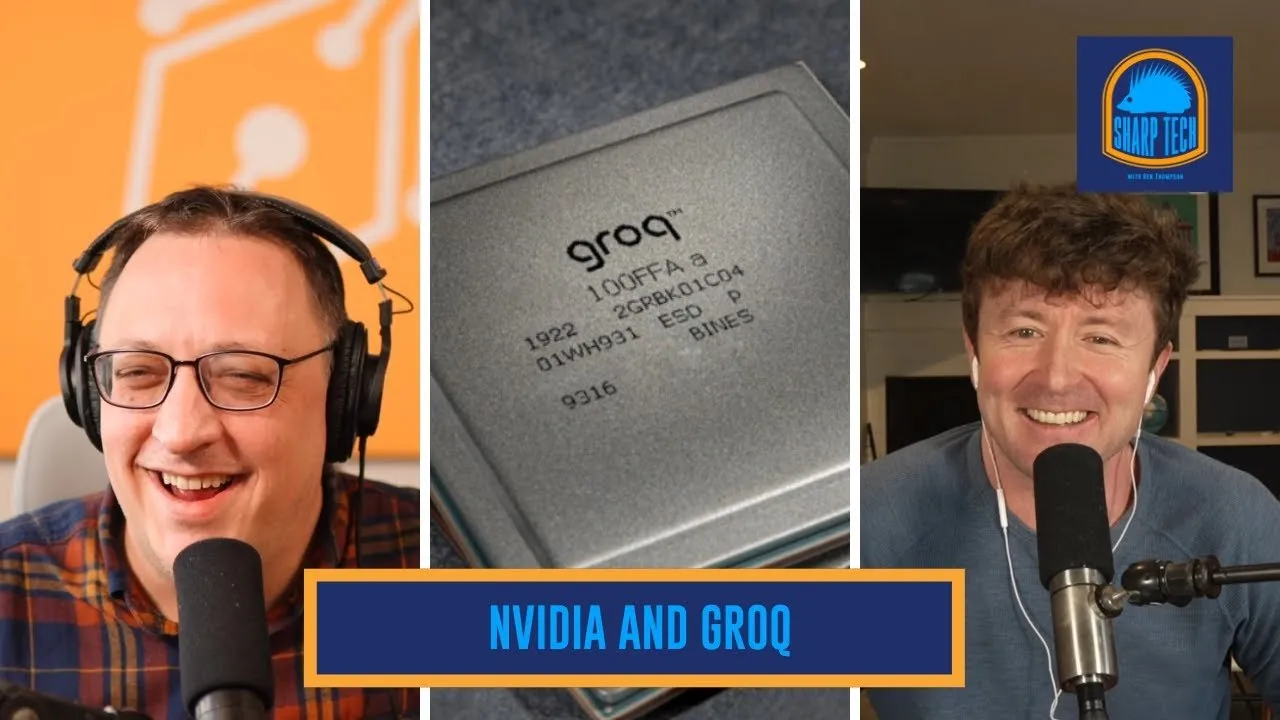
On Christmas Eve, Nvidia solidified its dominance over the artificial intelligence landscape by securing a non-exclusive licensing deal with AI startup Groq, a move that integrates cutting-edge inference technology into Nvidia’s ecosystem while absorbing key technical talent. The agreement allows the semiconductor giant to incorporate Groq’s specialized chip architecture—designed for ultra-low latency processing—into its future product lines, further diversifying its hardware capabilities beyond traditional GPUs.
Key Points
- Strategic Licensing: Nvidia has licensed Groq’s next-generation chip architecture and hired a significant portion of its engineering team, though Groq will remain an independent entity with a new CEO.
- Technological Shift: The deal gives Nvidia access to "deterministic computing" technology, which utilizes SRAM for significantly faster inference speeds compared to traditional DRAM-based GPUs.
- Regulatory Evasion: Analysts describe the deal structure as a "pseudo-acquisition," designed to bypass antitrust scrutiny while effectively transferring Groq’s intellectual property and human capital to Nvidia.
- Market Impact: The integration addresses the growing demand for real-time, low-latency AI applications, such as instant voice response and personalized advertising.
The Shift to Deterministic Computing
At the heart of this agreement is a fundamental difference in how AI calculations are processed. While Nvidia’s market-leading Graphics Processing Units (GPUs) rely on high-bandwidth memory (HBM) and dynamic RAM (DRAM), Groq’s architecture utilizes a "software-defined" approach paired with Static RAM (SRAM) directly on the chip.
According to Ben Thompson, author of Stratechery, this distinction is akin to the difference between a standard driver navigating a gas station and a Formula 1 pit crew.
"If you can predefine everything, it's going to be way faster than dealing with uncertainty... Groq takes that to the extreme where the idea is if you know exactly what the calculation that you're running is, there's no ifs, ands, or buts. You're just running a very straightforward calculation. The way to make that run the absolute fastest is to define where every single thing is."
Traditional GPUs are somewhat probabilistic; they must constantly refresh memory and search for data locations, introducing micro-latencies. Groq’s architecture is deterministic: the compiler knows the exact physical location of every bit of data at every moment. This eliminates the need for memory refresh cycles and dramatically increases speed, making it ideal for applications requiring instant responses, such as real-time conversational AI.
Integrating Speed with Scale
Despite its speed, Groq’s architecture faced a significant hurdle: memory capacity. Because SRAM is integrated directly onto the chip die, it is expensive and space-inefficient compared to external memory. This limited Groq’s ability to run massive Large Language Models (LLMs) with large context windows without linking hundreds of chips together.
By bringing this technology under the Nvidia umbrella, the industry giant can leverage its manufacturing prowess. Nvidia can potentially produce these designs on TSMC’s advanced 2nm process, significantly improving density and performance. Furthermore, Nvidia aims to abstract the complexity of Groq’s software-defined hardware using layers similar to its proprietary CUDA platform, making the technology more accessible to developers.
The "Vera Rubin" Context
The deal complements Nvidia’s broader hardware roadmap. Alongside this low-latency technology, Nvidia continues to develop massive scale solutions, such as the upcoming "Vera Rubin" architecture. These servers reportedly incorporate dedicated solid-state drives (SSDs) to handle massive Key-Value (KV) caches, solving for the massive context windows required by "thinking" models, while Groq-derived tech handles rapid-fire inference tasks.
Regulatory Implications and Deal Structure
The structure of the agreement—a licensing deal accompanied by the hiring of key staff—mirrors recent trends in Silicon Valley designed to navigate an aggressive antitrust environment. Rather than a traditional acquisition, which would likely face intense review from the Department of Justice, Nvidia opted for a partnership that leaves Groq legally independent but operationally diminished.
Industry observers argue that this "acqui-hire" model is a direct result of regulatory overreach that has frozen standard mergers and acquisitions.
"This is the one that probably needs the regulatory review... The reality is Groq's approach was unique. Nvidia could not match it without building their own version... It was a legitimate competitor that Nvidia was just able to not buy, but effectively buy. And because they can bring so much to bear, it doesn't matter that Groq is still a standalone entity."
Despite the high premium Nvidia likely paid—leveraging its $23 billion in quarterly free cash flow—the move effectively neutralizes a potential competitor by bringing its unique architectural advantages in-house. This consolidation suggests a future where the AI hardware market becomes increasingly fragmented technically, yet commercially centralized under Nvidia’s leadership.
As 2025 unfolds, the industry will watch closely to see how quickly Nvidia can integrate Groq’s deterministic IP into its silicon, potentially widening the gap between itself and competitors like AMD and Intel in the race for real-time AI supremacy.