Table of Contents
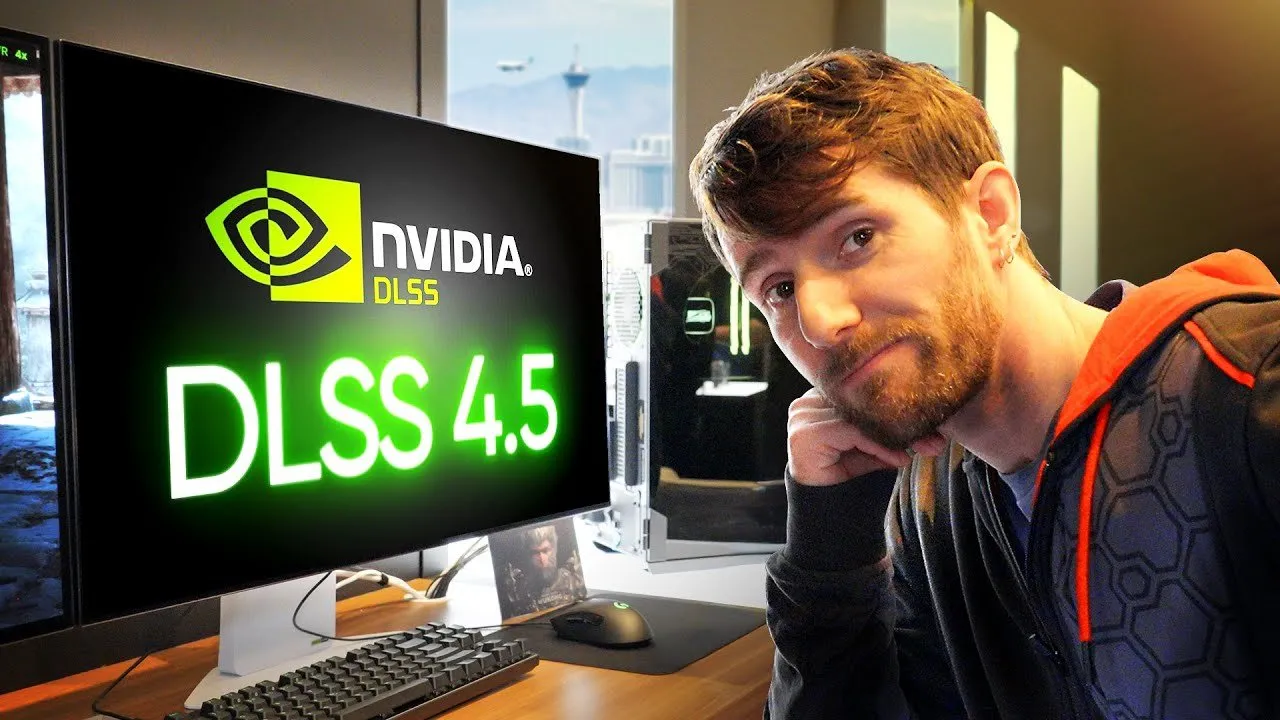
Nvidia has unveiled a significant evolution in its graphics rendering technologies with the introduction of DLSS 4.5 and G-Sync Pulsar, aiming to bridge the gap between native rendering and AI-assisted performance. The announcement highlights a second-generation transformer AI model designed to deliver a "generational leap" in upscaling quality, alongside a new Dynamic Frame Generation feature that prioritizes native frames to reduce latency and visual artifacts.
Key Points
- DLSS 4.5 features a new AI model trained with five times the compute power of its predecessor, offering sharper visuals and better HDR handling.
- Dynamic Frame Generation intelligently toggles frame generation on and off to lock framerates to a monitor’s refresh rate without unnecessary processing.
- G-Sync Pulsar introduces advanced backlight strobing to IPS monitors, claiming motion clarity equivalent to a 1,000 Hz display.
- The new upscaling model supports all RTX GPUs, while advanced multi-frame generation features are exclusive to the new 50-series cards.
A New Standard for AI Upscaling
The core of the DLSS 4.5 update is Nvidia’s second-generation transformer AI model. According to the company, this model was trained using five times the computational resources of the version introduced with DLSS 4. According to early tests, this increased training volume results in image quality that aligns much closer to "ground truth"—rendering reference images at a quality far higher than typical real-time anti-aliasing.
While the new model introduces a slight performance overhead of approximately 2% to 3%, the visual improvements are substantial. The technology reportedly resolves previous issues with "boiling" artifacts and blurring, particularly in complex particle effects and foliage. The improved definition allows users to potentially utilize "Performance" modes to maximize framerates while maintaining image quality comparable to higher-quality settings on previous iterations.
Dynamic Frame Generation
Nvidia is addressing long-standing criticisms regarding latency and visual artifacts in frame generation with a new feature: Dynamic Frame Generation. Unlike previous iterations that applied frame generation indiscriminately, this technology is designed to minimize the use of artificial frames.
The system prioritizes natively rendered frames, activating generation only when necessary to fill gaps and lock the framerate to the display's refresh rate. This approach aims to eliminate stutters during intensive rendering scenarios while avoiding the latency penalties associated with constant frame generation.
"It is literally a feature that they built to minimize the use of frame gen, opting instead for real frames wherever possible and using frame gen to fill in the gaps where it's needed."
For users with the latest hardware, Nvidia also introduced 6x frame generation, exclusive to the RTX 50-series GPUs. This capability can generate up to five frames for every natively rendered one, significantly boosting smoothness, though it comes with a noted 5 to 7 millisecond increase in latency.
G-Sync Pulsar and Display Technology
Beyond graphics processing, Nvidia launched G-Sync Pulsar, a display technology targeting motion clarity on IPS monitors. By utilizing variable frequency strobing, Pulsar aims to mitigate the motion blur inherent in LCD pixel transitions.
The technology uses horizontal backlight sections that pulse consecutively from top to bottom. This method ensures all pixels are strobed for an equal duration, preventing the uneven brightness and flickering often associated with traditional backlight strobing. Nvidia claims this results in motion clarity comparable to a 1,000 Hz refresh rate, maintaining brightness levels that previous implementations often sacrificed.
Availability and Rollout
Nvidia is moving quickly to deploy these technologies. The DLSS 4.5 upscaling model is available immediately for over 400 supported games via the Nvidia app, with full in-game menu integration expected to roll out over the coming months.
G-Sync Pulsar will be available on select monitors starting January 7. Initial hardware partners for the new display technology include AOC, ASUS, MSI, and Acer.