Table of Contents
Since late 2022, the software industry has faced a pivotal moment of existential questioning. From the investor community to enterprise customers, a single narrative has dominated the conversation: in an era where artificial intelligence can generate code and replace workflows, what is the future of the traditional software stack? The "bear thesis" suggests that value is migrating exclusively to hyperscalers and foundation models, leaving SaaS applications vulnerable. However, a deeper look at enterprise durability suggests a different reality.
In a recent live recording of the No Priors podcast, Sarah Guo sat down with CJ Desai, President and CEO of MongoDB, to dissect these anxieties. Drawing from his leadership experience at ServiceNow, Cloudflare, and now MongoDB, Desai offers a pragmatic roadmap for building durable software companies. The discussion moves beyond the hype of "vibe coding" to address the structural realities of enterprise moats, the necessity of speed during technology transitions, and why the data layer remains the most resilient component of the modern stack.
Key Takeaways
- Platforms displace products: Durable revenue growth beyond $10 billion is reserved for companies that evolve from single tools into sticky, multi-product platforms.
- Speed is the primary defense: During major technology shifts—like Mobile, Cloud, or AI—incumbents survive only by pivoting immediately and aggressively.
- The Data Layer is constant: While the application layer evolves and models commoditize, the underlying data infrastructure remains a non-negotiable necessity.
- Enterprise friction creates value: "Vibe coding" allows for rapid app creation, but regulatory compliance, security, and governance remain significant barriers to entry that favor established players.
The Distinction Between Products and Platforms
A recurring theme in the software industry is the difficulty of scaling past specific revenue milestones. While many companies achieve success in the $100 million to $1 billion range, the number of pure-play software companies exceeding $10 billion in revenue remains in the single digits. Desai attributes this ceiling to the fundamental difference between a product and a platform.
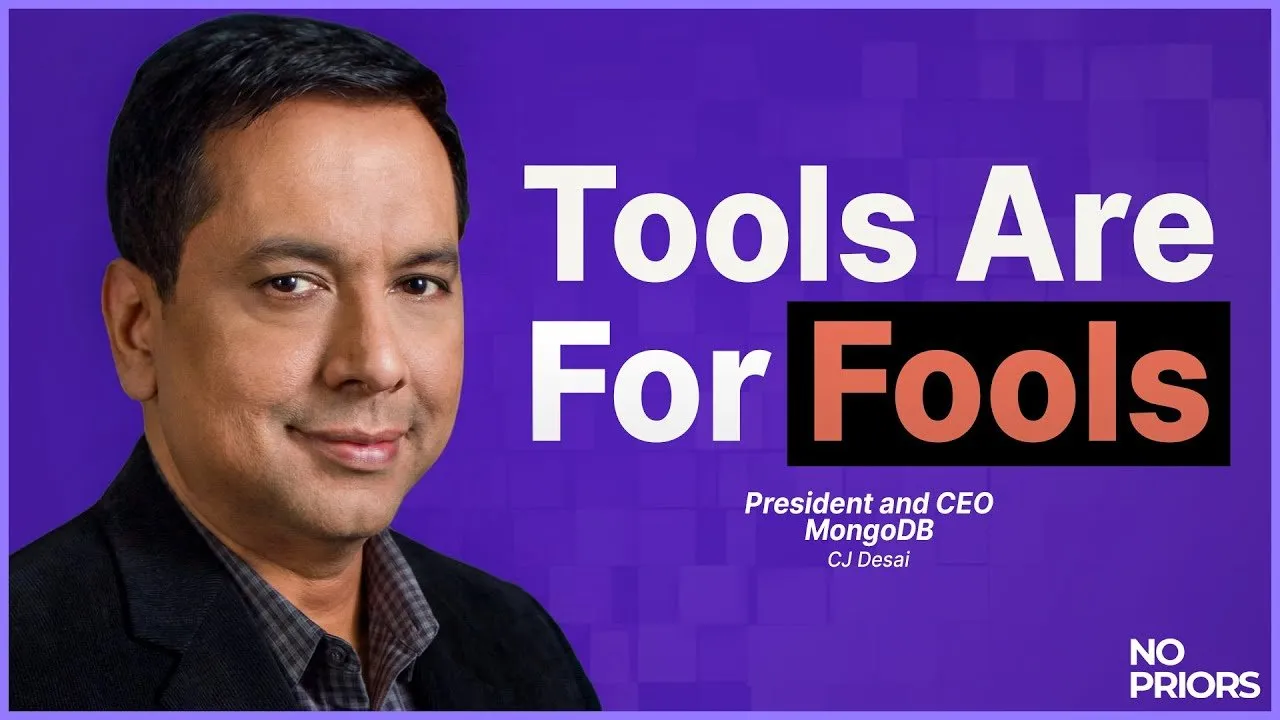
The "Tools are for Fools" Philosophy
Products are inherently replaceable. In a fast-moving disruptive market, a better tool can easily displace an incumbent. However, platforms create stickiness through integration and scope. When a customer adopts a platform, they are not just buying a utility; they are making a thoughtful architectural decision that involves multiple products working in unison.
Platforms are sticky; products are not. No matter which software company you create today in the world of the age of AI or you created in the past, products can be replaced. My hiring manager at ServiceNow, Frank Slootman, used to say tools are for fools.
Escaping the Single-Product Wedge
Startups often enter the market with a "wedge"—a killer initial use case that disrupts a specific function. While this is necessary for entry, relying on a wedge creates a vulnerability: the same ease of entry allows competitors to disrupt the incumbent just as easily. To achieve durability, companies must expand from a single use case (N=1) to a suite of interconnected solutions (N=2+). This expansion embeds the software into the fabric of the client's infrastructure, making it difficult to rip and replace.
Navigating the Investor "Bear Thesis" on SaaS
The current investment climate is defined by anxiety regarding the application layer. Capital has shifted heavily toward AI infrastructure and models, driven by the fear that generative AI will erode the value of traditional SaaS. Desai argues that this fear is overblown, provided that software leaders understand where value actually accrues in the new stack.
The Durable Elements of the Stack
When analyzing the future software stack, certain layers appear immutable. Large Language Models (LLMs) will persist as a core component, as will the agentic frameworks built upon them. Equally critical is the data layer. Regardless of how applications are generated or interacted with, the unstructured data that fuels AI needs a secure, scalable home.
The companies most at risk are those that fail to demonstrate "reacceleration." Investors are looking for proof that AI is not just an efficiency tool for the vendor, but a growth driver that helps them innovate faster and sell more. If a company cannot prove that AI is accelerating their own trajectory, the market remains skeptical.
The Reality of Enterprise Adoption
There is a disconnect between the speed of AI innovation in the startup ecosystem and the reality of deployment in the Fortune 500. While "vibe coding" and AI-assisted development allow for the rapid creation of applications, getting those applications deployed in highly regulated environments is a different challenge entirely.
Regulatory Moats
For large enterprises in banking, healthcare, and the public sector, the speed of app generation is secondary to compliance. A bank is far more concerned with regulatory audits, air-gapped security, and multi-cloud resiliency than it is with how quickly an app was coded. This creates a natural defensive moat for incumbents who have already passed these rigorous governance checks.
Will this work? Will it pass our regulatory test? We need resiliency... I really need for this banking application to be truly sandboxed or, a better way to say it is, an air-gapped network. These are enterprise-class things that you need where the TAM is.
The "Build vs. Buy" Shift
Interestingly, the AI era is prompting some large enterprises to reconsider their reliance on off-the-shelf SaaS for core functions. Desai notes that some major retailers and European firms, frustrated with expensive and failed ERP implementations, are choosing to build bespoke solutions on top of data platforms like MongoDB. This suggests a hybrid future where enterprises buy platforms to build their own disruptive internal applications, rather than buying rigid SaaS products.
Leadership in Times of Transition
Successfully navigating the shift to AI requires more than just technical strategy; it requires a specific leadership mindset. The history of technology is littered with companies like Nokia and BlackBerry that failed not because they lacked resources, but because they failed to recognize the speed of transition.
Speed and Customer Intimacy
The only option for incumbents is to lean in aggressively. Waiting for the technology to mature is a failing strategy. Desai emphasizes that the most effective product leaders are those who maintain intense proximity to their customers. By understanding not just how a customer uses a product, but the broader business pains they face, leaders can see "around corners" and anticipate shifts before they become existential threats.
You cannot be a great product and engineering person unless you speak to customers all the time... That will allow you to not only do a pattern match but see around the corner.
Conclusion
The software industry is undoubtedly in a period of upheaval, but the terminal value of software is far from zero. The "bear thesis" overlooks the complexity of enterprise environments and the enduring necessity of data management. For founders and CEOs, the path to $10 billion in revenue remains the same: move faster than the market during transitions, evolve from products into platforms, and solve the messy, unglamorous problems of security and compliance that high-value customers demand.