Table of Contents
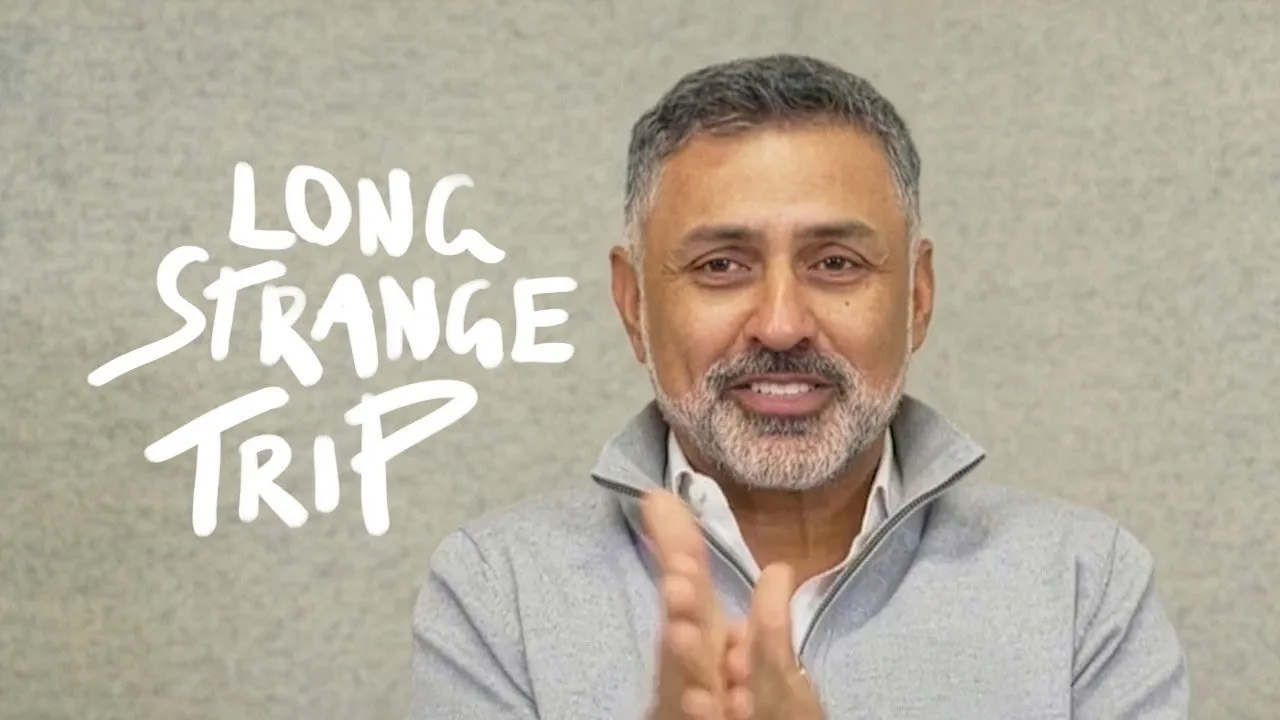
When Nikesh Arora took the helm at Palo Alto Networks, he was a declared outsider. He wasn’t a cybersecurity expert; by his own admission, he didn’t initially know that "cybersecurity" was a single word. Yet, under his leadership, the company has transformed from a firewall vendor into a comprehensive platform giant, achieving a market capitalization that dwarfs its competitors.
Arora’s journey—from his time at Google and SoftBank to leading one of the world’s largest security firms—offers a masterclass in leadership that transcends industry expertise. His approach combines ruthless business logic, a unique M&A playbook, and lessons learned from tech titans like Larry Page and Masayoshi Son. For founders and executives alike, Arora’s tenure proves that sometimes the freshest perspective comes from someone who hasn't been in the trenches from day one.
Key Takeaways
- The Outsider Advantage: Lacking domain expertise can be a superpower, allowing leaders to ask fundamental business questions that industry veterans overlook.
- A New M&A Playbook: Successful acquisitions require integrating founders as leaders of the new division, rather than subordinating them to existing executives.
- Platform over Point Solutions: In fragmented markets, consolidation is key. Customers ultimately prefer integrated platforms over stitching together dozens of disparate tools.
- The "Swing Big" Mentality: Risk management leads to average market returns; only aggressive risk-taking leads to legendary outcomes.
- Sustainable Intensity: High performance doesn't require "996" burnout culture; it requires context switching, focus, and protecting personal time.
The Virtue of the Outsider Perspective
There is a pervasive belief in Silicon Valley that a CEO must be a deep subject matter expert to succeed. Nikesh Arora challenges this notion. When he joined Palo Alto Networks, he didn't attempt to fake technical knowledge. Instead, he leaned into his background as a business operator to identify inefficiencies that technical leaders had accepted as the status quo.
Upon arrival, Arora found 600 engineers working on 60 new features for a firewall software update. His question was simple: "How will our salespeople sell 60 new features?" When the engineering team couldn't list past the 37th feature, Arora realized the disconnect between product development and go-to-market strategy. He redirected resources toward solving a specific, high-value problem—DNS security—which became the company’s first major innovation under his watch.
"I had to keep my insecurities inside me... Sort of be like a duck, you know, like be serene on top but paddle furiously underneath."
By asking the "dumb" questions, Arora forced the organization to justify its roadmap based on business outcomes rather than just technical capability. This shift from feature-bloat to strategic value creation was only possible because he wasn't attached to the way things had always been done.
Rewriting the Rules of M&A
Palo Alto Networks has executed over 25 acquisitions, a strategy that often fails for other tech giants. Arora’s success stems from a counter-intuitive approach to integration that prioritizes talent retention and product acceleration over traditional hierarchy.
Founders Become the Bosses
In a typical acquisition, the founder of the acquired company reports to a generic SVP at the parent company. Arora flips this dynamic. His logic is straightforward: if a startup was beating Palo Alto Networks in a specific niche with fewer resources, that startup's founder clearly understands the market better than the internal team.
Consequently, the acquired founder often takes over the entire business unit, becoming the boss of the internal employees. While this can be unnerving for legacy staff, it empowers the innovator and keeps the entrepreneurial spirit alive within the larger corporation.
The "Unvest" Strategy
Retaining talent is the hardest part of M&A. Founders and early engineers often view an acquisition as the finish line. To combat this, Palo Alto Networks utilizes an "unvesting" strategy. They essentially require founders to roll over a significant portion of their equity, which then vests over three to four years. To sweeten the deal, the company tops this off with additional equity—sometimes 25% to 40% more.
"I say we're buying half product and most talent... I think it takes four to seven years to build a good product in tech."
This ensures that the acquiring company isn't just buying code, but buying the committed time of the architects who wrote it.
The Seller’s Perspective
For entrepreneurs on the other side of the table, this approach highlights the importance of negotiating beyond the headline price. Founders should look to define their role post-acquisition, ensuring they have the autonomy to run the product line. Furthermore, smart founders use the due diligence period to agree on a joint product roadmap before the deal closes, preventing the frustration of having their vision stifled by corporate bureaucracy later.
From Point Solutions to Platformization
The cybersecurity industry is notoriously fragmented, with customers often juggling dozens of disconnected tools. Arora recognized that Palo Alto Networks was only playing in one "swim lane"—firewalls. To grow, the company had to become a platform.
The strategy involved moving into adjacent markets—endpoint security, cloud security, and SOC automation—and stitching them together. The goal was to offer a solution where "1 + 1 = 3," where the integration of tools provided value that disparate best-of-breed solutions could not match. This allows the company to consolidate a customer's vendor list, replacing five or six distinct contracts with a single platform agreement.
For startups, the lesson is stark: you are either building a platform, or you are destined to be eaten by one. While you must start with a specific, innovative wedge (an MVP), the long-term vision must encompass how that product expands into a broader ecosystem.
Leadership Lessons from Tech Titans
Arora’s leadership philosophy is a synthesis of his time working with some of the industry's most legendary figures. He identifies a common thread among them: high standard deviation. These leaders are not well-rounded in the traditional sense; they are obsessive in specific areas that drive outsized results.
- Larry Page (Google): Taught the absolute necessity of product obsession. Page believed that companies fail because they lose sight of building great products. He famously told Arora that he didn't have time to fix sales because he had to focus on product.
- Eric Schmidt (Google): demonstrated how to manage chaos. Schmidt excelled at acting as the interface between visionary founders and the structured requirements of a scaling corporation, translating wild ideas into executable strategies.
- Masayoshi Son (SoftBank): Instilled an appetite for risk. While most people and boards prioritize risk management (which leads to average returns), "Masa" swings big every day. He operates on the belief that you only need a few massive bets to pay off to change the world.
"Swing big, you fail big. If you're a new CEO, why not swing as hard as you can? At the end of the day, if it works out, it's going to work out spectacularly."
The Renaissance CEO: Work-Life Balance and Focus
Despite managing a massive public company, serving on multiple boards, and overseeing aggressive M&A, Arora rejects the "hustle culture" that demands 24/7 availability. He is disciplined about his time, generally avoiding business dinners and reserving weekends for family.
Context Switching as a Superpower
Arora attributes his ability to manage this workload not to long hours, but to rapid context switching. He can absorb a 20-slide deck in under a minute, identify the core problem, and make a decision. This pattern recognition allows him to move through meetings efficiently without getting bogged down in minutiae.
Rejecting the 996 Mentality
There is a growing trend in startups toward the "996" schedule (9 a.m. to 9 p.m., six days a week). Arora argues that this is often a symptom of impatience rather than a requirement for success. He believes that burning out talent does not speed up innovation. Instead, working smarter—and having the psychological safety to take risks—yields better long-term results than brute-forcing hours.
Conclusion
Nikesh Arora’s tenure at Palo Alto Networks serves as a reminder that the principles of great business—product focus, strategic consolidation, and bold risk-taking—are universal. By refusing to be intimidated by a lack of domain expertise, he turned an outsider’s gaze into a competitive advantage, questioning established norms and rebuilding the company into a platform powerhouse. For leaders looking to scale their own ventures, the message is clear: don't just manage risk; swing big, back your team, and never lose sight of the product.