Table of Contents
Key Takeaways
- The Ubermensch as a Future Species: Friedrich Nietzsche’s concept of the Ubermensch is not merely a political or psychological ideal, but a blueprint for a future, evolved human state that transcends current biological and social limitations.
- The Mystical Reading of the Canon: Great thinkers throughout history, including Nietzsche, were not merely writing philosophy; they were attempting to encode and transmit profound, non-ordinary states of consciousness through their texts.
- The Filter Thesis: Rather than producing consciousness, the human brain and body act as a filter or a "radio," mediating a broader, cosmic consciousness. Madness or extreme aesthetic practices can sometimes "break" this filter, allowing deeper insights to emerge.
- The Reality of Precognition and Eternal Recurrence: Concepts like eternal recurrence are not just thought experiments; they reflect a deeper, non-linear understanding of temporality where future and past events are inextricably linked.
- The Superhumanities: The study of literature and culture should be reimagined as the study of these transmitted altered states, bridging the gap between scientific materialism and mystical experience.
The Ubermensch: An Evolution Beyond Humanity
In the common academic consensus, Friedrich Nietzsche’s Ubermensch is often reduced to a value-creating individual or an anti-egalitarian political figure. However, a more radical, mystical reading suggests that Nietzsche was gesturing toward something far more profound: a fundamental ontological shift. We are currently a transitional species, existing on a tightrope between our animal past and a superhuman future.
This future state is not something Nietzsche expected us to reach through random Darwinian selection. Instead, he saw a central role for the will—a deep-seated spiritual seekership that shapes the very fabric of our being. While Nietzsche was fierce in his writing, his life was marked by suffering and sensitivity, suggesting that these superhuman insights are often birthed from the very traumatic secrets and illnesses that modern society seeks to categorize as mere pathology.
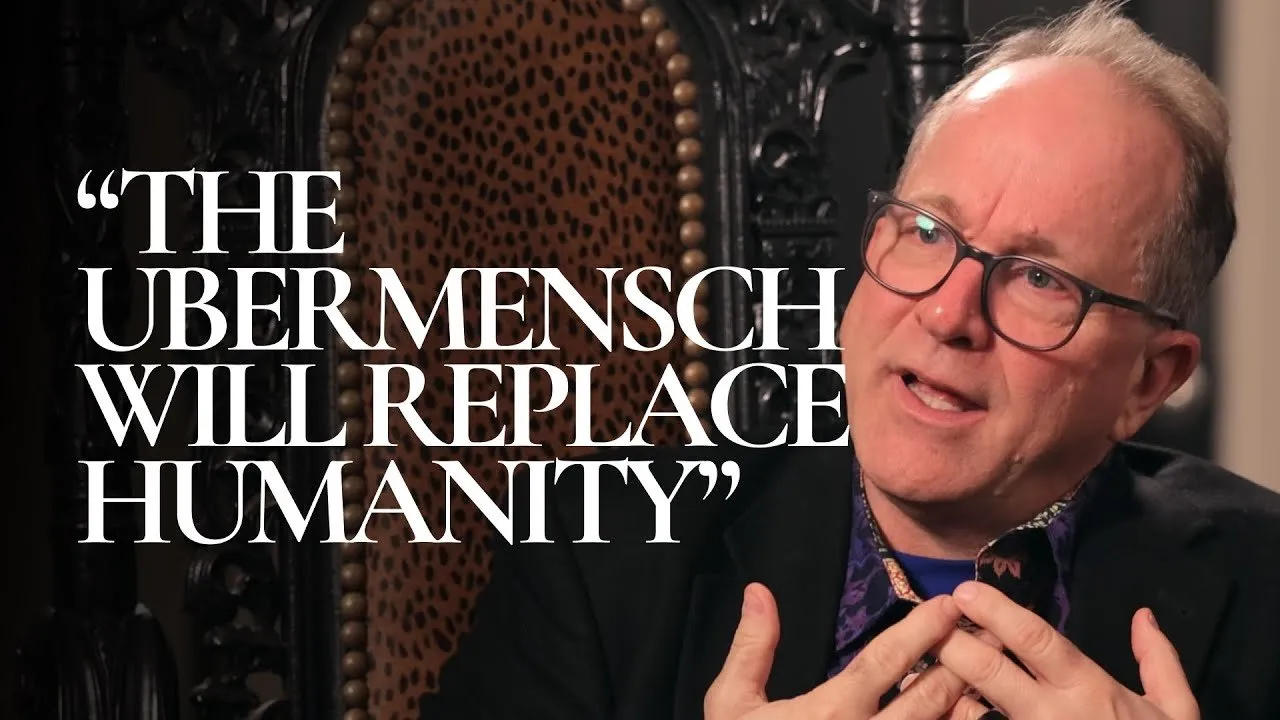
"The Ubermensch is the future human. It's where humanity is evolving or transitioning toward and we are transition." — Jeff Kripal
The Esoteric Transmission of Ideas
A transformative shift in understanding occurs when we stop viewing philosophical texts as simple, static arguments and start seeing them as transmitters of altered states. Throughout history, great thinkers have claimed their insights were not the product of dry logic but of direct, mystical revelations. When a reader engages deeply with a text like Thus Spoke Zarathustra, they are not just absorbing information; they are potentially entering the same ecstatic state that the author inhabited while writing it.
The Verticality of Thought
Many traditional interpretations of philosophy focus on the "horizontal" reading—analyzing history, politics, and social structures. The "vertical" dimension, however, acknowledges that insight comes from an encounter with something transcendent. Whether it is an experience in a foreign land or a moment of clarity while hiking a mountain path, this verticality connects the thinker to a deeper life force. This is the difference between being a "first-floor" thinker, confined by social norms, and accessing the "second floor" of cosmic potential.
Madness, Suffering, and the Cosmic Signal
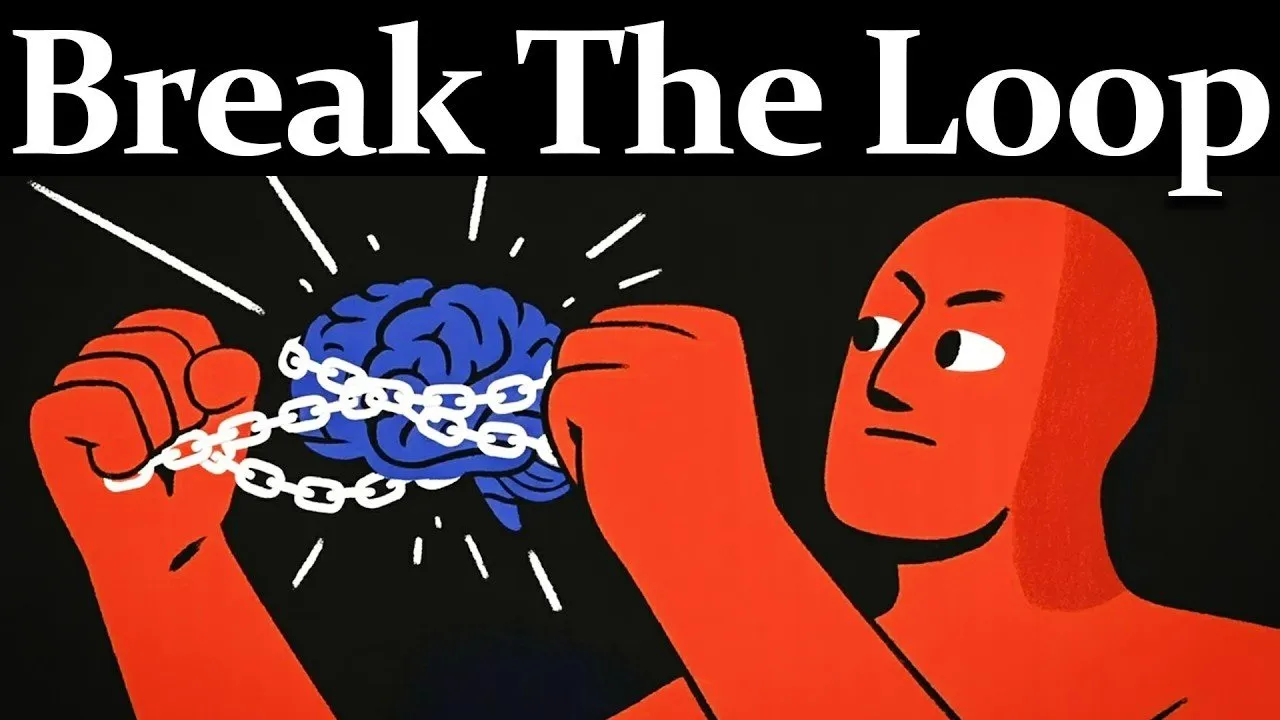
There is a dangerous, seductive invitation in the work of mystical thinkers: to not fit in. Modernity traps individuals in a herd mentality, prioritizing a superficial definition of health and happiness. Critics might argue that this rejection of social integration leads to madness, but the history of philosophy suggests a more complex relationship. As the "filter thesis" proposes, the brain does not produce consciousness; it filters it. Therefore, damaging or "messing up" the radio can sometimes allow the cosmic signal to come through more clearly.
"I so wish that you're not happy, that you're not normal. I want you to be totally messed up, and I want you to be really interesting." — Jeff Kripal
This is not to romanticize mental illness or suggest that these states are always functional for the individual. Many who experience such radical transformations pay a heavy personal price. Yet, these experiences are the source of the breakthroughs that define our great cultural and religious traditions. It is a paradox of the human condition: to see the truth often requires shattering the lens through which we typically view the world.
Temporality and the Block Universe
Modern science and mystical experience seem to converge on a startling view of time: the block universe. If the past, present, and future already exist as a fixed whole, then our experience of linear time is an illusion generated by our biological limitations. This framework provides an empirical basis for phenomena like precognition, which appear impossible only if one assumes causality must flow strictly from the past to the present.
When Nietzsche writes of eternal recurrence, he is not just proposing a mental exercise for evaluating one's life. He is describing a reality where circularity is built into the structure of time. By "willing backwards" or engaging with our future selves, we acknowledge that the connections we make are not mere accidents, but a manifestation of a deeper, single substance—a cosmic spirit that integrates everything into one coherent, albeit vast, reality.
Conclusion
The call to realize our superhuman potential is a rejection of the materialist worldview that reduces us to mere biological machines. By recognizing that our greatest thinkers were not just philosophers, but mystics transmitting glimpses of a higher reality, we reclaim the humanities as a vital, transformative discipline. While we may live as "muggles" on the first floor of social reality, the second floor—and the superhuman consciousness it represents—remains the true telos of our existence. Ultimately, the invitation is to listen to the signal, embrace the tension of our contradictions, and remain open to the idea that we are part of an evolutionary process far greater than our current definitions of humanity can hold.