Table of Contents
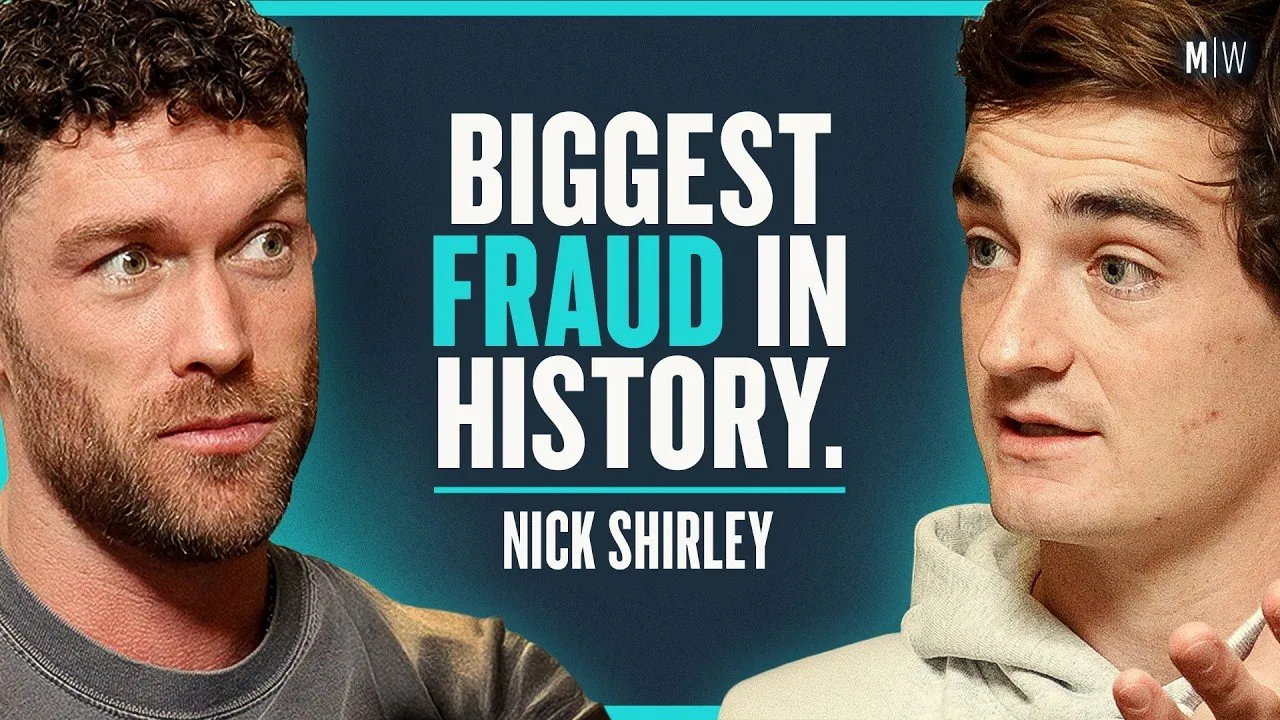
When independent journalist Nick Shirley uploaded a documentary exposing alleged welfare fraud in Minnesota, he expected a reaction, but perhaps not a national firestorm. Within 72 hours, the video amassed over 100 million views, captured the attention of high-profile figures like Elon Musk and JD Vance, and triggered immediate federal scrutiny. The investigation, which centered on what Shirley describes as "ghost" daycare centers and fraudulent medical transportation companies, has since spiraled into one of the most significant stories regarding government inefficiency and corruption in recent years.
The implications of this investigation extend far beyond viral metrics. It has raised serious questions about oversight in state-funded programs, the culpable negligence of political figures, and the dangerous reality facing independent journalists who challenge established narratives. Below, we break down the mechanics of the alleged scheme, the political fallout, and the future of this unfolding investigation.
Key Takeaways
- The "Ghost" Economy: The investigation uncovered a network of daycare centers, adult care facilities, and autism centers in Minnesota receiving millions in government funding despite appearing empty or non-operational.
- Explosive Viral Impact: Shirley’s documentary garnered over 100 million views in three days, prompting immediate responses from the Department of Justice and the freezing of childcare funding across the state.
- Systemic Exploitation: The fraud reportedly involves exploiting loopholes in the Child Care Assistance Program (CCAP) and Medicaid, with allegations of cash kickbacks and funds being funneled overseas.
- Political Consequences: The exposure has intensified scrutiny on Minnesota’s leadership, specifically regarding Governor Tim Walz's oversight of the Department of Human Services (DHS).
- High Stakes for Journalism: Following the exposé, Shirley has faced credible death threats, necessitating 24/7 security and highlighting the risks of modern investigative reporting.
The Mechanics of the Minnesota Fraud Scheme
At the heart of Shirley's investigation is a startlingly simple premise: government funds were being allocated to businesses that, upon inspection, appeared to be completely non-functional. The scheme primarily targets welfare programs designed to help the most vulnerable, specifically the Child Care Assistance Program (CCAP) and Medicaid funds for adult daycares and autism centers.
The Phenomenon of "Ghost" Centers
During his investigation, Shirley visited multiple facilities in Minneapolis and St. Paul that were on record as receiving massive government subsidies—some upwards of $3 million to $5 million. What he found on the ground contradicted the paperwork.
Shirley describes visiting centers with blacked-out windows during peak operating hours. In one instance, he visited a facility receiving millions in funding, only to find the doors locked and no children present. At another location, the "Quality Learning Center" (notably spelled incorrectly on their signage as "Learing"), he found a facility that had received nearly $2 million despite having over 90 violations.
"I knocked on the door and I hear a lady talk... I asked, 'Would my son have friends here?' She said, 'No.' And there were no kids, no snow, no footprints in the snow. And she was the only one there. Broad daylight... There should be children inside the daycare."
The Autism Funding Surge
One of the most alarming statistics uncovered involves the exponential growth in funding for autism centers. In a remarkably short period, state funding for autism programs in Minnesota skyrocketed from approximately $1 million to nearly $200 million. While autism diagnoses have risen globally, a 200-fold increase in funding allocation within a specific geographic area raised immediate red flags regarding the legitimacy of these diagnoses and the centers treating them.
The investigation suggests that regulations were loosened significantly, allowing providers to bill the state without proving they had the necessary accreditation or patient load. This created a "gold rush" environment where bad actors could exploit the system with minimal oversight.
Following the Money: Cash, Kickbacks, and Overseas Transfers
The fraud does not stop at billing for non-existent services. The investigation points to a complex system of money laundering and kickbacks. According to Shirley’s sources and footage, there is evidence of a cash-based economy fueling these operations.
A common tactic allegedly involves "kickbacks" to parents. In this scenario, parents enroll their children in these fraudulent centers but do not actually leave them there. In exchange for their complicity—allowing the center to bill the state for the child's care—the parents receive a cash payment. This mutually beneficial fraud allows the "business" to keep the bulk of the government check while the "client" receives a tax-free payout.
International Implications
Perhaps the most disturbing element of the scheme is where the money eventually lands. Reports indicate that large sums of cash, originating from US taxpayer-funded welfare programs, are being moved out of the country. Shirley cites reports of millions of dollars in cash moving through TSA checkpoints, often destined for Dubai, which serves as a financial hub for transfers to Somalia. There are concerns, backed by previous reporting, that a portion of these funds may be reaching terrorist organizations like Al-Shabaab, turning a domestic fraud issue into a matter of national security.
Political Fallout and Federal Response
The release of the documentary caused immediate waves in the political landscape. For years, local whistleblowers had attempted to bring attention to these issues, but it took a viral independent documentary to force the hand of government officials.
The "Walz" Factor
Much of the criticism has fallen on Governor Tim Walz. Shirley argues that Walz has been aware of the fraud since at least 2019 but failed to take decisive action to stop it. The documentary highlights a disconnect between the administration's claims of fighting fraud and the reality of billions of dollars purportedly lost to these schemes.
The exposure has forced a reckoning. Following the video’s release, federal agencies surged investigators into Minnesota. The Department of Human Services (DHS) took the unprecedented step of freezing child care funding for the entire state, demanding that businesses prove their legitimacy before payments could resume. According to Shirley, at the time of the interview, zero businesses had successfully submitted proof to reclaim their funding.
A New Federal Task Force
The impact of the investigation reached the highest levels of the incoming administration. In a breaking development discussed during the interview, JD Vance announced the creation of a new Assistant Attorney General position specifically designed to combat this type of fraud, with nationwide jurisdiction.
"We've actually activated a major interagency task force to make it possible to get to the heart of this fraud... We have over 1,500 subpoenas the Department of Justice has issued to get to the heart of the fraud ring." — JD Vance
Part Two: The Transportation Loophole
While the daycare fraud garnered the initial headlines, Shirley indicates that it is merely one component of a larger ecosystem. The "glue" holding the fraud together appears to be Non-Emergency Medical Transportation (NEMT).
These transportation companies bill the state for driving patients to and from daycare centers, adult care facilities, and healthcare clinics. However, just like the centers themselves, many of these rides allegedly never happen. The transportation logs serve a dual purpose: they generate direct revenue for the transport companies (estimated at $50 per trip), and they create a paper trail that "validates" the attendance of patients at the fraudulent clinics.
Shirley’s upcoming investigation focuses on visiting the registered addresses of these transportation fleets, only to find no vans and no offices. By billing for phantom rides to phantom appointments, these companies syphon an estimated $2 million daily from the state, acting as the logistical backbone of the wider fraud network.
The Cost of Truth: Security and Censorship
Uncovering a multi-billion dollar fraud scheme involving organized crime has come at a significant personal cost to Shirley. Following the video's release, he received credible death threats, including graphic images sent to his personal device and attempts to dox his location.
The danger is not theoretical. The investigation touches on areas with gang activity and high tensions. Consequently, Shirley now travels with 24/7 security, a stark contrast to his previous "run and gun" filming style with just a camera and a microphone. This escalation highlights the precarious position of independent journalists who lack the institutional protection of legacy media corporations.
Mainstream Media Friction
The response from legacy media has been adversarial. Rather than investigating the fraud exposed by Shirley, many outlets focused on debunking his claims or labeling the investigation as politically motivated. This clash represents a broader shift in the information landscape, where independent creators are breaking stories that traditional institutions have either missed or ignored due to political sensitivities.
Conclusion
Nick Shirley’s investigation into the Minnesota fraud scheme serves as a potent example of the power of citizen journalism. By simply going to the locations and asking to see the services taxpayers are funding, he exposed a systemic failure that had gone unchecked for years. The result is a freeze on funding, federal indictments, and a new national task force dedicated to rooting out welfare abuse. As the investigation expands to transportation networks and other states like Ohio and California, it is clear that this is not just a Minnesota story, but a nationwide reckoning with government inefficiency and corruption.