Table of Contents
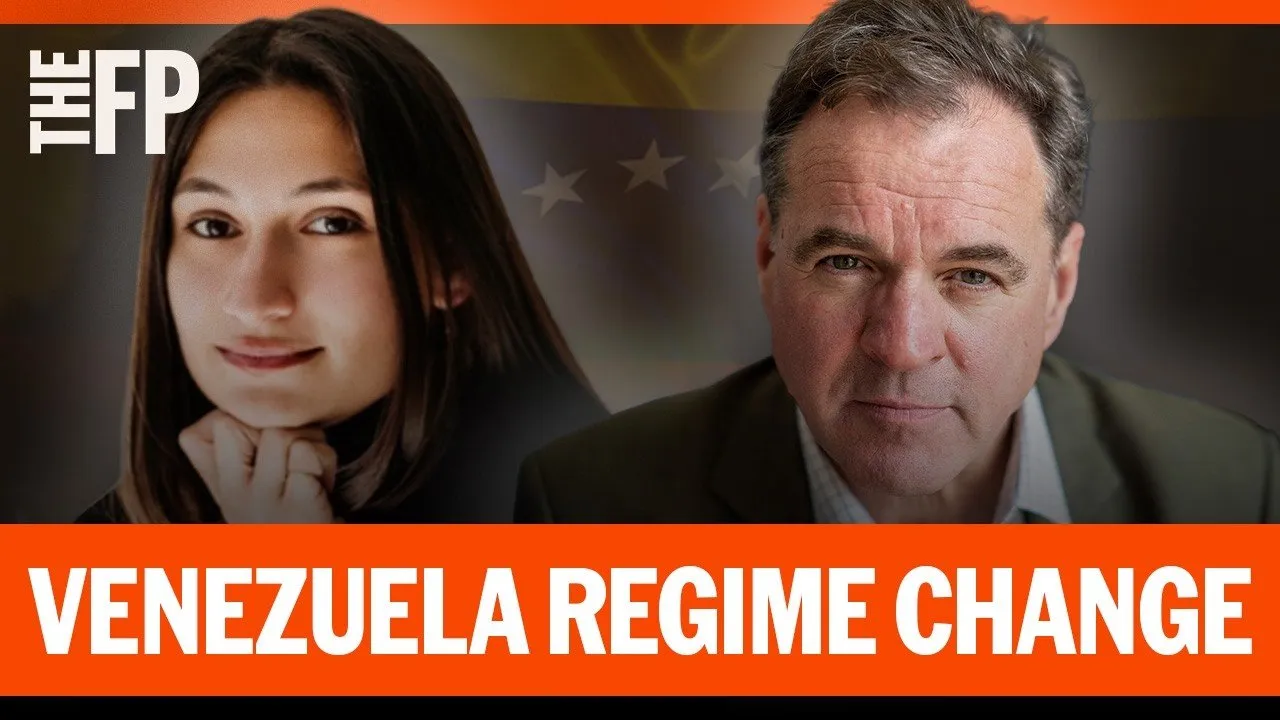
The recent extraction of Venezuelan leader Nicolás Maduro marks a decisive shift in American foreign policy, one that historian Niall Ferguson argues is long overdue. While modern commentators often view such interventions through the lens of recent failures in the Middle East, Ferguson suggests we are witnessing a return to a much older, more assertive American doctrine—one that prioritizes the stability of the Western Hemisphere above all else.
In a detailed discussion regarding the operation, Ferguson places the event not in the context of Iraq or Afghanistan, but within the historical framework of the early 20th century. By analyzing the strategic, economic, and geopolitical implications of this move, we can understand why this surgical strike represents a significant pivot in the ongoing "Cold War II" between the United States and its authoritarian rivals.
Key Takeaways
- The Return of the Roosevelt Corollary: The operation signals a revival of the 1904 doctrine asserting the U.S. right to intervene in Latin American nations that have fallen into chaos or hostility.
- The Cost of Non-Intervention: Ferguson argues that the "liberal" view against intervention ignores the long-term suffering caused by allowing regimes like Castro’s Cuba or the Chavistas to remain in power.
- Surgical Strategy: Unlike the nation-building efforts of the early 2000s, this operation resembles the 1989 extraction of Manuel Noriega in Panama—swift, covert, and reliant on special forces rather than large-scale occupation.
- Geopolitical Impact: The removal of Maduro serves as a significant strategic blow to China and Russia, who have used Venezuela as a client state to challenge U.S. dominance in the region.
- Economic Realism: President Trump’s approach reflects a "19th-century" worldview where foreign policy and economic interests (specifically oil) are openly intertwined, rejecting the pretense of purely humanitarian motives.
Reviving the Roosevelt Corollary
To understand the significance of the Maduro extraction, one must look back to 1904. While the Monroe Doctrine of 1823 warned European powers against colonizing the Americas, it was often a "dead letter" in practice. It was Theodore Roosevelt who gave it teeth with his famous Corollary: the assertion that the United States reserved the right to intervene in any Latin American nation guilty of "chronic wrongdoing."
Ferguson notes that the Trump administration’s recent National Security Strategy explicitly revives this concept. This is not merely a political talking point; it is a strategic reset that rolls back decades of hesitation regarding American power in its own hemisphere.
"To me, that was a remarkable throwback 120 years to a time when the United States openly asserted its right to get rid of any government in Latin America... that it thought was falling short of whatever standards it sought to apply."
For a quarter-century, the Chavista regime transformed Venezuela from a wealthy nation into a failed state, creating a refugee crisis comparable to the Syrian civil war. By acting to remove the regime, the U.S. is reestablishing the boundaries of its sphere of influence.
The Historical Case for Intervention
The prevailing narrative in media outlets like The New York Times has long been that U.S. intervention in Latin America is inherently disastrous and immoral. Critics point to historical unintended consequences in places like Guatemala or Chile to argue for a hands-off approach. Ferguson counters this by highlighting the catastrophic consequences of non-intervention.
The Consequences of Inaction
When the United States fails to act against authoritarian leftist regimes in the region, those regimes tend to entrench themselves for decades. Ferguson points to Cuba and Nicaragua as prime examples. The failure to overthrow Fidel Castro condemned Cuba to over half a century of undemocratic rule and economic stagnation. Similarly, the survival of the Maduro regime allowed Venezuela to spiral into a criminal enterprise run by drug cartels.
The Pinochet Comparison
While acknowledging the brutality of the Pinochet regime in Chile, Ferguson argues that the intervention there ultimately led to a transition to democracy and the creation of the region's strongest economy. This stands in stark contrast to the enduring poverty and tyranny found in nations where the U.S. adopted a passive stance. The argument is not that intervention is clean or easy, but that the alternative—allowing a failed state to fester—often yields worse humanitarian outcomes.
Trump as a 19th-Century Realist
A distinct feature of this operation is the lack of high-minded, Wilsonian rhetoric about spreading democracy. Instead, the justification has been transactional and direct. Ferguson characterizes President Trump not as a modern neoconservative, but as a figure stepping out of the Gilded Age.
In the 19th century, it was considered normal for national interests and commercial interests to overlap. Trump’s open acknowledgment that the U.S. seeks access to Venezuelan energy resources ("good neighbors and good energy") breaks from the diplomatic norms of the post-WWII order, but it reflects a refreshing honesty regarding motives.
"Donald Trump is a 19th-century figure who's not outraged or scandalized... by the idea that there might be some private economic motives involved. The business of America is business."
This approach also manifests in how the operation was conducted. It was not a "forever war" requiring thousands of troops and trillions of dollars. It was a surgical strike using elite special forces—Green Berets and Navy SEALs—to achieve a specific objective. This aligns with a public that supports decisive military wins but has no appetite for protracted occupations.
Geopolitical Shockwaves: China, Russia, and Cold War II
The extraction of Maduro is not just a regional event; it is a major play in what Ferguson calls "Cold War II." Venezuela has long acted as a client state for U.S. adversaries, with China and Russia propping up the regime through loans, arms, and political cover.
Impact on China: This event represents a humiliation for Beijing. China has poured billions into Latin America to secure resources and influence. The sudden removal of their primary ally in the region demonstrates that despite its economic reach, China struggles to project power in America’s "backyard" when the U.S. decides to play hardball.
Impact on Authoritarians: The operation sends a chilling signal to other autocrats, particularly in Iran. It demonstrates that the U.S. retains the capability to reach into hostile territory and remove leadership figures. However, Ferguson warns against overconfidence regarding regime change elsewhere.
The Taiwan Distinction
While the U.S. can assert dominance in the Caribbean, Taiwan remains the true flashpoint. Replicating a Venezuelan-style success in East Asia is exponentially more difficult due to China’s proximity and military buildup. While Venezuela is an economic asset due to oil, Taiwan is critical to the global economy due to its semiconductor industry. A conflict there would dwarf the stakes of any Latin American intervention.
Challenges of Transition and Domestic Risks
Despite the operational success, the path forward for Venezuela is fraught with danger. Removing a dictator is distinct from restoring a nation. The immediate challenge is ensuring the transition does not dissolve into civil war or result in a "meet the new boss, same as the old boss" scenario where the Chavista structure remains intact under a different figurehead.
However, Ferguson notes a glimmer of optimism: unlike Haiti, which lacks a history of strong institutions, Venezuela possesses a cultural memory of democracy and the rule of law. A middle class exists that remembers a functional state, which provides a foundation for rebuilding.
Ferguson’s Law: The Ultimate Threat
While the U.S. military remains supreme, the greatest threat to American power comes from within. Ferguson cites "Ferguson’s Law": If a great power spends more on debt interest payments than on defense, it will not remain great for long.
The United States is currently crossing this threshold. No matter how successful individual covert operations may be, the ability to maintain global hegemony relies on fiscal health. If the U.S. cannot manage its indebtedness, its capacity to enforce the Roosevelt Corollary or deter Chinese aggression in Taiwan will inevitably erode.
Conclusion
The removal of Nicolás Maduro is a bold reassertion of American power and a clear message that the Western Hemisphere remains a U.S. priority. It rejects the passivity of recent decades in favor of a "peace through strength" model rooted in 19th-century Realpolitik. Yet, as the dust settles, the administration faces the dual challenge of managing a complex political transition in Caracas while confronting the looming fiscal crisis at home.