Table of Contents
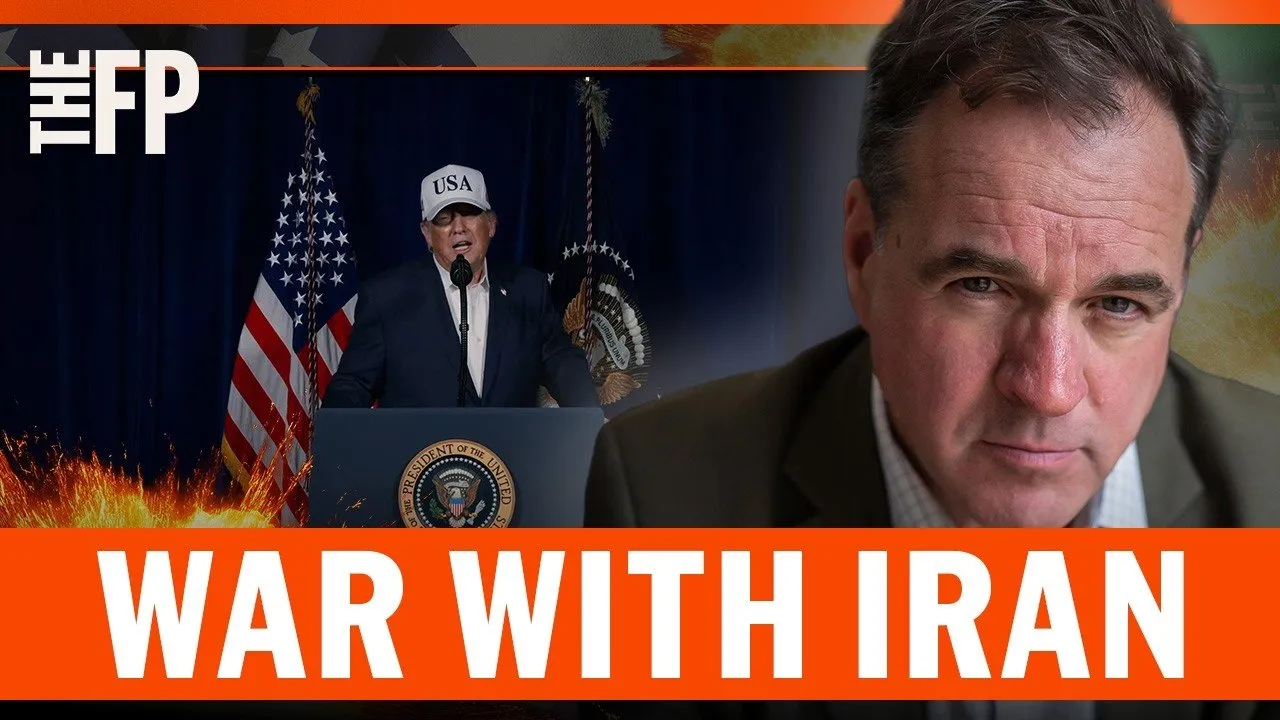
The geopolitical landscape shifted dramatically overnight as the United States and Israel launched Operation Epic Fury, a coordinated military campaign targeting the heart of the Iranian regime. While the "fog of war" remains thick, the strategic implications are already becoming clear. According to historian Niall Ferguson, this operation represents more than just a regional skirmish; it is a fundamental recalibration of American power on the global stage. By moving beyond failed diplomatic maneuvers and focusing on the precision "decapitation" of a hostile leadership, the U.S. aims to restore a level of deterrence that critics argue has been absent for over a decade.
Key Takeaways
- Shift in Strategy: Unlike the 2003 invasion of Iraq, Operation Epic Fury relies on precision air power to destabilize the regime without a massive "boots on the ground" occupation.
- Global Deterrence: The strikes serve as a "global signal" to adversaries in Moscow and Beijing that American red lines carry heavy consequences.
- Preemptive Security: Proponents argue the operation is necessary to prevent Iran from finalizing nuclear weapons and to end its half-century sponsorship of regional terrorism.
- The China Risk: Ferguson warns that an extended focus on the Middle East could create a strategic opening for China to move against Taiwan.
The Failure of Diplomacy and the Fog of War
For weeks, the international community watched as negotiators in Geneva attempted to find a compromise regarding Iran’s nuclear ambitions and its support for regional proxies. However, Ferguson suggests these maneuvers were little more than Masquerovka—a strategic deception. The Iranian leadership showed no willingness to yield on the core demands set by the Trump administration, specifically the cessation of uranium enrichment and the dismantling of its ballistic missile program.
Targeting the Core of the Islamic Republic
The current operation targets both the physical infrastructure and the personnel of the Iranian regime. Reports indicate that private residences of high-ranking officials and key military assets have been struck. While rumors regarding the fate of the Supreme Leader, Ali Khamenei, remain unconfirmed, the objective is clear: to remove the head of the theocratic state. The hope is that this "decapitation" will create the necessary conditions for the Iranian people to reclaim their own government, rather than having a new regime imposed from the outside.
Iranian Retaliation and Regional Alienation
In response to the strikes, Tehran has launched retaliatory attacks against U.S. targets across at least six Gulf states. Notably, these actions seem to be alienating potential regional partners. Most Gulf nations, including Saudi Arabia and Kuwait, have sought to maintain neutrality. By targeting U.S. naval bases in Bahrain and threatening regional stability, Iran may be inadvertently consolidating a regional coalition against itself. Ferguson notes that the desperation in Tehran is palpable, as their attempts to disrupt the flow of oil through the Strait of Hormuz have, thus far, failed to produce a significant market shock.
Why This Conflict Matters to the American Public
A common critique of American interventionism is that it distracts from domestic crises, such as housing affordability and inflation. Why should a young American struggling to buy a home care about a conflict thousands of miles away? Ferguson argues that the cost of inaction is far higher. A nuclear-armed Iran, capable of delivering warheads to European or even American targets, presents an existential threat that would dwarf current economic concerns.
"Getting America's reputation back for being a superpower you don't mess with, that can save many American lives in the future."
Furthermore, Iran has functioned as a primary sponsor of terrorism for fifty years, directly contributing to American casualties in Iraq and supporting groups like Hamas. By "calling time" on this behavior, the U.S. aims to secure long-term global stability, which is the bedrock of a functioning domestic economy. The argument is one of preemptive security: it is better to neutralize a threat now than to face a much larger, more expensive conflict later.
Decapitation Without Occupation: A New Military Paradigm
The strategy driving Operation Epic Fury is a direct response to the lessons learned—and mistakes made—in Iraq. In 2003, the United States attempted to "force" freedom through a costly occupation and nation-building project. The current approach is fundamentally different. It utilizes the "full spectrum dominance" of modern U.S. air power to take out the ruling elite while leaving the future of the country in the hands of its citizens.
The Power of Precision Strikes
Technological advances have changed the nature of regime change. In previous eras, such as World War II, air power was blunt and often involved widespread civilian casualties. Today, the precision of drones and missiles allows the U.S. and Israel to target specific individuals and offices with surgical accuracy. This capability increases the likelihood that a regime can be tipped over without the total collapse of the state or the need for American "boots on the ground."
The Risk of a Power Vacuum
However, Ferguson acknowledges that this gamble is not without significant risk. There is no guarantee that the Iranian people, recently subjected to brutal internal crackdowns, will rise up successfully. The potential for civil war, balkanization along ethnic lines, or a vacuum that neighboring powers like Turkey might exploit remains a serious concern for regional experts.
The Global "Three-Body Problem"
Perhaps the greatest danger of the current conflict is not regional, but global. Ferguson describes a "three-body problem" in U.S. foreign policy, where the nation must simultaneously manage threats in Europe (Ukraine), the Middle East (Iran), and the Far East (China). History shows that it is nearly impossible for a superpower to play successfully in all three theaters at once.
"China is the one real rival that the United States needs to fear because China now has built a navy... as big as the US Navy."
While the world's eyes are fixed on the Middle East, China continues to build its naval capacity and develop hypersonic missiles capable of targeting U.S. aircraft carriers. The real fear among military leaders is that Operation Epic Fury might be exactly the distraction Beijing needs. If the U.S. becomes bogged down in a protracted Middle Eastern conflict, the window for a Chinese move against Taiwan in 2026 or 2027 becomes dangerously wide.
Conclusion
Operation Epic Fury represents a high-stakes attempt to reset the global order and eliminate a long-standing threat to international security. By focusing on the "decapitation" of the Iranian regime through precision technology, the United States is attempting to restore its credibility as a superpower without repeating the mistakes of the past. However, the success of this operation will be measured not just by the fall of Tehran, but by Washington's ability to remain vigilant in Europe and the Pacific. The coming days will determine if this is a masterstroke of deterrence or a distraction that changes the global balance of power forever.