Table of Contents
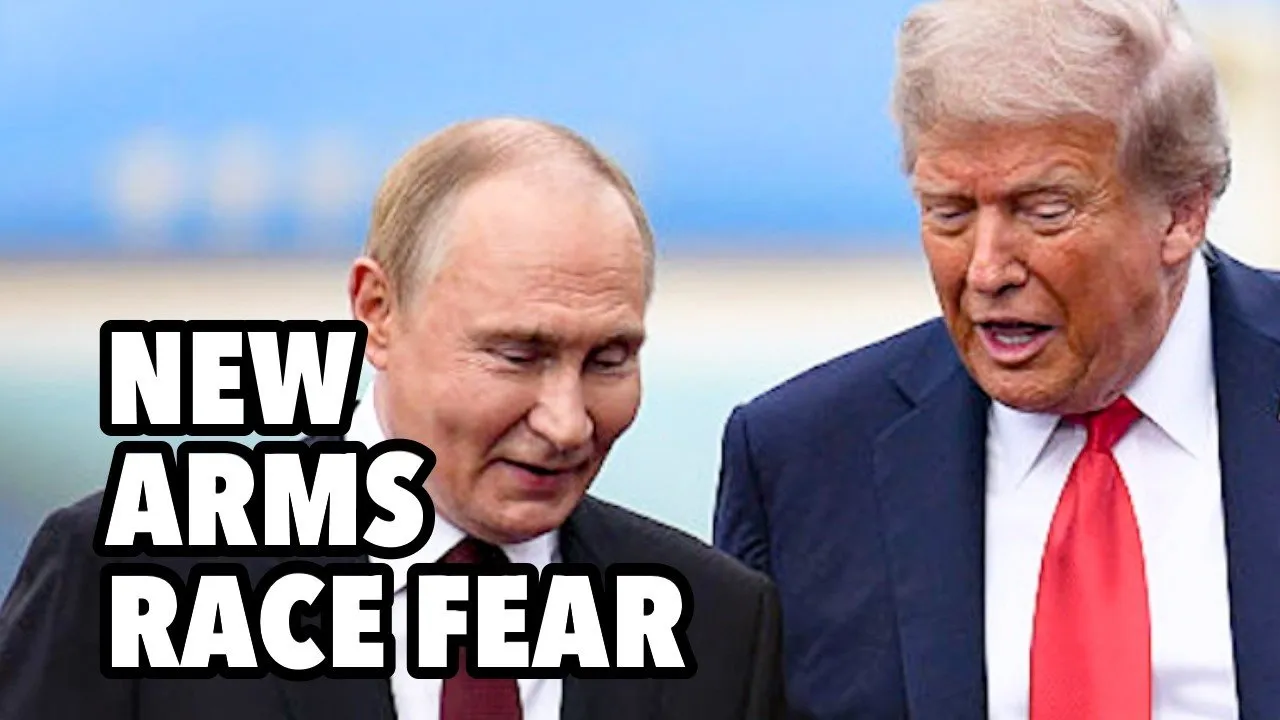
The global security architecture has officially entered a precarious new phase with the expiration of the New START treaty. For the first time in decades, the world’s two largest nuclear powers, the United States and Russia, are operating without a binding agreement to limit their strategic arsenals. While Russian leadership proposed a one-year extension to allow time for renegotiation—an offer intended to bridge the gap while addressing modern complexities—Washington declined the proposal. Consequently, the mechanisms that provided transparency, inspections, and verified limits have evaporated, leaving the international community to navigate a high-stakes environment with no guardrails.
Key Takeaways
- The Era of Unregulated Arsenals: With the expiration of New START, there are no longer any active treaties limiting the number or type of nuclear weapons deployed by the US and Russia, nor are there inspection regimes in place.
- The China Factor: Diplomatic efforts are stalled largely because the United States insists on including China in negotiations, fearing a scenario where the combined arsenals of Beijing and Moscow outmatch American capabilities.
- Risks of European Proliferation: There is a growing concern that hawkish factions may push to arm European allies—such as Poland or Germany—with nuclear capabilities to offset conventional military shortcomings, a move historically viewed as severely destabilizing.
- Technological and Industrial Realities: An arms race is viewed by analysts as unwinnable for the West due to China’s superior manufacturing capacity and Russia’s current lead in hypersonic missile technology.
- The Case for Détente: Historical precedents, particularly from the Kennedy administration, suggest that accepting multipolarity and negotiating limits is the only viable path to preventing a catastrophic escalation.
The Collapse of Historical Arms Control
We are currently witnessing a unique and unsettling situation. throughout the vast majority of the post-WWII era, global stability was anchored by continuous negotiations or active treaties limiting strategic weapons. This lineage traces back to 1959, leading to the Partial Test Ban Treaty negotiated by President Kennedy and Soviet Premier Khrushchev in 1963. This was followed by SALT I, SALT II, and eventually the START treaties, which successfully reduced global stockpiles.
The expiration of New START represents a total severance of this lineage. While the Nuclear Non-Proliferation Treaty (NPT) of the 1960s technically remains, its primary function is to prevent non-nuclear states from acquiring weapons. Its legitimacy rests on the promise that major powers will work toward disarmament. With the superpowers now potentially uncapped, the NPT is pushed to the brink of irrelevance.
The Loss of Verification
Perhaps more dangerous than the potential increase in warheads is the loss of the inspection regimes. These treaties provided a window into the adversary’s capabilities, fostering a baseline of predictability. Without inspections, transparency vanishes. Nations must now rely on intelligence estimates and worst-case scenario planning. This ambiguity creates a fertile ground for a new arms race, where fear of the unknown drives the development and deployment of new, more dangerous weapon systems.
The Triangular Dilemma: Washington, Moscow, and Beijing
The primary driver behind the American hesitation to renew the treaty is the emergence of a third nuclear superpower. For decades, the strategic calculus was a binary equation between Moscow and Washington. The inclusion of China radically alters this balance. US strategists are increasingly anxious about a "two-against-one" scenario, where limiting American forces to parity with Russia leaves a gap that China could exploit.
However, expecting Beijing to agree to limits that permanently cement their inferiority to the United States is diplomatically unrealistic. Furthermore, the geopolitical alignment between Russia and China—a partnership solidified by recent Western policy—complicates the US desire to maintain nuclear supremacy.
You put yourself in this position by bringing China and Russia closer together... so you created an alliance between these two countries. So you put yourself in this position.
The United States now faces a reality where it cannot realistically outbuild the combined industrial and technological output of its adversaries. Attempting to maintain nuclear parity with the combined forces of Russia and China would require an economic mobilization that the current US debt structure may not support.
The Dangers of European Nuclear Expansion
In the absence of a treaty, disturbing new strategies are being floated within defense circles. With the recognition that European conventional forces are currently unable to deter Russian military power effectively, some hardline factions—often termed neoconservatives—may advocate for transferring nuclear capabilities to frontline European states.
This strategy suggests that countries like Poland, Finland, or Germany could be armed with nuclear weapons to create local leverage against Russia. This approach mirrors the exact scenario President John F. Kennedy fiercely opposed in the 1960s. Kennedy understood that diffusing nuclear technology to European powers, given the continent's history of conflict, would drastically lower the threshold for nuclear use.
If we start allowing nuclear powers like Germany and other places in Europe to start to acquire nuclear weapons... we are almost definitely going to create a situation where nuclear weapons are going to be used.
Expanding the nuclear club to European allies would likely be interpreted by Moscow not as a defensive measure, but as an existential escalation, potentially triggering the very conflict the policy purports to prevent.
Industrial Capacity and Technological Gaps
Proponents of a renewed arms race often overlook the material realities of the 21st century. The United States is no longer the undisputed industrial hegemon it was during the Cold War. In a competition of production, China’s manufacturing capabilities dwarf those of the West. If the strategy relies on out-producing the adversary, the US is at a severe structural disadvantage.
Furthermore, in terms of delivery systems, Russia has maintained, and in some areas surpassed, technological parity. The deployment of hypersonic missiles—such as the Oreshnik and Burevestnik systems—demonstrates capabilities that Western defense systems currently struggle to intercept. Engaging in an arms race against an adversary with a decade-long lead in hypersonic technology, and another with mass-production supremacy, is a strategic miscalculation.
Conclusion: The Necessity of Realism
The solution to this deadlock does not lie in fanciful defense systems or the dangerous proliferation of nuclear weapons to allied states. It requires a return to diplomatic realism. The United States must accept the multipolar nature of the modern world. The notion that one nation requires enough weaponry to defeat all potential adversaries combined is a relic of a unipolar moment that has passed.
Détente is not capitulation; it is a rational strategy for survival. By engaging in genuine negotiations that respect the security concerns of Russia and China, the US can stabilize the global order. As history has shown, stability is rarely achieved through the barrel of a gun—or the nose cone of a missile—but through the hard work of diplomacy and the mutual recognition of limits.