Table of Contents
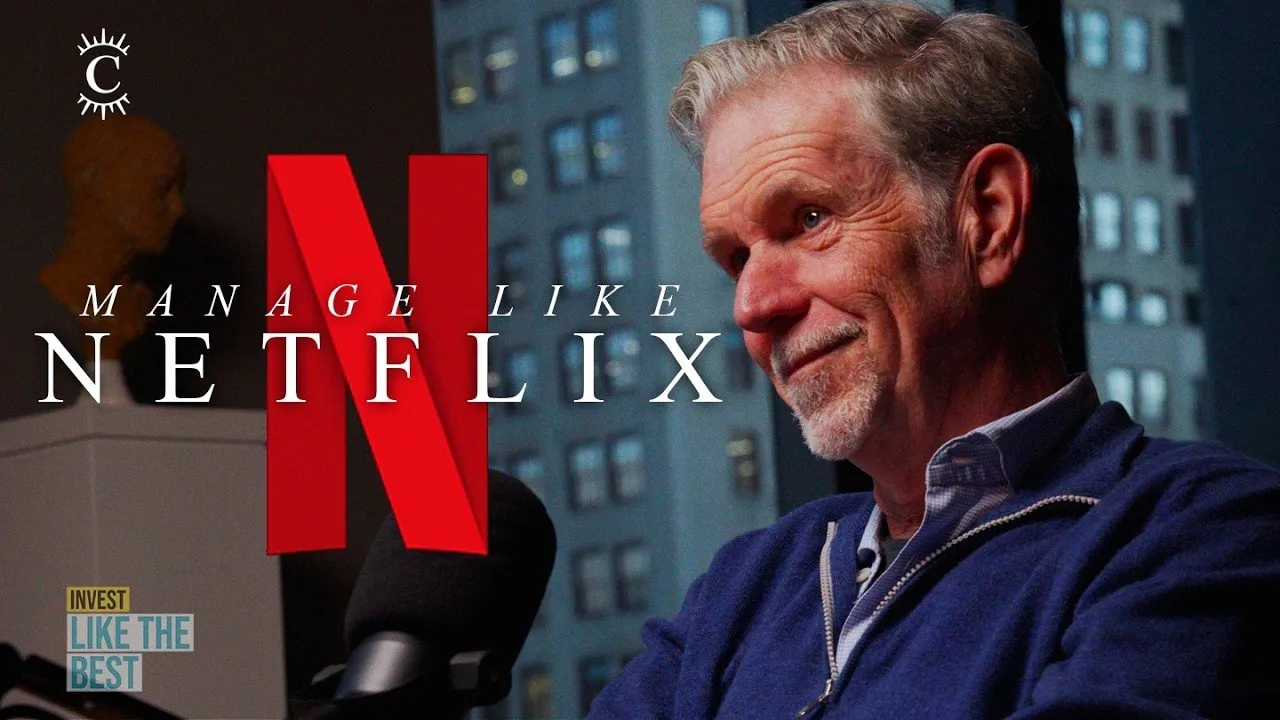
Netflix is arguably the single most relatable business success story of the modern era. We all watch it, we all understand the product, yet few understand the radical internal engine that powered its rise from a DVD-by-mail service to a global streaming hegemon. That engine is the "Netflix Culture Code," a philosophy pioneered by co-founder Reed Hastings.
The company’s trajectory wasn't an accident of timing; it was the result of two deceptively simple ideas executed with extreme discipline: finding a simple concept and taking it extraordinarily seriously, and maintaining an exceptionally high bar for talent. Hastings transformed organizational psychology, rejecting the standard corporate "family" metaphor in favor of a high-performance sports team model.
In a wide-ranging discussion on the origins of Netflix, Hastings breaks down the mechanics of talent density, the "Keeper Test," and how leaders should navigate the edge of chaos to drive innovation.
Key Takeaways
- Talent Density is Paramount: A company should not be run like a family, but like a professional sports team where every position must be filled by the best possible player for that specific role.
- The Keeper Test: Managers should constantly ask, "If this employee wanted to leave, would I fight to keep them?" If the answer is no, a generous severance package is the strategic move.
- Manage on the Edge of Chaos: Over-optimization and strict processes kill creativity. To get high variance and innovation, you must tolerate a certain level of looseness in management.
- The Informed Captain Model: Decisions should not be made by consensus or committees. Individuals (Captains) make decisions after gathering extensive dissenting opinions.
- Strategic Patience: Netflix envisioned streaming from day one (1997) but disciplined themselves to master the DVD business first as a necessary stepping stone.
The Origin of "Talent Density"
The concept of talent density—now a ubiquitous term in Silicon Valley—was born from Hastings’ previous failure. Before Netflix, he founded Pure Software in 1990. As the company grew, Hastings admitted he wasn't careful about hiring standards. As talent density declined, the company had to implement more rules and processes to protect against mistakes made by average employees.
This created a vicious cycle: process drove out high-performing creative talent, which required even more process. Hastings realized that you cannot manage a creative software company like a manufacturing plant designed to reduce error. Instead, you must manage it "artistically with inspiration."
The Sports Team vs. The Family
One of the most friction-heavy aspects of the Netflix culture is the rejection of the "we are a family" trope. Hastings argues that while humans naturally value loyalty and niceness, these traits can be counterproductive in a high-performance environment.
"We have to find a way to give each other permission to not be conventionally nice and instead to be focused on the team success... The contrast is a professional sports team. It's really focused on achievement and everyone understands that you change players as you need to try to win the championship."
In a family, you stick by your brother regardless of his performance. In a company, that loyalty can drag down the collective. By shifting the metaphor to a sports team, Netflix normalized the idea that fighting for your position is part of the job, and being let go isn't a moral failure—it simply means the team is upgrading to win the championship.
Implementing the Keeper Test
To maintain this density, Netflix utilizes the "Keeper Test." Managers are encouraged to ask a simple question: If a team member told you they were leaving for a similar job at a peer company, would you fight hard to keep them? If the answer is no, the company prefers to give them a generous severance package immediately and look for a star player.
This approach requires reframing termination. It is not a verdict on a person's worth, but a strategic roster change. To make this palatable, Netflix pays top-of-market salaries and offers substantial severance (often four to nine months of pay). This eases the moral burden on managers, allowing them to make the hard, right decision for the business without destroying the livelihood of the employee.
Managing on the Edge of Chaos
High talent density allows a company to operate with fewer rules. Hastings describes this as managing "fast and loose." If you over-manage specific hours, vacation policies, or decision flows, you filter out creativity. The goal is to run the organization on the "edge of chaos"—a state where there is just enough structure to prevent total collapse, but enough freedom to allow for dynamism and last-minute saves.
The Qwikster Lesson: The Cost of Consensus
However, running fast has risks. Hastings cites the 2011 "Qwikster" debacle—where Netflix attempted to split its DVD and streaming services too early—as a prime example of failing to harness the team's intelligence. The stock dropped 75% following the announcement.
In the post-mortem, Hastings realized that many executives hated the idea but didn't speak up because they assumed Hastings "must be right" given his track record. This failure led to a new system of information sharing. Netflix now uses shared documents where stakeholders rate decisions on a scale of -10 to +10.
"You want to be totally independent in your thinking and not consensus-oriented at all, but you want to know what other people are thinking otherwise you're flying blind."
This solidified the "Informed Captain" model. Netflix does not make decisions by committee. An individual (the Captain) owns the decision, but they are obligated to actively solicit dissent and information before pulling the trigger.
The Contrarian Bet: Content and Strategy
Netflix’s success is rooted in contrarian thinking—betting against the current consensus and being right. The very name "Netflix" (Internet Flicks) was chosen in 1997, despite the business being entirely physical DVD distribution. The DVD business was merely a high-bandwidth, low-latency analog network that they knew would eventually be replaced by the internet.
Venture Capital Approach to Content
When Netflix began producing originals, they treated content spend like a venture capital portfolio. They didn't know which show would be a hit, but they knew they needed to fund enough "A-rounds" to find the outliers. This strategy requires a high tolerance for failure and a willingness to overpay for entry.
Hastings recalls bidding for House of Cards against HBO. As a DVD rental company, Netflix had to significantly overpay to win the rights. It was a risk, but it established them as a serious player in original programming. Today, their goal is to shovel as much money as possible into content to find the next global franchise, knowing that hits like "K-Pop Demon Hunters" are often unpredictable and result from artistic intuition rather than algorithmic certainty.
Leadership Beyond the C-Suite
Since stepping down as CEO, Hastings has applied his philosophy to board work, philanthropy, and new ventures like Powder Mountain. His view on corporate governance is starkly different from the norm.
The Board as Insurance
Hastings argues that board members often delude themselves into thinking they add operational value. In reality, a board member who spends one day a quarter with the company cannot effectively advise management. Instead, a board member’s primary role is insurance.
The board exists to step in if the company falls apart and to replace the CEO. To do this effectively, they must exercise an "extreme duty of care," observing operations closely not to meddle, but to be prepared for the crisis. A great board member isn't measured by the advice they give, but by their wisdom during a meltdown.
The Future: AI and Education
Looking forward, Hastings is focused on the intersection of AI and education. He believes the industrial model of the "sage on a stage"—one teacher lecturing thirty kids—is obsolete. AI offers the potential for individualized tutoring at scale, something previously reserved for the wealthy. This shift could transform teachers into social-emotional mentors while software handles the transfer of hard skills.
Conclusion
Ultimately, the Netflix culture code is about stripping away the ego and artifice of traditional management to focus on raw performance and truth. But beneath the "professional sports team" bravado lies a requirement for deep humility and servant leadership.
Hastings closes with a story from his early days as a frontline engineer at a startup. He was working all-nighters, leaving messy coffee cups around the office. One morning at 4:00 AM, he walked into the bathroom to find the CEO washing those cups. When asked why, the CEO replied, "You do so much for us, and this is the one thing I could do for you."
That moment of service created a loyalty that no paycheck could buy. It serves as a reminder that while high standards and talent density are the mechanics of success, the fuel is a leadership team that genuinely serves the mission and its people.