Table of Contents
The boundary between onchain data analysis and trade execution is rapidly dissolving. For years, crypto investors have relied on fragmented workflows: checking analytics on one platform, bridging funds on another, and executing trades on a decentralized exchange (DEX). This friction has long been accepted as the cost of doing business onchain. However, the emergence of AI-driven "agentic trading" promises to streamline this chaotic process into a single, conversational interface.
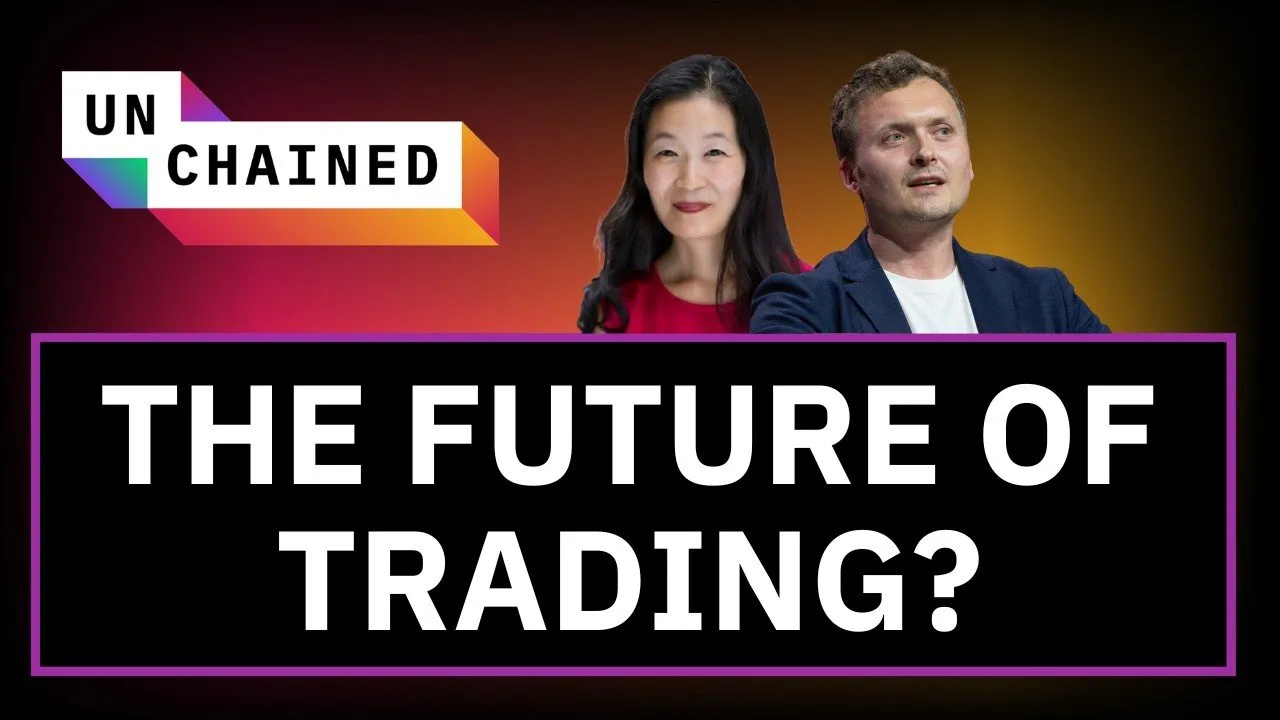
In a recent discussion with Laura Shin on Unchained, Alex Svanevik, co-founder and CEO of Nansen, unveiled the company’s new AI trading agent. Moving beyond their reputation as a premier analytics platform for "following the smart money," Nansen is now positioning itself as a comprehensive execution environment. By integrating natural language processing with onchain infrastructure, the platform aims to give retail investors the technological leverage previously reserved for sophisticated hedge funds.
Key Takeaways
- Integration of Research and Execution: Nansen has evolved from a pure analytics tool to a trading terminal, allowing users to discover tokens and execute trades within the same interface via AI prompts.
- The "Iron Man Suit" for Retail: The new agent acts as a co-pilot, utilizing AI to democratize access to sophisticated trading strategies and execution speed that were once the domain of institutions.
- Security through "Human-in-the-Loop": Unlike fully autonomous bots, Nansen’s current model requires user biometric confirmation for every trade, utilizing non-custodial embedded wallets (via Privy) to maintain security.
- Solving the UX Crisis: The agent abstracts away the complexities of bridging, chain switching, and approval signing, addressing the notoriously poor user experience of DeFi.
- The Future of "Vibe Trading": Svanevik predicts a shift toward voice-controlled, off-screen trading interfaces, liberating investors from being glued to their monitors.
From Analytics to Action: The Rise of Agentic Trading
For the past several years, Nansen has been the industry standard for labeling wallets and tracking "smart money" flows. However, the traditional workflow required users to identify an opportunity on Nansen and then leave the platform to execute the trade elsewhere. The launch of Nansen’s AI agent marks a strategic pivot to capture the entire investment lifecycle.
Svanevik describes the new functionality as a natural evolution of the user experience. Investors can now engage in a dialogue with the platform, asking it to identify what smart money is buying and then instructing it to take immediate action.
A Conversational Interface
The core innovation lies in the agent's ability to interpret intent. A user can type a command as simple as "rebalance my portfolio," and the AI will analyze current holdings, propose a set of transactions, and prepare them for execution. This shift from manual clicking to intent-based prompting is what Svanevik calls "agentic trading."
"We thought, what does investing look like in 2030? Instead of trying to build yet another trading product that looks like all the other ones, you can basically talk to Nansen... and the agent literally based on what you said goes out, checks multiple DEX aggregators, and gives you the best price."
The platform currently supports Solana and Base, with plans to expand to all major chains. By utilizing aggregators, the agent ensures users receive optimal pricing without charging excessive premiums. Svanevik clarified that fees remain competitive—10 basis points for pro users and 25 basis points for free users—often matching or beating standard DEX fees.
Addressing the "Garbage" User Experience of Crypto
A driving force behind this development is the recognition that the current state of onchain trading creates significant friction. Svanevik was candid about the industry's shortcomings, noting that the "user experience of trading onchain is pretty garbage."
The fragmentation of liquidity, the need to manage multiple wallet extensions, and the complexity of bridging assets between chains have historically acted as barriers to entry. The AI agent serves as an abstraction layer, handling the technical heavy lifting "under the hood."
The Efficiency of AI Lubrication
By removing these hurdles, AI effectively lubricates the trading process. Svanevik noted that his own trading activity increased significantly during the beta testing phase simply because the friction of execution was removed. When the process of acting on information becomes effortless, market participants are likely to trade more frequently and with greater confidence.
This has implications for market structure. As tools improve, the threshold for participation lowers, potentially leading to a "Cambrian explosion" of activity across a long tail of assets, including memecoins, prediction markets, and tokenized real-world assets.
Security and the "Human-in-the-Loop"
With the rise of AI agents, security concerns are paramount. The prospect of an AI hallucinating a trade or a malicious actor "jailbreaking" an agent to drain funds is a serious risk. Nansen has addressed this by deliberately avoiding full autonomy in this initial release.
Self-Custody and Biometrics
The platform utilizes an embedded wallet architecture powered by Privy. This ensures the system remains self-custodial; the user holds the keys, not Nansen. Furthermore, the agent acts as a concierge rather than a power of attorney. It prepares the transaction, but the user must physically tap "execute" and provide biometric authentication (such as FaceID) to sign the trade.
"We want to make sure that the agent doesn't hallucinate... It acts almost either as a co-pilot or a concierge to execute the trade. But over time, you're going to be able to do more interesting things like prompting a strategy."
The Problem with Autonomous Agents
Svanevik argued that the infrastructure for fully autonomous, decentralized agents does not yet exist in a secure form. The industry faces an unsolved problem: how to grant an agent an allowance to trade without exposing the private key or allowing the agent's logic to be tampered with.
Until a robust infrastructure for "agent vaults" or secure execution environments is built—potentially through new joint venture protocols—keeping a human in the loop remains the gold standard for safety.
The Future: Voice, Vision, and Off-Screen Trading
Looking toward 2026 and beyond, Svanevik envisions a fundamental change in how humans interact with financial markets. The stereotype of the crypto trader—hunched over six monitors, glued to charts 24/7—may soon become obsolete.
The integration of voice capabilities and advanced AI models suggests a future where trading can happen passively or through audio interfaces while the user is away from their desk.
The Blade Runner Interface
Svanevik referenced the "enhance" scene from Blade Runner as the ultimate user experience goal: a seamless blend of voice commands and real-time visual adjustments. This shift is not just about convenience; it is about liberating users from their screens.
"I get really excited about the idea that they can be outside in the real world touching grass, but then also feel like they're taking action on their portfolio... I'm super bullish on voice as a user interface."
Vibe Coding and Democratized Development
Beyond trading, the convergence of AI and crypto is accelerating software development itself. Svanevik highlighted the concept of "vibe coding," where non-technical users utilize tools like Claude to build functional applications rapidly. This democratization of building, combined with the democratization of sophisticated trading via agents, sets the stage for a period of intense innovation.
Conclusion
The launch of Nansen’s trading agent represents a broader trend in the crypto industry: the transition from fragmented infrastructure to integrated, intelligent applications. By equipping retail investors with an "Iron Man suit" of data and execution capabilities, AI agents are leveling the playing field against institutional players.
While the technology is still in its early stages—requiring human oversight to prevent hallucinations and ensure security—the trajectory is clear. As Svanevik predicts, the combination of deep onchain liquidity and AI-driven interfaces is poised to make 2026 one of the most transformative years in the history of digital assets.