Table of Contents
The intersection of artificial intelligence and blockchain technology is no longer a futuristic concept—it is actively reshaping how investors interact with the crypto market. From Nansen's latest move to integrate AI execution directly into its analytics platform to the evolving debates around Bitcoin’s status as a safe haven, the landscape is shifting rapidly. As tools become more sophisticated, the market structure itself is undergoing a stress test, highlighting both the immense potential of "agentic" trading and the lingering maturity issues within token launches and social protocols.
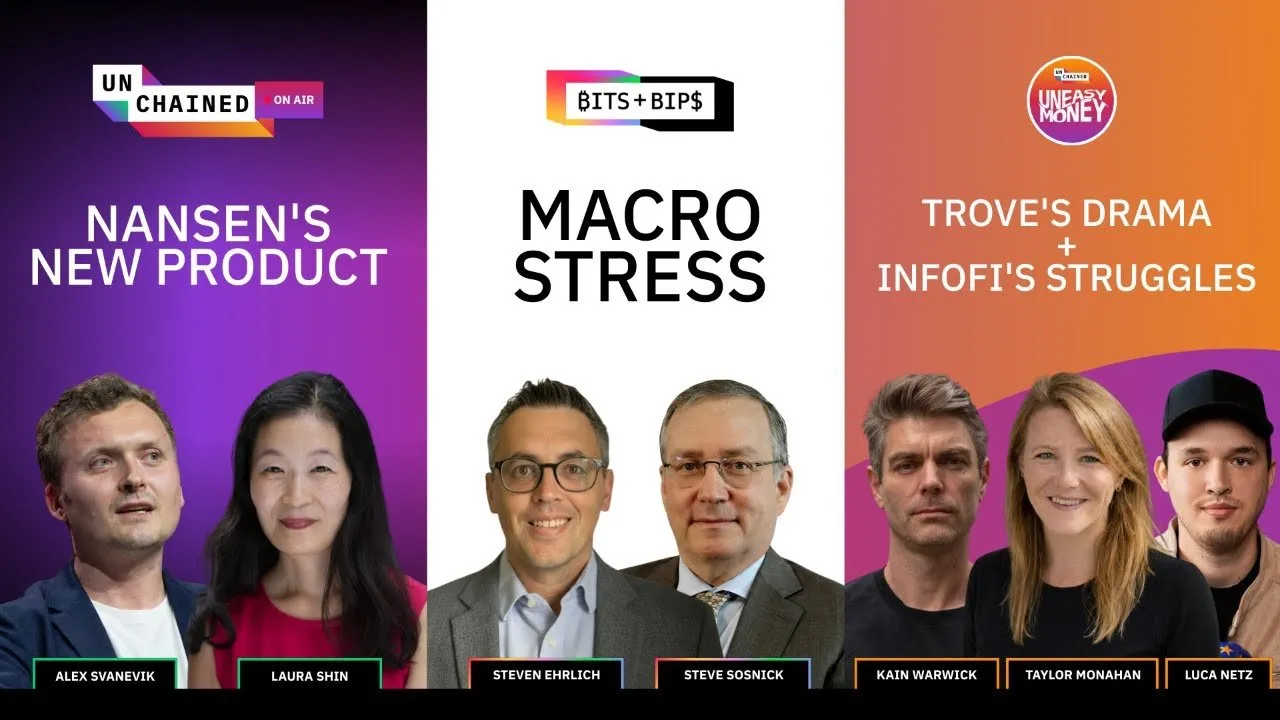
This deep dive explores the launch of Nansen’s new AI trading agent, the macroeconomic tensions challenging Bitcoin’s narrative, and the harsh lessons learned from recent market stumbles like the Trove ICO and the collapse of InfoFi.
Key Takeaways
- AI as an "Iron Man Suit" for Retail: Nansen’s new agent combines on-chain discovery with execution, aiming to level the playing field between individual investors and institutional funds.
- The Shift to Voice and "Vibe Trading": The future of crypto engagement may move away from complex dashboards toward natural language voice commands and automated portfolio management.
- Bitcoin vs. Gold: Amid macro volatility, Bitcoin is currently behaving more like a risk asset correlated with the Nasdaq rather than the "digital gold" safe haven it is often touted to be.
- The ICO Problem Persists: The disastrous launch of Trove highlights a continued lack of professional standardization in crypto capital formation compared to traditional IPOs.
- The End of InfoFi: The recent crackdown on "yapper" communities by social platforms signals the limits of financializing low-quality social engagement.
The Rise of Agentic Trading and the "Iron Man Suit"
For years, Nansen has been the gold standard for on-chain analytics, helping users track "smart money" and discover trends. However, a friction point always remained: users had to leave the platform to execute trades based on that data. With the launch of Nansen AI, the company is closing that loop, introducing an agent that can act on natural language prompts.
Alex Svanevik, CEO of Nansen, describes this evolution as a move toward a "co-pilot" experience. The goal is not just to provide data but to give retail investors tools that were previously the domain of sophisticated hedge funds. By integrating execution via aggregators and managing cross-chain complexities, the agent effectively acts as an infrastructure abstraction layer.
"I do think this is kind of giving retail investors an Iron Man suit... The cost to recreate or even create new infrastructure and products tools that are equally good or even better has basically collapsed with AI. And so my view is actually that the greatest improvement will be for individual investors."
This shift suggests a future where "vibe trading" becomes a legitimate workflow. Instead of navigating 17 different tabs and complex bridging protocols, a user might simply instruct an agent to "rebalance my portfolio" or "sell all meme coins," and the AI handles the routing, bridging, and execution across chains like Solana and Base.
Security, Custody, and the Future of "Agent Vaults"
As the industry moves toward autonomous agents, security becomes the primary bottleneck. Nansen’s current approach relies on a non-custodial architecture powered by Privy, where the human user must still sign the final execution. This "human-in-the-loop" model is a necessary guardrail against AI hallucinations or unauthorized drain attempts.
However, the long-term vision extends beyond simple commands. Svanevik envisions a future of "Agent Vaults" or Joint Venture Protocols (JVPs). In this scenario, a skilled trader or developer could spin up an agent with a specific strategy, and other users could deposit capital into that agent's vault, sharing in the upside. This would effectively democratize the hedge fund model, allowing automated strategies to manage capital transparently on-chain.
Until security standards for fully autonomous agents mature—solving for both private key security and prompt injection attacks—the industry will likely remain in this hybrid co-pilot phase.
Bitcoin’s Identity Crisis: Safe Haven or Risk Asset?
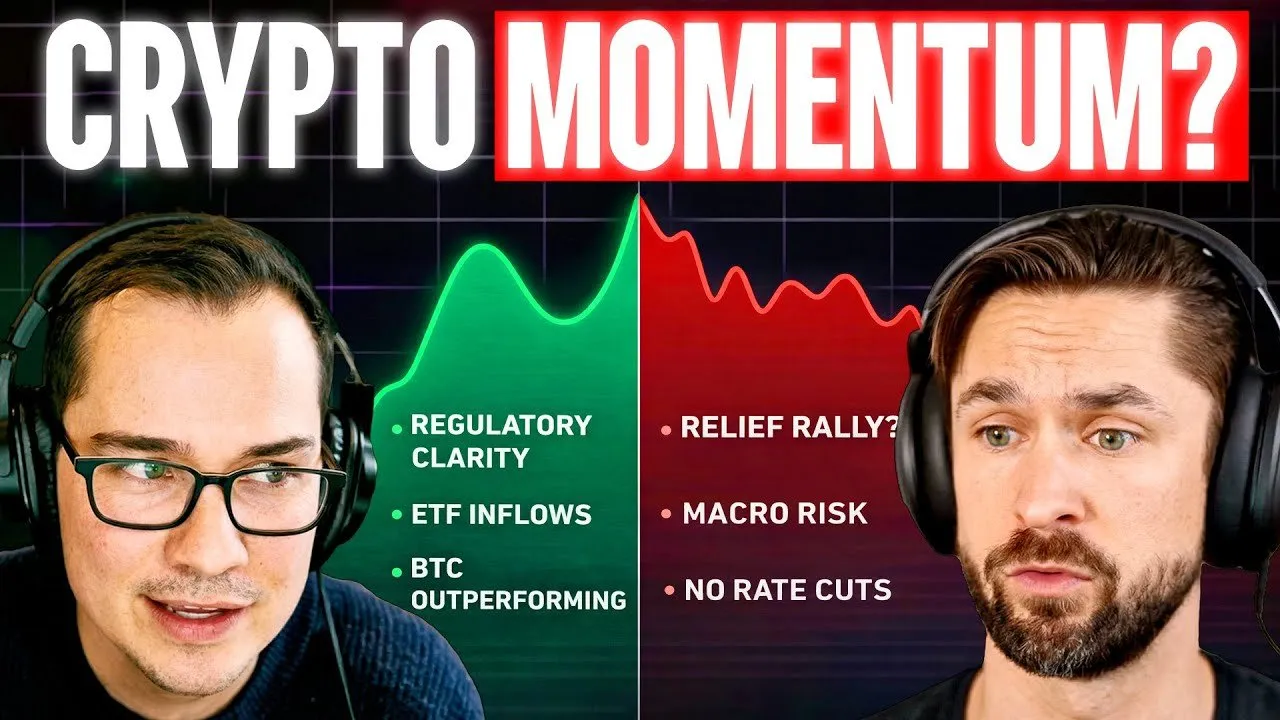
While technology accelerates, market dynamics are flashing warning signs regarding Bitcoin's role in a portfolio. During periods of geopolitical stress and macro volatility, investors historically flock to safe havens. Recently, gold has surged to new highs, yet Bitcoin has struggled to maintain momentum, behaving more like a high-beta tech stock than digital gold.
Steve Sosnick, Chief Strategist at Interactive Brokers, notes that the correlation between Bitcoin and the Nasdaq remains high. The introduction of spot ETFs has brought "normie" capital into the ecosystem—capital that treats crypto as just another risk asset to be sold during downturns. Unlike gold, which benefits from centuries of history as a store of value, Bitcoin is currently suffering from its own success as a mainstream investment vehicle.
Furthermore, in high-inflation economies like Turkey or Argentina, stablecoins are increasingly eating into Bitcoin’s market share as the preferred store of value. When investors want safety from local currency devaluation without the volatility of crypto assets, US dollar-pegged stablecoins offer a compelling alternative.
The Structural Failures of Modern ICOs
Despite years of iteration, the crypto industry still struggles with capital formation events. The recent launch of Trove, which raised over $11 million only to see its token value collapse immediately upon launch, serves as a stark reminder of the sector's immaturity.
The failure was attributed to a mix of poor communication, pivot decisions (moving from Hyperliquid to Solana at the last minute), and a lack of professional guidance. In traditional finance, investment banks act as underwriters to stabilize launches. In crypto, founders are often left to navigate complex game theory and liquidity management on their own, often with disastrous results for retail participants.
"If you take a company public, you go to JPMorgan, Morgan Stanley, Goldman Sachs, and they do all the bullshit and they make sure everything's set up... If you're a token founder, there's no JPMorgan. You either have the right investors or the right people in your corner telling you how to do it or you don't."
This incident underscores the risks of the "anti-VC" meta. While community raises like Echo and various ICOs promise fair access, they often lack the guardrails and vesting structures that prevent immediate dumps, leading to adverse selection where the only winners are those who sell first.
The Collapse of InfoFi and the Limits of SocialFi
The concept of "InfoFi"—incentivizing social media engagement with financial rewards—recently hit a wall. Platforms like X (formerly Twitter) have begun aggressively purging "yapper" communities and bot networks that spam engagement to farm rewards. This crackdown highlights the fragility of building businesses entirely on top of centralized social graphs.
The "yapper" meta created a perverse incentive structure where the goal was volume of noise rather than quality of discourse. When financial incentives are attached to basic social interactions without strong filters, the result is almost invariably spam. This has led to a renewed interest in decentralized social protocols, though the path forward remains difficult.
News of Farcaster’s ecosystem consolidation (via the acquisition by Neynar) suggests that while decentralized social is promising, it is capital-intensive and technically challenging. The dream of a decentralized social layer persists, but the industry is learning that simply adding a token to social interactions does not automatically create a sustainable product.
Conclusion
The crypto industry is currently operating at two different speeds. On the technological front, the integration of AI agents suggests a leap forward in usability, potentially abstracting away the clunky interfaces that have historically barred mass adoption. The vision of voice-controlled, on-chain portfolio management is becoming a reality.
However, on the market structure side, the industry faces familiar ghosts. Bitcoin is still fighting to decouple from traditional risk assets, and the mechanisms for launching new tokens remain fraught with peril. As we move through 2026, the winners will likely be those who can leverage AI to simplify the user experience while avoiding the "get rich quick" schemes that continue to plague the edges of the ecosystem.