Table of Contents
Key Takeaways
- Names are high-frequency leverage: A company name is the single most persistent element of a brand; choosing the right one creates an asymmetric advantage that compounds over time.
- The "Processing Fluency" Rule: Great names balance familiarity with surprise. They should be easy for the brain to process yet unexpected enough to grab and hold attention.
- Quantity leads to quality: Effective naming requires a deep dive into "treasure hunting." Small, two-person teams should generate thousands of concepts before narrowing them down.
- Avoid the Comfort Trap: Founders often settle for safe, descriptive names. True breakthroughs require moving away from comfortable labels toward provocative, category-defining language.
- Separate generation from evaluation: To foster creativity, teams must suspend judgment during the ideation phase, allowing for "approximate" or even "absurd" ideas before entering the filtering stage.
The Strategic Value of a Name
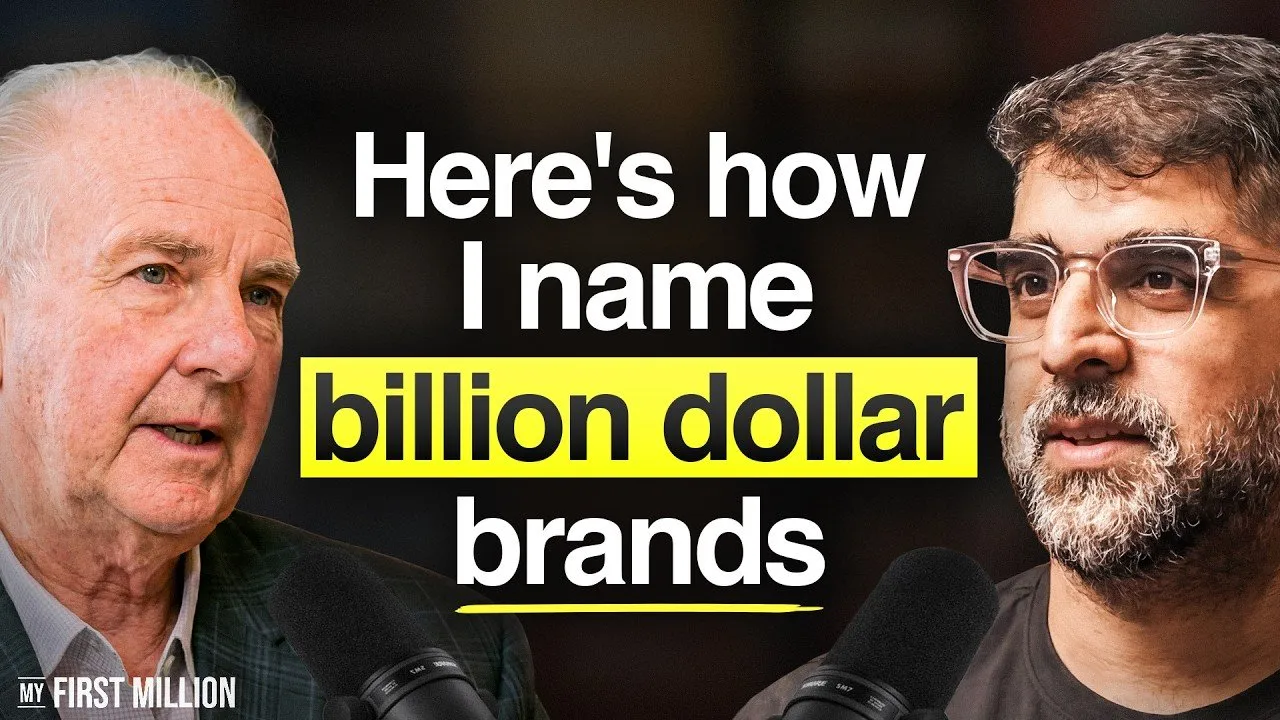
Many founders dismiss naming as a secondary concern, assuming that a great product will succeed regardless of its label. However, branding experts argue that a name is the one asset you will use more frequently and for longer than any other. When executed correctly, a name acts as a force multiplier, providing a strategic advantage from day one.
The difference between an okay name and the right name is often measurable in market performance. Consider the transition from the functional, generic "Pro-Mop" to the now-iconic "Swiffer." While a competitor released a nearly identical product with a safe, descriptive name like "ReadyMop," the Swiffer brand achieved multi-billion dollar status while its counterpart stalled. This illustrates that the name provides the essential interest and differentiation required to break through the initial competitive noise of the market.
The difference between an okay name and the right name that actually creates a strategic advantage, our goal is to always create asymmetric advantage.
The Three Pillars of a Great Name
To move beyond the "sea of sameness" that plagues most commodity markets, a name must achieve three specific objectives. If a name fails these tests, it becomes invisible to the consumer.
1. Gaining Attention
In a saturated market, you must stand out immediately. A name that sounds like every other competitor in the category—often chosen because it feels "safe"—is destined to be ignored. A name must act as a hook that forces the prospect to stop and wonder what the brand represents.
2. Holding Attention Through Processing Fluency
Once you have their attention, you must hold it. This requires processing fluency: the name should be easy enough to pronounce and understand, but it must contain a spark of the unexpected. The brain prefers information that is familiar yet fresh, creating a state of curiosity that encourages engagement.
3. Being Surprisingly Familiar
The most successful names are "surprisingly familiar." They utilize linguistic roots that feel grounded but apply them in a context where they shouldn't belong. When Microsoft chose "Azure" for their cloud platform—a category previously dominated by dry, technical descriptions—they successfully signaled a shift in tone that captured market imagination.
The Art of Creative Treasure Hunting
The search for a perfect name is akin to an archaeological dig. It requires a systematic approach to "creative curiosity" rather than relying on standard brainstorming sessions, which are often hindered by peer pressure and premature evaluation.
The Problem with Brainstorming
Traditional brainstorming sessions are notoriously inefficient. They frequently devolve into a "slow, slow grind" where group consensus kills originality. Instead, working in small, two-person teams allows for higher levels of focus and psychological safety. This structure encourages participants to explore disparate fields—such as aviation, Greek mythology, or even the periodic table—to find connections that an uninspired group would miss.
The "Trash" Phase
Counterintuitively, quantity leads to quality. A team might generate thousands of names before finding the right one. During this stage, most ideas are "trash," but this is a necessary part of the process. By creating a high volume of concepts, the team uncovers unique angles and patterns that would never surface if they focused on perfecting the first few ideas they liked.
Cultivating a Creative Culture
Managing creative talent requires a shift in mindset from leading to encouraging. The root word of encouragement is courage; founders often stifle innovation by judging ideas too harshly or too early. To fix this, create a clear divide between the divergent phase (dreaming) and the convergent phase (judging).
Redirecting Instead of Rejecting
When an employee proposes an idea that violates budget or legal constraints, avoid slamming it down. Instead, use "problem-solving propositions." Phrases like, "I wish we could make that work within our budget," or "How can we modify that to make it legally available?" challenge the team to solve the problem rather than abandoning the vision. This keeps the creative momentum alive while maintaining practical boundaries.
Conclusion
A name is more than a label; it is a long-term asset that, if chosen wisely, compounds in value every day. While a bad name does not guarantee failure, a great name gives you the best possible shot at building a successful, memorable brand. By committing to a rigorous process of creative discovery, separating your generative and evaluative phases, and prioritizing "surprising familiarity," you can move beyond safe, forgettable labels. Remember that the goal is not to fit into the marketplace, but to capture it.


![Bitcoin Is on Sale [How to Buy It in 2026]](/content/images/size/w1304/format/webp/2026/03/how-to-buy-bitcoin-2026.jpg)