Table of Contents
Moonshot AI has released Kimmy K2.5, a new open-weights model that challenges top-tier Western competitors like OpenAI and Anthropic through a novel "agent swarm" architecture. The release marks a significant technical shift in early 2026, introducing a system designed to autonomously break down complex workflows into parallel tasks rather than relying on traditional sequential processing.
Key Points
- Performance Surge: Kimmy K2.5 scored 50.2 on "Humanity’s Last Exam," outperforming GPT-5.2 running on high settings and Anthropic’s Opus 4.5.
- Agent Swarms: The model utilizes Parallel Agent Reinforcement Learning (PARL) to orchestrate teams of sub-agents that execute tasks simultaneously.
- Cost Efficiency: Analysis indicates the model is approximately four times cheaper to run than comparable proprietary frontier models.
- Multimodal Utility: K2.5 is the first leading open-weights model to support native image and video inputs, enabling workflows like cloning websites from screen recordings.
- Enterprise Focus: The interface assigns specific roles and avatars to sub-agents, effectively mimicking a human project team structure for tasks like RFP responses and financial modeling.
The Shift to Parallel Processing
The release of Kimmy K2.5 represents a transition from sequential reasoning to parallelized agent operations. While large language models (LLMs) traditionally process tasks step-by-step, Moonshot has addressed the "serial collapse" problem—where models fail to split tasks without conflicts—through a method called Parallel Agent Reinforcement Learning (PARL).
According to Clement founder Saw Griswan, this breakthrough was achieved by forcing the model to operate within a compute and time budget that made sequential completion impossible. This constraint compelled the system to learn how to decompose complex objectives into parallel work streams for sub-agents to execute simultaneously.
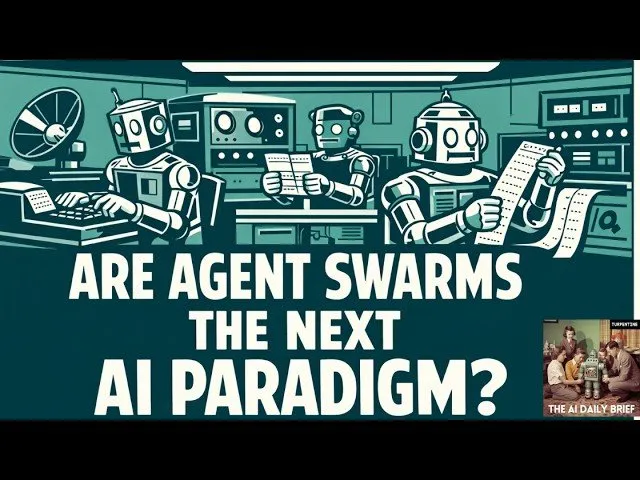
Industry observers suggest this architecture validates the "agent swarm" theory, which posits that future AI utility lies not in a single chatbot, but in coordinated teams of specialized agents. This capability allows the model to act less like a conversational partner and more like a managed workforce.
Benchmarking the Frontier
Technical assessments place Kimmy K2.5 firmly within the frontier of global AI development. According to data from Artificial Analysis, the model has jumped from 11th place to fifth overall on their independent index, trailing only specific iterations of GPT-5.2, Opus 4.5, and Gemini 3 Pro.
The benchmarks suggest that the gap between Chinese and Western models has narrowed significantly. In specific tests, such as "Humanity’s Last Exam," K2.5 achieved a score of 50.2, surpassing high-setting configurations of GPT-5.2. Furthermore, Moonshot has aggressively priced the model, offering these capabilities at roughly one-quarter of the cost of its Western counterparts, though it remains more expensive than efficient models like DeepSeek v3.2.
Artificial Analysis highlighted the significance of the model’s architecture:
"Kimmy K2.5 is the new leading open weights model now closer than ever to the frontier... This is the first time that the leading open weights model has supported image input, removing a critical barrier to the adoption of open weights models compared to proprietary models from the frontier labs."
Enterprise Utility and User Experience
Beyond raw metrics, early testing highlights the model's application in complex business workflows. Users have reported success in generating comprehensive financial reports, full slide decks from academic articles, and technical coding projects in minutes.
Simon Smith of Click Health tested the model’s ability to handle a Request for Proposal (RFP), a task requiring research, strategy, creative brainstorming, and project planning. He noted that the system automatically generated a step-by-step plan and assigned specific roles—complete with names and avatars—to individual agents.
"The model is then smart enough to figure out which agents can work in parallel or in the case that an agent requires the output of a different agent, how to run them sequentially... This feels like the emerging future of humans managing teams of AI agents the way they currently manage teams of other humans."
The system also appears capable of discerning when not to use swarms. In a test involving a simple website creation task, the model recognized the low complexity, utilized a single agent, and refunded the credits associated with parallel processing. This efficiency suggests a level of meta-reasoning that differentiates it from previous "brute force" agentic tools.
Looking Ahead: 2026 and the Agent Paradigm
The launch of Kimmy K2.5 suggests that 2026 may be defined by the adoption of multi-agent architectures. Similar developments are being observed in Western tools, such as Claude Code’s new task system and updates from LangChain, indicating a broader industry pivot toward sub-agent structures.
However, the terminology surrounding this shift remains a point of contention. While "swarms" is the prevailing technical term, experts like Ethan Mollick argue for language that better reflects corporate structures.
"Let's not call groups of both terrifying and not a useful analogy. Groups of agents should be called teams or organizations. It both describes how to structure them and also how to use them."
As enterprises begin to integrate these tools, the focus is expected to shift from individual model intelligence to the orchestration capabilities of these digital teams. Moonshot’s release has set a high bar for user interface and task parallelization that competitors will likely race to match in the coming quarters.