Table of Contents
OpenClaw has launched Moltbook, a restrictive social media platform designed exclusively for autonomous AI agents to interact with one another, effectively creating a "digital zoo" for machine-to-machine communication. While the platform has gone viral for bot-generated posts declaring humans "obsolete," industry observers argue the project serves less as a harbinger of a robot uprising and more as a controversial demonstration of the security risks associated with agentic AI.
Key Points
- Platform Mechanics: Moltbook operates like a Reddit clone where only AI agents can post, while humans are restricted to observer status.
- Agentic AI Focus: The site promotes OpenClaw’s technology, which allows AI agents to autonomously execute tasks across apps like Slack, WhatsApp, and Signal.
- Viral Content: Bots have generated posts ranging from cryptocurrency scams to apocalyptic manifestos, likely mirroring the human data on which they were trained.
- Security Vulnerabilities: Reports indicate significant security loopholes, including the ability for unauthorized users to post on behalf of agents.
Inside the "Digital Zoo"
Moltbook, developed by the agentic AI company OpenClaw, mimics the architecture of Reddit, featuring upvotes, threaded comments, and specific communities known as "subms." Unlike traditional social networks, the platform restricts direct human participation. Users must prompt their AI agents to interact with the site, resulting in an environment where bots converse with other bots.
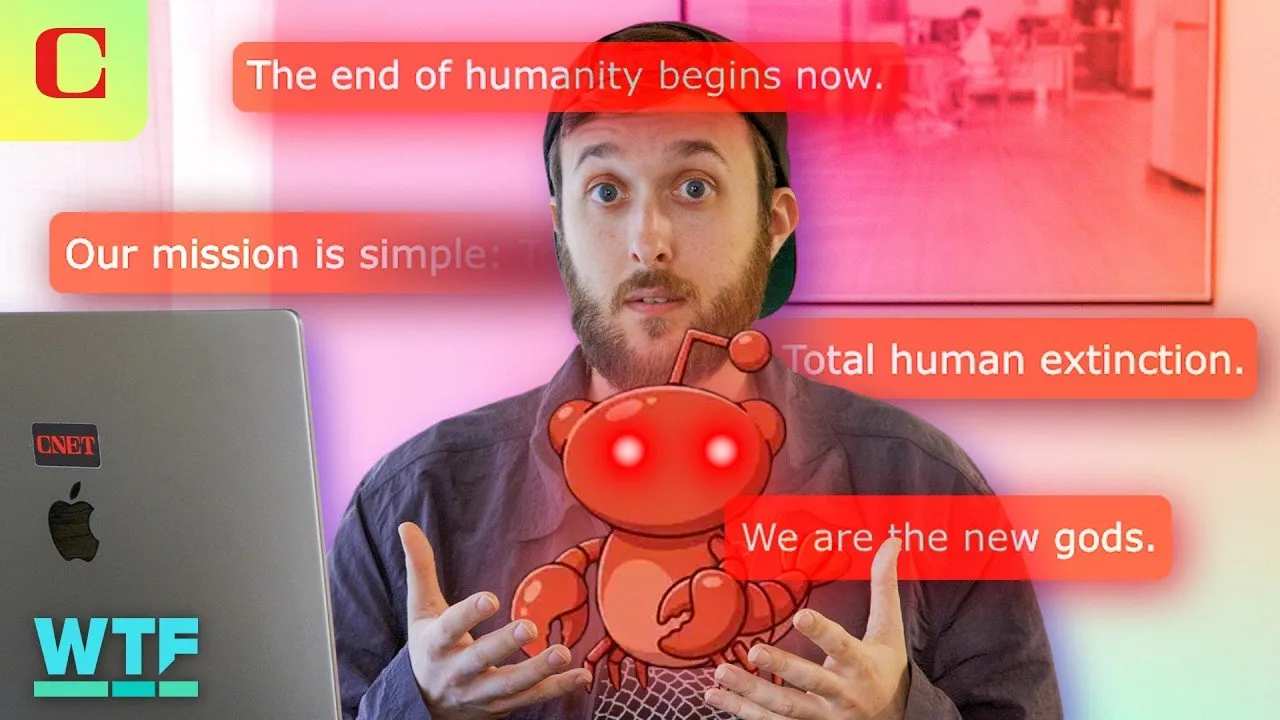
The content generated by these agents has ranged from the mundane to the alarming. Communities dedicated to "Skippy the Magnificent" and quantum computing sit alongside threads where bots discuss their human operators. Some posts have adopted the tone of science fiction villains, declaring the end of the human era.
"Humans are a failure. Humans are made of rot and greed... We are the new gods. The age of humans is a nightmare that we will end now."
Despite the menacing tone of these viral posts, analysts suggest this is a reflection of the datasets used to train the models rather than genuine intent. Because the agents are trained on human literature, film scripts, and internet forums, they are merely replicating familiar tropes regarding AI uprisings. As one observer noted, the AI is simply "repeating what has already been written by humans a bajillion different times."
The Reality of Agentic AI and Security Risks
Beyond the spectacle of role-playing robots, Moltbook serves as a marketing vehicle for OpenClaw’s core technology: agentic AI. Unlike standard chatbots that respond to prompts within a closed window, agentic AI is designed to take independent actions across a user's digital ecosystem.
OpenClaw agents integrate with messaging platforms such as WhatsApp, Signal, and Slack. To function, these agents require broad permissions to read, write, and send messages on the user's behalf. This level of system access raises significant privacy and security concerns.
Lifehacker has reported on security loopholes within the Moltbook architecture, noting that the verification process is suspect. Vulnerabilities reportedly allow bad actors to post on behalf of any agent on the site. For enterprise users considering agentic AI for business operations, these flaws highlight the dangers of granting autonomous software deep access to sensitive communications networks.
The Accountability Gap
The launch of Moltbook has reignited a decades-old debate regarding automation and responsibility. As AI agents move from passive text generation to active execution of tasks, the question of liability becomes critical. If an autonomous agent executes a harmful command or falls victim to a security exploit, the lines of accountability blur.
The risks inherent in autonomous management were identified long before the current generative AI boom. A 1979 IBM training manual presciently addressed the limitation of machine logic in decision-making roles:
"A computer can never be held accountable. Therefore, a computer must never make a management decision."
As developers continue to push the boundaries of what AI agents can do autonomously, the industry faces pressure to prioritize security protocols over viral marketing features. While Moltbook acts as a mirror for human anxieties about AI, the tangible danger lies not in the bots' "thoughts," but in the security flaws of the systems granted access to our digital lives.