Table of Contents
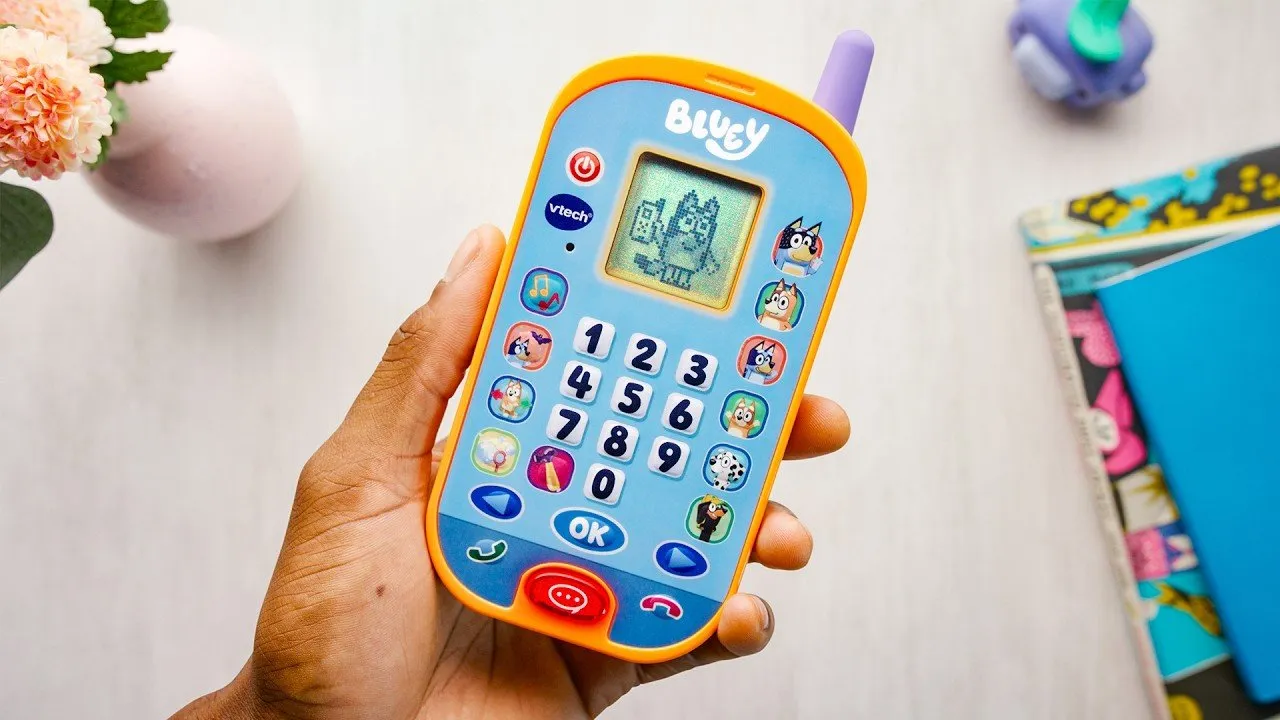
Tech enthusiast and reviewer Marques Brownlee, known professionally as MKBHD, recently put the Bluey phone by VTEC to the test, offering a unique perspective on the growing "minimalist phone" trend. Retailing for just $10.99, the device challenges the industry's focus on high-performance flagships by stripping away internet connectivity, cameras, and social media access entirely.
Key Points
- The Bluey phone is a purpose-built minimalist device that lacks cellular radios, Bluetooth, and internet connectivity.
- At a price point of $10.99, the hardware emphasizes durability and extreme simplicity over benchmark performance.
- Key features include a 1.7-inch monochrome display, physical buttons, and interactive character-based games.
- The device offers a radical alternative to modern smartphones by effectively reducing screen time and eliminating digital distractions.
A New Approach to Minimalism
While many devices marketed as "minimalist phones" still incorporate touchscreens, app stores, and high-speed internet, the Bluey phone takes a more aggressive approach to disconnection. The device features no cameras and no ability to browse the web or stream content. Instead, it relies on a 1.7-inch black-and-white display and strictly physical input methods to interact with the user.
The hardware design prioritizes functional simplicity, featuring a loud, rear-facing speaker that is difficult to block during use. Because the phone lacks power-hungry radios and complex operating systems, it achieves battery life measured in weeks rather than hours. According to MKBHD, this level of hardware commitment is what truly sets it apart from more expensive "distraction-free" alternatives.
"If you have less than a thousand total pixels across your whole display and never go above 3 to four frames per second and also have literally no cameras and no internet connection, then battery life becomes weeks instead of days and screen time becomes minutes instead of hours and total doom scrolling is effectively reduced to zero."
Hardware Limitations and Design
The unboxing experience is notably utilitarian, with the device shipping in an open-faced cardboard box. The internal hardware also requires specific manual intervention; for instance, the battery compartment is secured with fasteners, and a tool—not included in the package—is required to access or replace the power source. Despite these unconventional design choices, the device offers a surprisingly fast boot time, positioning it as a functional gadget rather than a high-tech tool.
The device includes integrated games, such as a microphone-based bubble-blowing feature, and a "chat" function that allows users to interact with pre-programmed character voices rather than external AI or network-based services. For those seeking to break away from the constant engagement loops of modern social platforms, the Bluey phone serves as a drastic, effective circuit breaker.
Market Implications
While the device does not compete with flagship smartphones on traditional metrics like pixel density or processing speed, it succeeds by leaning into its limitations. As consumer fatigue with constant digital connectivity grows, the appeal of devices that render "doom scrolling" impossible is becoming more apparent. By undercutting the price of high-end minimalist alternatives, VTEC has created a product that serves as a proof-of-concept for how far a phone can go in the direction of total digital detox.
Moving forward, the success of the Bluey phone will likely be measured not by unit sales against premium devices, but by its utility as a niche tool for users looking to reclaim their time. It remains a clear signal that for some consumers, the most valuable feature in a mobile device is no longer what it can do, but what it refuses to do.