Table of Contents
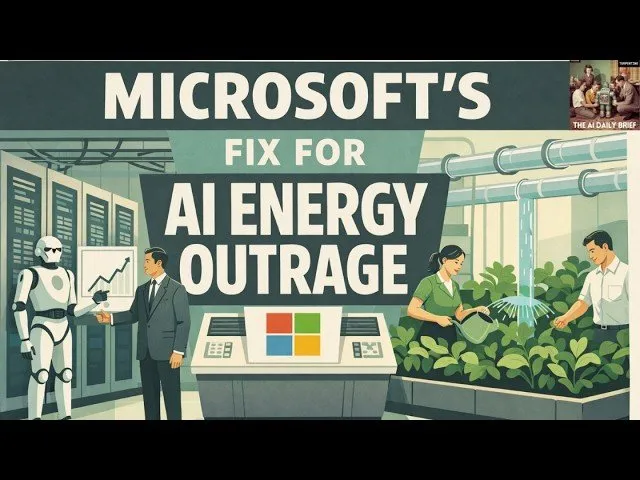
Microsoft has announced a comprehensive "community-first" infrastructure plan designed to insulate American consumers from the rising energy costs associated with the rapid expansion of artificial intelligence data centers. The initiative, developed in consultation with the Trump administration, aims to address growing political concerns regarding affordability and utility rates as the AI sector significantly increases its power consumption.
Key Points
- Energy Cost Protection: Microsoft commits to paying higher utility rates to ensure local consumer electricity bills do not rise due to data center demand.
- Five-Pillar Strategy: The plan includes water replenishment, job creation, tax base contributions, and local AI training alongside energy commitments.
- Political Alignment: The move follows direct pressure from President Trump, who recently stated Americans should not subsidize big tech’s power usage.
- Chip Market Volatility: Conflicting reports have emerged regarding the entry of Nvidia’s H200 chips into China, despite conditional approval from the U.S. Commerce Department.
- M&A Activity: OpenAI has acquired health tech startup Torch, reportedly for $100 million in equity, to enhance medical record integration with AI.
Infrastructure and Affordability
As the artificial intelligence industry continues its aggressive infrastructure build-out, the massive electricity requirements of hyperscale data centers have become a focal point of political discourse. With affordability expected to be a dominant theme in the 2026 election cycle, technology giants face increasing pressure to mitigate their impact on local utility grids.
Following discussions with the Trump administration, Microsoft Vice Chair and President Brad Smith unveiled a five-part plan to operate as a "good neighbor" in host communities. The primary pillar of this initiative is a financial commitment to prevent cost passthroughs to consumers.
"I never want Americans to pay higher electricity bills because of data centers. Therefore, my administration is working with major American technology companies to secure their commitment to the American people... First up is Microsoft, who my team has been working with, and which will make major changes beginning this week to ensure that Americans don't pick up the tab for their power consumption." — President Donald Trump via Truth Social
Beyond energy costs, Microsoft’s framework addresses broader resource concerns. The company pledged to minimize water usage and replenish more water than it consumes in local communities. Economic incentives include creating local jobs, contributing to the tax base to fund essential services like hospitals and schools, and investing in non-profits and AI training programs.
Market Sentiment and Strategic Timing
The timing of Microsoft’s announcement suggests a proactive approach to potential regulatory headwinds. Investors and analysts, such as Chamath Palahapatiya, have warned since late 2023 that hyperscalers must subsidize local costs to avoid community pushback that could stall the AI build-out. By voluntarily assuming the financial burden of grid upgrades and higher rates, Microsoft aims to secure the "social license" required to operate these facilities.
This strategy addresses the "affordability" argument that is likely to dominate the upcoming political landscape. By ensuring data centers contribute to, rather than detract from, local financial stability, major tech firms hope to insulate the sector from populist political attacks regarding the cost of living.
Semiconductor and Industry Updates
While Microsoft addresses infrastructure, the hardware sector faces renewed geopolitical complexity. Reports from Reuters indicate that Chinese customs officials have effectively banned Nvidia’s H200 chips, instructing tech companies to halt orders unless strictly necessary. Conversely, The Information characterizes the directive from Beijing as "deliberately vague," potentially allowing imports for research and development.
Simultaneously, the U.S. Commerce Department has finalized export approvals for the H200, subject to strict conditions. These include third-party testing to verify AI capabilities and volume caps limiting shipments to China to 50% of sales to U.S. customers. Analysts suggest Beijing’s stance may be a leverage play ahead of trade negotiations slated for April.
Capital Markets and Acquisitions
In the private markets, chip-making startup Cerebras is reportedly in talks to raise $1 billion at a $22 billion valuation, with plans to IPO potentially in the second half of the year. Meanwhile, OpenAI has expanded its portfolio by acquiring Torch, a health tech startup focused on unifying medical records. Sources indicate the deal was valued at roughly $100 million paid in equity.
Microsoft's initiative is expected to set a new industry standard, likely pressuring other hyperscalers like Amazon and Google to adopt similar "good neighbor" policies to remain competitive in securing energy contracts and political goodwill.