Table of Contents
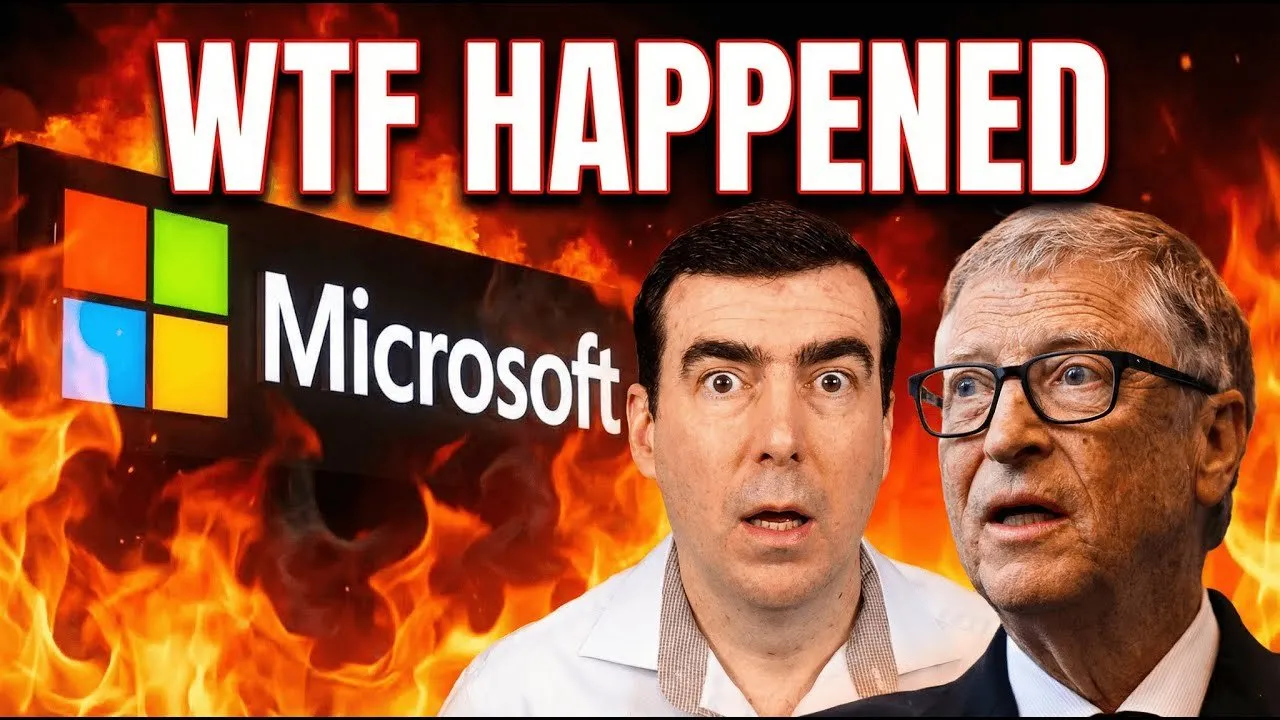
Major technology giants, led by Microsoft and Meta, have triggered a wave of market volatility following warnings that skyrocketing capital expenditures on artificial intelligence are outpacing revenue growth. Despite beating earnings expectations, Microsoft saw a significant intraday market capitalization drop—potentially the largest since March 2020—as investors reacted to data revealing massive spending on short-lived AI infrastructure with no immediate return on investment. The developments suggest that the sector’s aggressive pivot to AI may lead to a period of negative free cash flow, prompting renewed fears of an asset bubble and subsequent workforce reductions.
Key Takeaways
- Surging Costs: Microsoft’s capital expenditures hit $37.5 billion in the fiscal second quarter alone, a 66% increase year-over-year, driven largely by AI infrastructure.
- ROI Concerns: Analysts warn that revenue from AI investments is not materializing fast enough to offset the rapid cash burn required to maintain GPU-heavy infrastructure.
- Workforce Impact: Major players, including Amazon and chip-equipment giant ASML, are cutting thousands of managerial roles to streamline operations amidst rising costs.
- Market Shift: Wall Street anticipates a surge in corporate bond sales as tech companies may need to finance AI projects through debt rather than cash flow.
The AI Spending Paradox
While Microsoft reported strong headline numbers—with revenue up 17% to $81.3 billion and Azure cloud growth hitting 38%—the underlying financial mechanics have alarmed institutional investors. The core issue lies in the sustainability of the company's spending. Microsoft CFO Amy Hood revealed that capital expenditures (Capex) surged to $37.5 billion in the recent quarter. This figure represents a 66% jump from the previous year, significantly outpacing the company's return growth.
The nature of these assets adds to the financial risk. Approximately two-thirds of this spending is allocated to short-lived assets, primarily GPUs and CPUs required to support platforms like Azure and OpenAI. Unlike traditional infrastructure which depreciates over long periods, these processors require replacement every few years, suggesting that these elevated spending levels are the new baseline rather than a one-time investment spike.
Morgan Stanley analyst Keith Weiss highlighted the disconnect between spending and returns during the earnings assessment:
"One of the core issues weighing on investors right now is Capex is growing faster than we expected... investors were concerned about the return on that spending which doesn't appear to be materializing."
Furthermore, Microsoft’s financial health is increasingly tethered to OpenAI. With 45% of commercial remaining performance obligations tied to OpenAI commitments, any regulatory hurdles or funding challenges faced by the AI startup could pose significant risks to Microsoft’s future revenue viability.
Cash Flow Pressures and Corporate Debt
The spending fervor is not isolated to Microsoft. Meta has also projected massive increases in expenditures, with estimates suggesting a potential 87% jump in future spending cycles compared to previous baselines. This aggressive outlay is depleting cash reserves across the sector. Analysts warn that without the issuance of significant new debt, some major tech companies could see cash equivalents drop to dangerous levels by the end of 2025.
This liquidity crunch is forcing a shift in corporate strategy. For over a decade, tech giants have supported their stock prices through aggressive share buyback programs funded by ample free cash flow. As these companies face the prospect of years of negative free cash flow due to AI obligations, Wall Street expects a pivot toward borrowing. February is projected to see record-high corporate bond sales as these firms seek to bankroll their AI ambitions without depleting operating cash entirely.
Labor Market Contraction
As operating costs rise faster than revenues, companies are looking to protect margins by reducing headcount, specifically targeting middle management layers. Amazon recently initiated cuts affecting approximately 16,000 corporate jobs worldwide. The retailer aims to dismantle layers of bureaucracy, a move mirrored by chip-equipment manufacturer ASML, which is eliminating 1,700 positions.
"It is not our plan to announce broad staff cuts every few months... [but the company will] make adjustments as appropriate." — Beth Galletti, SVP of Amazon
These reductions are indicative of a broader economic cooling. Beyond the tech sector, companies like Home Depot are reducing corporate support roles as sales slow. Data comparing housing starts to unemployment rates suggests a lagging correlation; as the housing market cools and corporate profits turn negative, a rise in unemployment typically follows.
Implications for Investors
The divergence between stock prices and fundamental technicals has led some market strategists to advise caution. The Nasdaq 100 has traded within a consolidation range similar to patterns seen before previous tech selloffs. With small-cap tech stocks already showing weakness, there are concerns that the "Magnificent 7" stocks may drag the broader market down if their AI bets do not yield immediate profits.
In response to this volatility, seasoned investors are engaging in defensive rotation. Strategies are shifting away from cyclical tech stocks and banks—which may be exposed to underwriting this new wave of corporate debt—toward defensive sectors such as utilities, healthcare, and commodities like gold and silver. Investors are advised to monitor the 50-day moving averages of major tech indices, as a break below these trend lines could signal a deeper correction.

![URGENT: This Next Market Rotation Will Go Parabolic! [& It’ll Be Quick]](/content/images/size/w1304/format/webp/2026/03/market-rotation-parabolic-shift-forecast.jpg)