Table of Contents
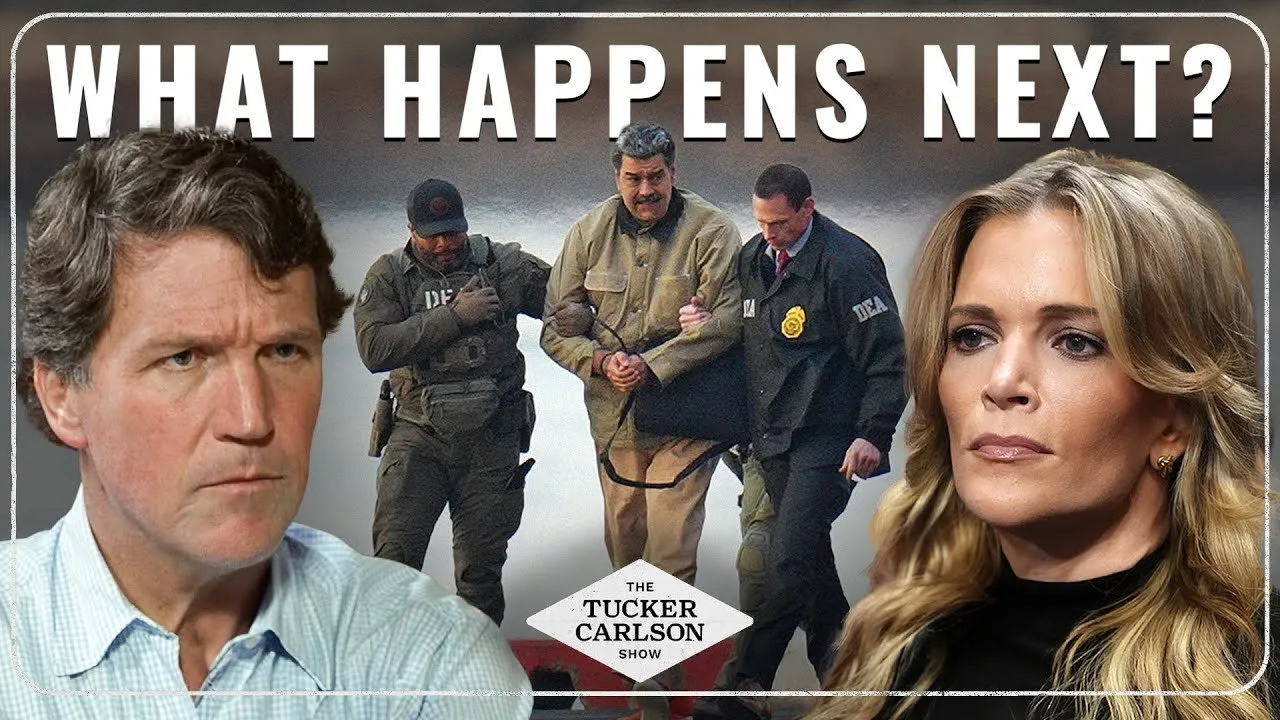
The recent actions taken by the United States government in Venezuela represent more than just a headline in foreign policy news; they signal a fundamental shift in how the nation defines itself on the global stage. For decades, American interventionism was cloaked in the language of human rights, democracy, and international law. However, the explicit move to secure Venezuela's oil reserves—justified openly by national interest rather than moral platitudes—marks a transition into what can be described as the "imperial phase" of the American experiment. This pivot brings with it a refreshing honesty but also profound risks involving hubris, executive overreach, and the potential for global conflict.
Alongside this geopolitical shift is a domestic fracturing of the conservative movement and the legacy media landscape. From the internal battles within the Republican party regarding foreign intervention to the implosion of trust in networks like CBS and Fox News, the old guard is struggling to maintain relevance in an era demanding authenticity and realism.
Key Takeaways
- The Shift to Open Empire: The US operations in Venezuela signal a move away from "democracy building" toward explicit resource extraction and national interest.
- Executive Power Expansion: As the US embraces an imperial posture, the legislative branch is withering, placing unchecked power in the hands of the President.
- The Neocon vs. Realist Divide: A fierce internal battle is waging within the GOP between interventionists like Lindsey Graham and "America First" realists like J.D. Vance.
- Media Collapse: Legacy outlets like CBS and Fox News are alienating audiences by enforcing ideological conformity and ignoring the shifting views of younger demographics.
- The Free Speech Absolutist Argument: Attempts to police speech, particularly regarding foreign policy and Israel, are backfiring and creating the very resentment they aim to suppress.
The Transition from Republic to Empire
For the last century, the United States has effectively operated as an empire while vehemently denying the label. Interventions in Latin America and the Middle East were historically justified by pretexts of stopping tyranny or spreading freedom. However, the recent extraction of Venezuela's leadership, coupled with open declarations regarding the acquisition of oil resources, marks the end of this pretense. The government is now admitting that these actions are calculated moves to secure resources and block rivals like China.
While there is a certain thrill in this honesty—stripping away the fakery of international bodies and hollow theories—it introduces significant dangers. The lifecycle of civilizations suggests that moving from a Republic to an Empire inevitably concentrates power in the executive branch. Congress, already weakened, was not consulted on the Venezuela operation, continuing a trend where the legislative branch becomes vestigial. This centralization means that national elections, specifically the presidency, now carry existential weight.
The Trap of Hubris
The most immediate pitfall of this new imperial honesty is hubris. Military success often seduces leaders into believing their power is limitless. Megyn Kelly points to the historical parallel of Libya, where a punitive action intended to project strength resulted in unforeseen blowback, such as the Lockerbie bombing.
"I worry very much about unintended consequences... First of all, when we killed their leader [in Libya], it's been chaos ever since. And I see the same sort of power vacuum there potentially, even with this Vice President left in place."
The lesson is clear: tyranny is bad, but chaos is worse. An empire requires serious leadership that understands stability is the prerequisite for prosperity. The danger lies in "flighty, emotionally incontinent" figures lobbying for new conflicts without understanding the long-term burden of ruling over fractured regions.
The GOP Civil War: Realists vs. Interventionists
This shift in foreign policy has exposed a deep rift within the Republican party. On one side are the "Neocons"—figures like Lindsey Graham and Mark Levin—who reacted to the Venezuela operation by immediately calling for escalation against Iran. Their rhetoric, often characterized by emotional outbursts and threats of violence, represents the old guard of American foreign policy.
On the other side is the emerging "America First" faction, influenced heavily by figures like J.D. Vance and Marco Rubio. This group advocates for a more calculated approach. Notably, the Trump administration’s decision to maintain continuity of government in Venezuela—rather than installing a neoconservative favorite—suggests a pivot toward realism. The goal is to prevent the country from turning into another Iraq or Libya, prioritizing stability and resource security over ideological regime change.
This internal conflict is not just about strategy; it is generational. Younger conservatives are increasingly skeptical of the "world policeman" role. They are less moved by appeals to abstract international order and more concerned with domestic stability and the realistic limits of American power.
The Collapse of Legacy Media
As the political landscape shifts, the media apparatus that once upheld the "post-war order" is crumbling. The recent turmoil at CBS News, where journalist Tony Dokoupil faced internal revolt for asking tough questions during an interview, illustrates the death of objective journalism in corporate media. Newsrooms have become enforcers of ideological orthodoxy rather than venues for inquiry.
The Fox News Dilemma
However, the critique extends to conservative media as well. Fox News faces an existential crisis as it clings to a pre-Trump, neoconservative worldview that is increasingly out of step with its audience. For decades, the network has acted as a cheerleader for military intervention, often suppressing skepticism regarding foreign wars.
"When I was there, it was very clear to me what the job was, which was to root for it, to defend it... And not to allow skeptics on to express why they thought it was a bad idea but instead to mock them and to belittle them."
This refusal to adapt is alienating the under-50 demographic. Younger Republicans and independents demand a media environment that allows for questioning the narrative, particularly regarding foreign aid and war. By maintaining a rigid adherence to interventionist talking points, legacy conservative media risks obsolescence as audiences flock to independent platforms that offer unfiltered analysis.
Free Speech and The Politics of Friendship
A critical component of this cultural shift is the debate over free speech. There is a growing intolerance within certain factions of the Right that mirrors the "cancel culture" of the Left. This is particularly evident in debates surrounding Israel, where figures are pressured to "de-friend" or ostracize individuals who hold dissenting views.
The argument for free speech absolutism remains the bedrock of American liberty. The First Amendment exists specifically to protect speech that others find offensive or hateful. Criminalizing speech—or attempting to define political criticisms as hate crimes—ultimately backfires. It creates resentment and fuels the very ideologies it seeks to suppress.
The fracturing of friendships over political disagreements indicates a dangerous trend where identity politics is replacing shared principles. True resilience lies in the ability to maintain relationships despite profound disagreements, refusing to bow to the demands of those who view politics as a totalizing force.
Conclusion
We are living through a definitive turning point. The United States has shed its reluctance to act as an overt empire, a move that clarifies our motives but drastically raises the stakes of our foreign policy. Simultaneously, the institutions that once guided public consensus—from Congress to the nightly news—are losing their authority.
In this new world, stability depends on "serious men" making calculated decisions based on national interest rather than emotional outbursts or foreign lobbying. As the legacy systems wither, the future belongs to independent voices and leaders willing to face the reality of the American position without the veil of pretense.