
Table of Contents
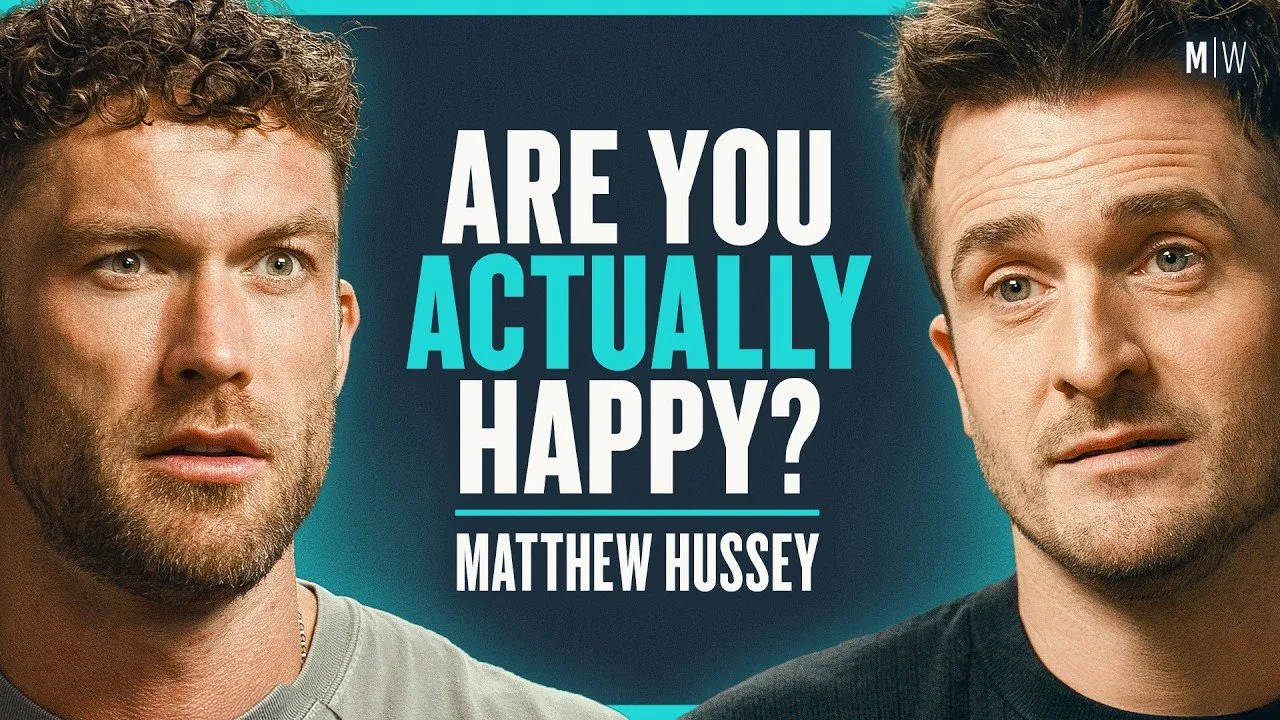
Deciding whether to stay in a relationship or leave is one of the most agonizing psychological battles a person can face. We often find ourselves paralyzed by the fear of regret, the terror of loneliness, or the sinking suspicion that we might never find anything better. This paralysis is frequently compounded by a misunderstanding of what love should feel like, confusing anxiety for passion and stability for boredom. In a profound conversation between Chris Williamson and relationship expert Matthew Hussey, the dynamics of heartbreak, the science of connection, and the misunderstood role of vulnerability in attraction are dissected to provide a roadmap for those standing at a crossroads.
Key Takeaways
- The "Cliff Edge" Trap: Most people wait until a relationship causes catastrophic damage—financially, emotionally, or temporally—before leaving, rather than acting on early intuition.
- Chaos is Not Chemistry: High anxiety and emotional rollercoasters are often mistaken for passion, when they are actually signs of an unregulated nervous system or incompatibility.
- The Relief Test: A powerful diagnostic tool for relationships is asking whether you would feel relief or wistfulness if the relationship ended tomorrow without your intervention.
- Vulnerability is Strength: For men especially, integrating sensitivity with strength creates "unique pairings" that foster deeper attraction and connection than stoicism alone.
- The Bodyguard Mechanism: We often rely on emotional defense mechanisms developed in childhood that served us then but actively sabotage our intimacy and happiness as adults.
The Psychology of the "Cliff Edge" and Sunk Costs
One of the most dangerous dynamics in failing relationships is the tendency to delay the inevitable until the cost becomes unbearable. We often ignore our intuition—the quiet voice saying something isn't right—and instead wait for our survival instincts to kick in, which only happens when we are in immediate danger.
- Defining the Cliff Edge: The "cliff edge" represents the point of no return where significant damage occurs—a financial blow-up, a loss of identity, or years of wasted time that cannot be recovered.
- Creating Artificial Deadlines: The goal of relationship coaching is often to create a "fake cliff edge"—a self-imposed deadline to act now before the real, destructive cliff edge is reached.
- Rock Bottom’s Basement: Contrary to the belief that hitting rock bottom prompts immediate recovery, toxic relationships often have a "basement with a trap door," where the threshold for pain keeps lowering the longer you stay.
- Activation Energy: Leaving requires massive energy—dealing with heartbreak, untangling logistics, and facing loneliness. Staying, while painful, requires less immediate energy, leading to a "status quo bias."
- The Sunk Cost Fallacy: We stay because we fear that the time invested will be wasted if we leave, not realizing that staying only compounds the loss.
- The Fear of "Stock Value" Dropping: Many people stay because they believe their "market value" has decreased during the relationship, leading to a fear that they cannot attract anyone else.
Confusing Anxiety for Chemistry
A major reason people stay in unhappy relationships is a fundamental misunderstanding of what connection feels like. We are often conditioned to view the "spark"—a rush of adrenaline and dopamine—as a sign of true love, when it may actually be a warning sign.
"People confuse chaos for chemistry and intensity for intimacy. And I think it's just largely like a neurobiological trick... somebody has hooked a particular fish line into this area of your brain and it keeps on pushing it."
- The Neurobiological Trick: The feeling of "butterflies" or intense longing is often driven by cortisol (stress) and dopamine (seeking), creating a "sympathetic" nervous system response rather than a "parasympathetic" (rest and digest) bond.
- The "First Sip" Optimization: Some partners are like sugary energy drinks—optimized for the first sip (the initial date or honeymoon phase) but sickening over the long term. Secure partners may feel like "Diet Coke"—less jarring initially but sustainable forever.
- Trauma Bonding: This occurs through variable reward schedules. If a partner treats you poorly 90% of the time but provides intense validation 10% of the time, the unpredictability creates an addiction similar to gambling.
- The "Safe" Chase: Healthy love should feel like a "rest," not a chase. The feeling of "arriving" brings safety and oxytocin, whereas the chase brings highs that are actually just temporary relief from the threat of abandonment.
- Misinterpreting "Spark": Often, a person who seems incredibly "sparky" on a first date is just a charismatic person who is sparky with everyone, not someone who has a unique connection with you.
- Boredom vs. Peace: People accustomed to toxic highs often misinterpret the safety of a healthy relationship as boredom, failing to recognize that peace is the prerequisite for long-term happiness.
Ego, Validation, and the "Best Available" Trap
Beyond chemistry, our ego plays a massive role in keeping us tethered to the wrong people. We often stay not because we are happy, but because we are trying to prove something to ourselves or the world.
- The "Best I Can Get" Fallacy: Asking "Is this the best I can get?" is a trap. The correct comparison is not between your current partner and an imaginary better partner, but between your current misery and "satisfactory singleness."
- Redemption through Relationships: We often choose partners who make us feel unworthy, believing that if we can finally secure their commitment, we will be "redeemed" and proven valuable.
- Scarcity Economics: When someone pulls away or acts hard to get, our brain interprets their scarcity as value. If we have low self-esteem, we assume their lack of interest means they are "above" us, and therefore a prize to be won.
- The "Gatekeeper" Ego: We stay to gatekeep the partner, thinking, "At least they are mine," even if "having" them brings no joy, only anxiety and a feeling of being fed scraps.
- Gatekeeping Your Children: A profound question to ask is whether you are staying to protect future children from the partner's influence, or if you would trust that partner to raise children alone if you were gone.
- The Relief Test: If you could wake up tomorrow and the relationship was over without you having to have the difficult conversation, would you feel heartbroken, or would you feel a wave of relief?
Masculinity, Vulnerability, and the "Bodyguard"
The conversation shifts significantly to address how men navigate relationships, specifically the tension between the societal demand for stoicism and the human need for connection. This leads to the concept of the "Bodyguard"—a psychological defense mechanism.
- The Bodyguard vs. The Inner Child: Many men develop a "Bodyguard"—a resilient, hard-working, unfeeling persona—to survive childhood or early struggles. While effective for survival, this Bodyguard prevents intimacy in adulthood.
- Hyper-Vigilance: The Bodyguard is fueled by fear and hyper-vigilance, constantly scanning for threats. This prevents the "Inner Child" (the part capable of play, joy, and connection) from having a voice.
- Advice Hyper-Responders: High-achieving, sensitive men often over-respond to "tough love" advice (e.g., David Goggins style) when they actually need grace. They are already pushing themselves too hard; more discipline only leads to burnout.
- The Cost of Stoicism: Suppressing emotions is often praised as strength, but it is actually a form of avoidance. True courage is the ability to feel deeply and speak one's truth despite the risk of rejection.
- Leading Edge of Growth: For many men, growth isn't about doing more of the same (working harder); it is about doing the opposite (allowing softness and connection).
- Compassion for the Self: Healing involves thanking the Bodyguard for its service but recognizing that the "Little You" needs to be heard to experience happiness and connection.
The Power of "Unique Pairings"
Attractiveness and deep connection are rarely the result of being one-dimensional. Instead, they arise from "unique pairings"—the combination of seemingly contradictory traits that create depth and intrigue.
- The "Bear on a Unicycle": Just as a bear is interesting and a unicycle is interesting, seeing them together is fascinating. Similarly, a man who is physically dangerous but emotionally gentle is infinitely more compelling than one who is merely tough.
- Strength + Sensitivity: The most magnetic partners are those who possess the competence to handle the world (resilience/strength) but the openness to connect deeply (vulnerability/sensitivity).
- Breaking the Binary: We often falsely believe we must choose between a partner who is "exciting but toxic" or "stable but boring." Unique pairings prove you can have stability and deep, emotional excitement simultaneously.
- Emotional Black Belts: To foster these pairings, we must surround ourselves with people who are "emotional black belts"—those who do not view vulnerability as weakness but as a skill to be mastered.
- Inputs vs. Outcomes: When supporting a partner (especially men), praise the traits (inputs) like loyalty, tenacity, and sensitivity, rather than just the outcomes (money, success). This reinforces that they are loved for who they are, not just what they provide.
- The "Enough" Affirmation: The most powerful thing a partner can hear is: "I know you can be more, but you are enough already. I’m with you no matter what."
Escaping the Echo Chamber
Finally, our ability to leave toxic relationships or embrace vulnerability is heavily influenced by our environment. We often trap ourselves in echo chambers that validate our dysfunction rather than challenging it.
"The wall becomes the world... We stand there and point at the wall and we keep talking about the wall and we find more evidence for the wall everywhere we can find it."
- The Wall Metaphor: If we have a specific trauma (e.g., "all men are trash" or "vulnerability gets you hurt"), we tend to find communities that stare at that same "wall," reinforcing the belief until it feels like a universal law.
- Algorithm Reinforcement: Social media algorithms feed us content that confirms our biases (e.g., "single life is better" or "relationships are a scam"), making it harder to see alternative possibilities.
- Seeking Incompatibility: We must actively seek out people who "don't have our wall"—people for whom our fears are non-issues. Their existence proves that a different reality is possible.
- Compatibility Over Correction: Much of dating strife is simply incompatibility (e.g., different sleep schedules or emotional needs). It is easier to find someone who naturally compensates for your shortcomings than to force someone to fix them.
- Pioneering Change: Breaking family patterns or societal conditioning is incredibly difficult. If you are trying to change your attachment style or emotional openness, recognize that you are a pioneer in your lineage, and expect it to be hard.
- Horizontal Relationships: Instead of viewing life as a vertical hierarchy where you are "behind" others, view it as a horizontal field where everyone is on their own journey with their own unique set of "ingredients."
Conclusion
Whether you are debating the end of a relationship or struggling to open up in a new one, the core challenge is often the same: the courage to face reality over comfort. We stay in bad relationships to avoid the pain of the "cliff edge," just as we stay behind our emotional "bodyguards" to avoid the risk of intimacy.
However, true connection lies on the other side of these fears. It requires discerning the difference between the anxiety of the chase and the peace of arrival. It demands the bravery to be a "unique pairing" of strength and softness. And ultimately, it asks us to stop staring at the wall of our past traumas and turn around to see the open possibilities of a future where we are enough, just as we are.


)