Table of Contents
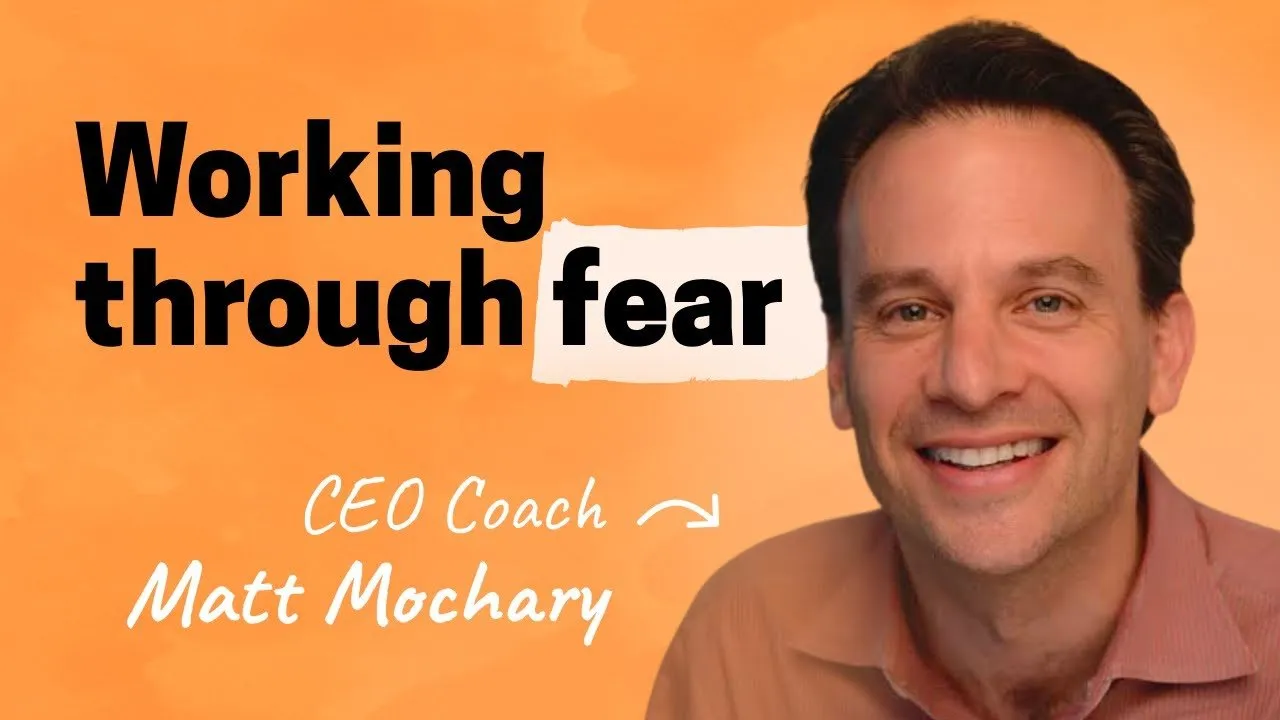
Matt Mochary is not just an executive coach; he is the quiet force behind some of Silicon Valley’s most influential leaders, including the CEOs of OpenAI, Coinbase, Reddit, and Notion. His approach moves beyond abstract leadership theory into rigorous, practical systems that solve the "good problems" of rapid growth—infrastructure breaking, communication stalling, and the psychological toll of leadership.
In a recent conversation with Lenny Rachitsky, Mochary deconstructed the specific methodologies he uses to guide founders through their most difficult transitions. From the counterintuitive psychology of fear to the precise mechanics of a humane layoff, the discussion offered a masterclass in operational excellence and emotional intelligence. The following insights break down the core components of the "Mochary Method" that allow leaders to scale their companies without losing their humanity or their sanity.
Key Takeaways
- Fear gives bad advice: Fear often predicts the worst-case scenario, which is rarely accurate. The most successful leaders learn to bet against their fear to build trust and transparency.
- Fire with compassion: Separation of employment should be treated with the same care as hiring. Becoming an "agent" for the departing employee changes the dynamic from adversarial to supportive.
- Radical innovation requires separation: To innovate within a large company, new products often need to be structured as separate C-Corps to bypass bureaucratic friction.
- Audit your energy: Sustainable leadership requires identifying your "Zone of Genius" and rigorously eliminating or delegating tasks that fall into your "Zone of Excellence" but drain your energy.
- Make people feel heard: The most effective way to de-escalate anger and resolve conflict is to reflect back not just what a person said, but the emotions and thoughts they are holding back.
The Psychology of Leadership: Navigating Fear and Anger
One of the most common struggles for high-performing founders is not a lack of skill, but an abundance of fear. Fear grips the mind and forces leaders to avoid difficult but necessary actions, such as sharing bad news with a board of directors or having a tough performance conversation.
Mochary argues that fear is an unreliable narrator. It exaggerates the potential negative outcomes of an action. To combat this, he uses a technique involving "prediction bets." When a CEO is afraid to take an action (e.g., disclosing a major problem to investors), Mochary asks them to predict the outcome. Usually, the CEO predicts a loss of trust. Mochary bets on the opposite: that transparency will increase trust.
Fear gives bad advice... I think you're predicting that if you do this, A will happen. I'm predicting if you do that, the exact opposite will happen.
When the CEO takes the action and realizes the catastrophic prediction didn't come true, the grip of fear loosens. Over time, leaders learn to recognize the sensation of fear not as a stop sign, but as a signal to investigate whether their brain is offering distorted data.
Anger as a Cover for Pain
Similarly, anger is often a secondary emotion used to mask pain. When leaders act out of anger, they destroy relationships and break trust. The goal isn't to suppress the emotion, but to acknowledge the underlying pain without externalizing it onto the team. By shifting from "You made me angry" to "I am perceiving myself to be in anger," leaders can create the necessary space to process the emotion without causing collateral damage.
The Art of Letting Go: Firing and Layoffs
Perhaps the most critical skill a leader must develop is the ability to fire well. Managers often struggle with this because they conflate the decision (which is based on the needs of the customer and the business) with the implementation (which involves human emotion).
To navigate this, Mochary suggests a radical shift in mindset: once the decision is made, the manager should transition into being the employee's "agent."
The Manager as an Agent
If an employee is underperforming, they are likely in a role that does not suit their strengths. By keeping them, the manager is actually holding them back from finding a role where they can excel. The implementation of the firing should involve active assistance in finding that next role.
This goes beyond offering a passive reference. It involves the manager dedicating time to reach out to their network, pitching the employee's specific strengths to other companies, and helping them land a position where they are needed. When handled this way, a firing transforms from a traumatic event into a career transition, preserving the relationship and the dignity of the employee.
Managing Layoffs Humanely
When it comes to mass layoffs, the stakes are even higher. The difference between a botched layoff and a successful one often comes down to a single variable: privacy.
The biggest marker that I've seen between a botched layoff and a successful layoff is at the moment someone hears that they no longer have a job, did they hear it from their manager in a one-on-one?
Mochary outlines a specific protocol for layoffs to minimize trauma:
- Individual delivery: News must be delivered 1-on-1 by the direct manager, never via email or group chat.
- Emotional release: Managers should ask, "I imagine you are feeling a lot of anger and sadness right now. Would you be willing to share that with me?" This allows the employee to vent and feel heard immediately.
- Care for the "Stay Team": After the layoffs, the remaining employees will experience "survivor's guilt," fear, and sadness. Managers must hold 1-on-1s with every remaining employee to process these emotions. If this step is skipped, morale and productivity can tank for months. If done correctly, the company often sees a performance increase within weeks due to reduced coordination drag and renewed focus.
The Power of Feeling Heard
Whether in a layoff, a performance review, or a product debate, the need to feel heard is universal. Mochary distinguishes between "listening" and "making someone feel heard." The latter requires active playback.
The deepest level of this technique involves reflecting back the thoughts the other person hasn't said. In a feedback session, an employee might be polite, but internally they are seething. A leader makes them feel truly heard by saying, "I accept that feedback. And I imagine you’re thinking, 'Screw you, Matt, how dare you do that?' Is that close?"
When a leader accurately articulates the other person's unspoken frustration, defenses drop. It signals that the leader is not running away from the emotional reality of the situation, building immense psychological safety.
Innovation and Corporate Structure
As companies scale, they inevitably slow down. The protocols required to maintain a massive user base—security reviews, uptime guarantees, code integration testing—are poison to early-stage innovation. Mochary has observed that the most successful way to innovate inside a giant company is to structurally isolate the new initiative.
The Separate Entity Strategy
Standard "innovation labs" often fail because they are still tethered to the parent company’s HR, legal, and technical infrastructure. The radical approach Mochary advocates involves creating a new C-Corp for the new product.
- Total Independence: The new entity should not report to the VP of Engineering or Product. It should report directly to the CEO.
- Small Teams: Keep the team size tiny. Innovation dies in large groups due to the geometric increase in communication overhead.
- Brand Safety: By using a separate corporate structure, the team can take risks without threatening the core brand's reputation.
This method replicates the "do or die" speed of a startup while maintaining a thread to the resources of the parent company.
Optimizing Personal Energy
Finally, high performance is unsustainable if a leader is constantly operating outside their natural strengths. Mochary advises an "Energy Audit" to align a leader's schedule with their "Zone of Genius."
Many competent leaders get stuck in their Zone of Excellence. These are tasks they are very good at and highly paid for, but which drain their energy. Over time, this leads to burnout. The Zone of Genius is work that is uniquely suited to the individual, where time seems to disappear, and energy increases during the task.
How to Conduct an Energy Audit
- Audit two weeks: Look at your calendar for the past 14 days.
- Color code: Mark every hour-long block as Green (gave energy) or Red (drained energy).
- Analyze the Reds: Identify themes. Is it recruiting? Is it finance? Is it inefficient team meetings?
- The Solution framework: For every Red item, you must do one of three things:
- Eliminate: Stop doing it entirely.
- Delegate: Find someone else for whom this task is in their Zone of Excellence or Genius.
- Make Exquisite: If you must do it, restructure the activity so it becomes energizing (e.g., changing a chaotic meeting into a structured written update).
By repeating this audit until the calendar is 80% green, leaders unlock a level of productivity and joy that sustains them for the long haul.
Conclusion
The Mochary Method is not about adding complexity; it is about stripping away the fear, administrative friction, and emotional baggage that slows down high-growth companies. Whether it is through the vulnerability of an "opposite bet" on fear, the compassion of a well-handled exit, or the rigorous discipline of an energy audit, the goal remains the same: to create an environment where the most difficult things are handled with grace, allowing the business—and the people running it—to thrive.