Table of Contents
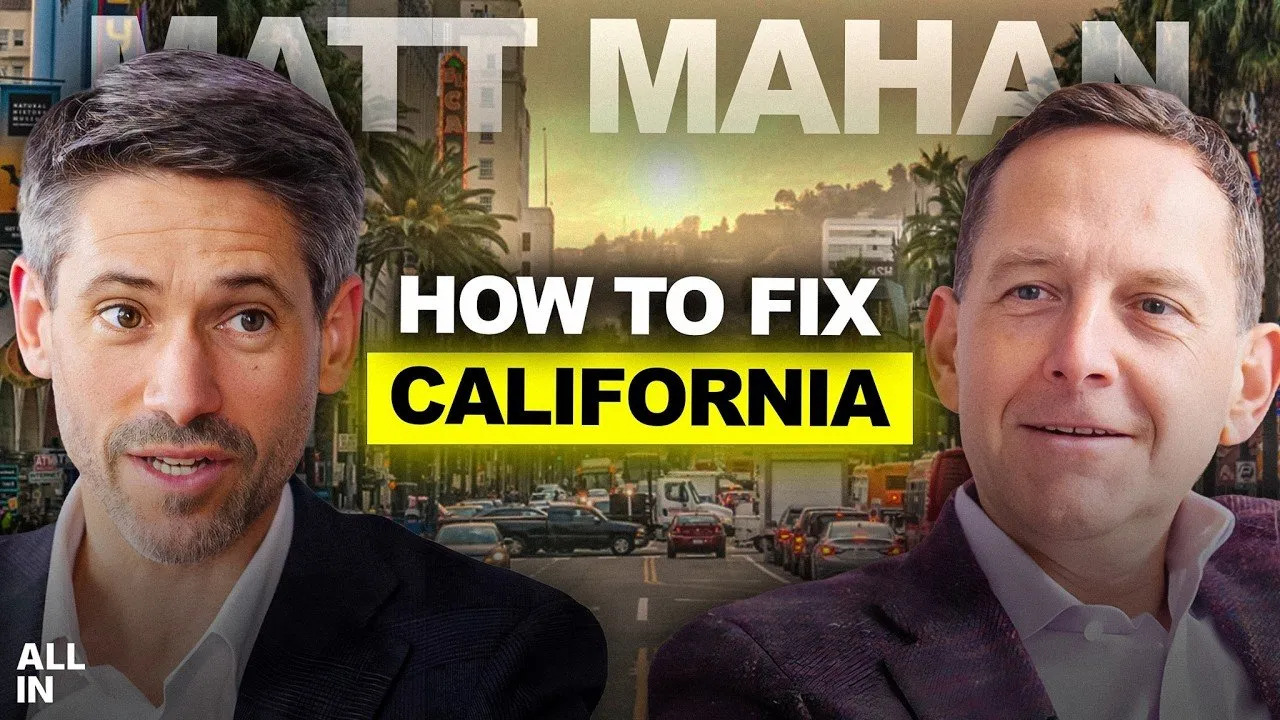
As California grapples with record-high costs of living, a persistent housing shortage, and a complex homelessness crisis, the state finds itself at an inflection point. Matt Mahan, the Mayor of San Jose, has entered the gubernatorial race with a platform centered on pragmatism, fiscal accountability, and evidence-based governance. Rather than following the traditional political playbook of expanding state spending, Mahan argues that California’s primary challenge is not a lack of revenue, but a failure of incentives and a bloated, performative bureaucracy.
Key Takeaways
- Incentive-Based Reform: Mahan argues that Sacramento’s current system prioritizes bureaucracy and special interests over measurable outcomes for citizens.
- Housing and Infrastructure: The state’s housing crisis is a direct result of excessive regulation, litigation, and restrictive zoning that suppresses supply.
- Accountability in Spending: With state spending increasing by 75% over the last six years without corresponding improvements in quality of life, Mahan advocates for zero-based budgeting and rigorous performance audits.
- Pragmatic Solutions: From homelessness to energy, the focus must shift from political ideology to real-world results, such as prioritizing shelter beds and managing wildfire risks through vegetation management.
The Root of California’s Dysfunction
Mahan contends that California’s governance is trapped in a feedback loop that rewards activity rather than impact. While the state has seen a massive surge in government spending—roughly $150 billion more annually than six years ago—the tangible outcomes in areas like education, public safety, and infrastructure remain stagnant or in decline.
Moving Beyond Performative Politics
In the eyes of many critics, the California state legislature often prioritizes passing hundreds of bills annually, many of which merely add layers of cost and process. Mahan believes that the measure of a successful administration should not be the sheer volume of legislation, but the ability to set clear, public-facing goals—and being held accountable if those goals are not met. He emphasizes that the state suffers from a lack of political will to challenge entrenched interests that thrive on the status quo.
The state is heading toward an inflection point past which there may be no return. We have increased spending in state government by 75%... and as far as I can tell, none of the outcomes have gotten better.
Addressing the Housing and Homelessness Crisis
The housing affordability crisis in California is largely characterized by a supply-side failure caused by excessive regulation. Mahan notes that the state’s building codes, environmental review processes, and litigation-heavy environment—specifically under the California Environmental Quality Act (CEQA)—have created a level of paralysis that makes it prohibitively expensive to build.
A New Strategy for Homelessness
When it comes to homelessness, Mahan advocates for a shift from ideological debates toward practical, interim solutions. In San Jose, he has championed the use of modular sleeping cabins, which offer privacy and security at a fraction of the cost of traditional developments. He maintains that government has a moral duty to intervene for those suffering from severe addiction or mental illness, proposing that individuals who refuse help repeatedly should be given clear, legal choices between treatment and accountability.
Energy, Insurance, and the Cost of Living
California’s aggressive green energy policies have often led to unintended consequences, including the displacement of refineries and a reliance on energy imports. Mahan argues that the state should move away from regulation that pushes industry out of the region and instead invest in innovation and a modernized grid.
Rebuilding the Insurance Market
The ongoing wildfire crisis has caused a massive departure of insurance providers, forcing the state into an unsustainable role as an insurer of last resort. Mahan’s proposal includes:
- Allowing insurers to price risk accurately to restore the private market.
- Increasing state focus on proactive vegetation management to reduce fire risk.
- Implementing granular pricing that rewards homeowners for taking fire-safety measures.
Fiscal Integrity and Pension Reform
A significant portion of California’s long-term liability lies within the public employee retirement systems (CalPERS and CalSTRS). Mahan, having navigated pension reform in San Jose, suggests that the state must shift toward more realistic return expectations and shared-responsibility models for current and future liabilities. He views this as a necessary step to free up the general fund for essential services and infrastructure maintenance.
We’ve gotten to the point where Mississippi and Louisiana are doing a better job of helping low-income kids get on grade level for reading than we are in the very well-resourced, very progressive state of California.
The Path Forward: A Pragmatic Third Way
Mahan’s candidacy is framed as an alternative to the binary choice between populist rhetoric from the left and the right. He believes that by focusing on measurable outcomes, such as reducing homelessness and lowering the per-square-foot cost of housing, the state can regain its status as an engine of innovation and prosperity.
Ultimately, he argues that the best antidote to the rise of reactionary populism is a high-functioning government that respects taxpayer dollars and delivers on the core responsibilities of the state. By fostering a culture of transparency and accountability, he believes California can resolve its most pressing dilemmas without further eroding the economic mobility of its working-class families.