Table of Contents
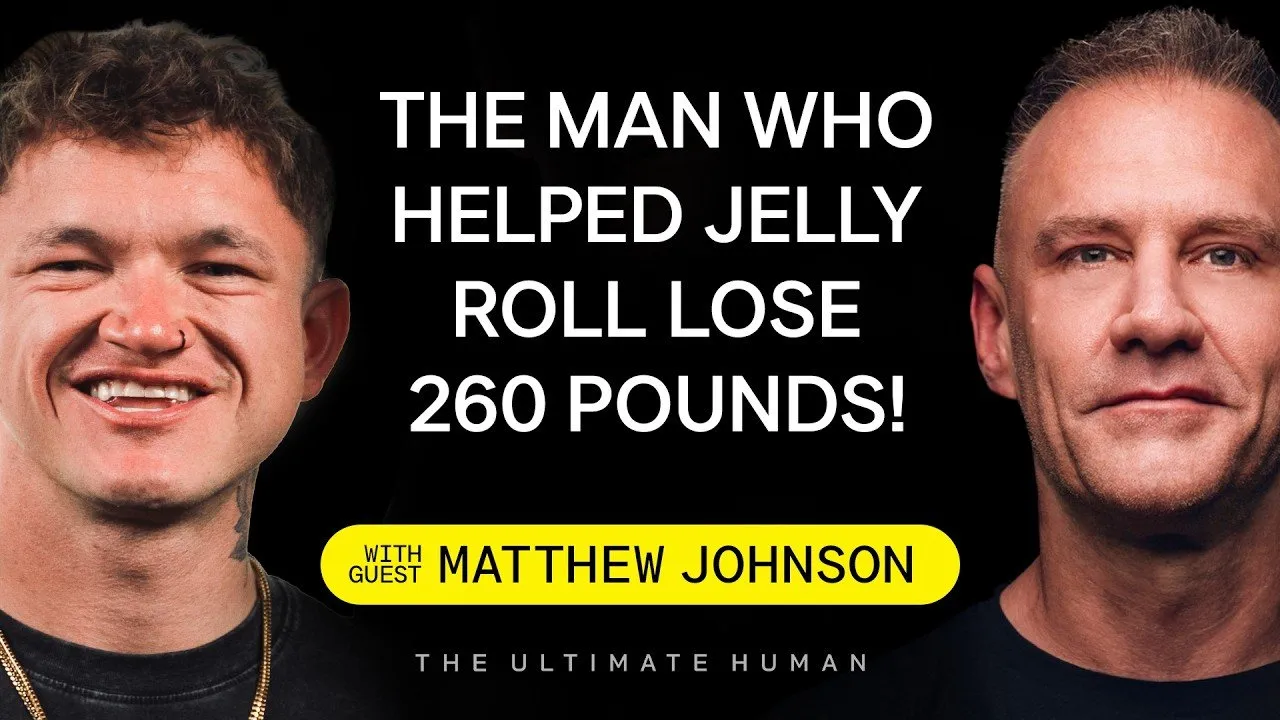
Matt Johnson’s journey is a masterclass in the human capacity for transformation. From a childhood marked by trauma and a young adulthood shadowed by addiction and the brink of despair, Johnson has emerged as a world-record-breaking ultrarunner and a high-performance coach. His story is not merely about the miles logged on the road, but about the mental architecture required to turn profound pain into a singular, driving purpose. By conquering the state of Texas twice and guiding others—including music icon Jelly Roll—through their own physical transformations, Johnson demonstrates that the ultimate human experience is found at the intersection of resilience and service.
Key Takeaways
- Resilience is Built, Not Born: Johnson’s endurance stems from witnessing his mother’s survival through trauma, proving that past hardships can be converted into future fuel.
- The 95% Mental Rule: In ultra-endurance, physical fitness is only the baseline; the ability to conquer the "mental space" is what separates those who finish from those who quit.
- Accountability as a Lifeline: The success of Jelly Roll’s weight loss journey was heavily rooted in radical, 24/7 accountability and the power of "shared suffering."
- Redefining Failure: True failure is the refusal to try. Johnson emphasizes that "DNFing" (Did Not Finish) a race is a necessary part of growth and should not deter future attempts.
- Service Leads to Fulfillment: Being an "Ultimate Human" is defined not by individual accolades, but by the ability to share knowledge and support with others.
From Adversity to the Military: The Roots of Endurance
Matt Johnson’s early life in rural Iowa was far from the disciplined, high-performance world he inhabits today. Raised in a small town without a single stoplight, his childhood was defined by a rotating cycle of instability and domestic trauma. Watching his mother work multiple jobs to provide for her children while enduring physical and emotional abuse instilled in him a foundational grit. "That is where I get my endurance from," Johnson reflects, noting that his mother’s tireless grind served as his first lesson in stamina.
The Toxic Cycle
Despite joining the military at 18 to seek a new path, the transition was not immediate. Johnson admits to falling back into toxic patterns of drug use and heavy drinking during his early years in the National Guard. He describes a version of himself that was nearly 180 pounds, out of shape, and mentally unmoored. This period of "implosion" served as the necessary low point before his eventual pivot toward high-performance athletics.
Finding the Catalyst
The turning point arrived through a combination of personal tragedy and literature. When his younger brother, Marcus, lost his best friends to violence, Johnson sought ways to help his brother navigate the ensuing depression. This search led him to David Goggins’ Can't Hurt Me. The book’s themes of childhood abuse and military discipline resonated deeply with Johnson’s own history, sparking a realization that his past did not have to dictate his future.
The Mental Architecture of the Ultra-Runner
Johnson transitioned from a casual runner to an elite athlete in an incredibly short window, driven by a need to control the one thing he felt had always been out of his reach: pain. For Johnson, running was not initially about health; it was an escape from a failing marriage and a career that felt stagnant. By pushing his body to the limit, he discovered a version of himself that he finally respected.
"I think the reason I fell into the love of running is because it was the only time in my life that I was able to control the pain that I was in."
Conquering Texas: 842 Miles of Grit
Johnson’s most iconic feat to date is running across the state of Texas—a distance of 842 miles. Remarkably, he has completed this journey twice, once from east to west and once from north to south, making him the only man to accomplish both routes. These feats were not just physical tests but logistical nightmares that required 17 days of continuous movement. He notes that while many people believe they are physically incapable of such distances, the barrier is almost always psychological.
The Danger of the Comfort Zone
A recurring theme in Johnson’s philosophy is the human tendency to set low goals to avoid the sting of failure. He argues that most people operate within a narrow band of what they know they can complete, which prevents them from discovering their true capacity. Johnson himself has failed to finish more ultramarathons than he has completed, a fact he shares with pride to illustrate that the attempt is more valuable than the guaranteed result.
"I think we subconsciously don't want to set ourselves up for failure. We either don't try or we do things that we know we can complete."
The Jelly Roll Transformation: Accountability in Action
Perhaps Johnson’s most visible impact has been his work with the musician Jelly Roll. When Johnson "parachuted" into Jelly Roll’s life, the artist was struggling with the massive physical demands of his newfound fame. Johnson moved in with the singer, providing 24/7 accountability that transformed his lifestyle and mindset. This wasn't about high-intensity sprinting; it was about the consistency of showing up.
Starting with the "Bite-Sized" Goal
For someone starting at 350+ pounds, the goal isn't a marathon—it's the mailbox. Johnson and Jelly Roll began with five-minute walks and "seconds" of increased effort. This approach demystifies the process of weight loss for the average person. By focusing on small, daily wins, they were able to build the momentum necessary for the singer to eventually complete a 5K and lose a staggering 260 pounds.
The Shared Journey
Johnson’s coaching style is rooted in the concept of "shared suffering." By running alongside his clients and athletes, he creates a bond that makes the pain bearable. "When you are doing something and you're suffering, when you know that the person next to you is suffering, it changes everything," he explains. This camaraderie was essential during the recent 100-mile run in Las Vegas, where Johnson guided a group of runners, including Gary Brecka’s son, through 24 hours of continuous desert running.
Managing the "Post-Race" Identity Crisis
A significant, yet rarely discussed, aspect of high achievement is the depression that often follows a major milestone. Johnson describes the "post-race depression" he experienced after his Texas run. For 17 days, he was surrounded by a support crew and an audience telling him he was "the greatest," only for the noise to stop the moment the race ended. This transition from "Matt the Ultrarunner" back to "Matthew the Human" can be jarring.
Separating Identity from Accolades
To combat this, Johnson emphasizes the importance of not letting your accomplishments become your entire identity. He has shifted his focus toward coaching and service, finding that the fulfillment gained from helping someone else achieve their goal is more sustainable than the fleeting high of a personal record. He warns against the "Instagram influencer" trap, where validation is sought from external noise rather than internal growth.
The Future: Running for a Greater Cause
Johnson’s next "bold, audacious goal" is a 250-mile run from Times Square to the White House, scheduled for the 4th of July. This run is not merely for personal glory; it is intended to honor fallen soldiers from his Iowa National Guard unit. He plans to carry their deployment flag the entire distance, raising money for veterans' charities. This shift from personal achievement to service-based endurance marks the next evolution of his journey.
The 250th Birthday Run
Coinciding with America’s 250th anniversary, the run symbolizes a bridge between his military past and his athletic present. By tying his physical feats to a larger narrative of sacrifice and honor, Johnson ensures that the "pain cave" serves a purpose beyond himself. This project highlights his belief that the ultimate goal of self-improvement is to become a more effective servant to one's community.
Conclusion: Defining the Ultimate Human
When asked what it means to be an "Ultimate Human," Matt Johnson’s answer has nothing to do with mileage or world records. Instead, he points to the act of helping others. For a man who had no father figure and had to teach himself the basics of fitness and life, being the person he once needed is the highest form of success. "I get my most fulfillment when I am helping others," he says, proving that the most enduring legacy isn't written in the record books, but in the lives of those we inspire to take their first step off the couch.