Table of Contents
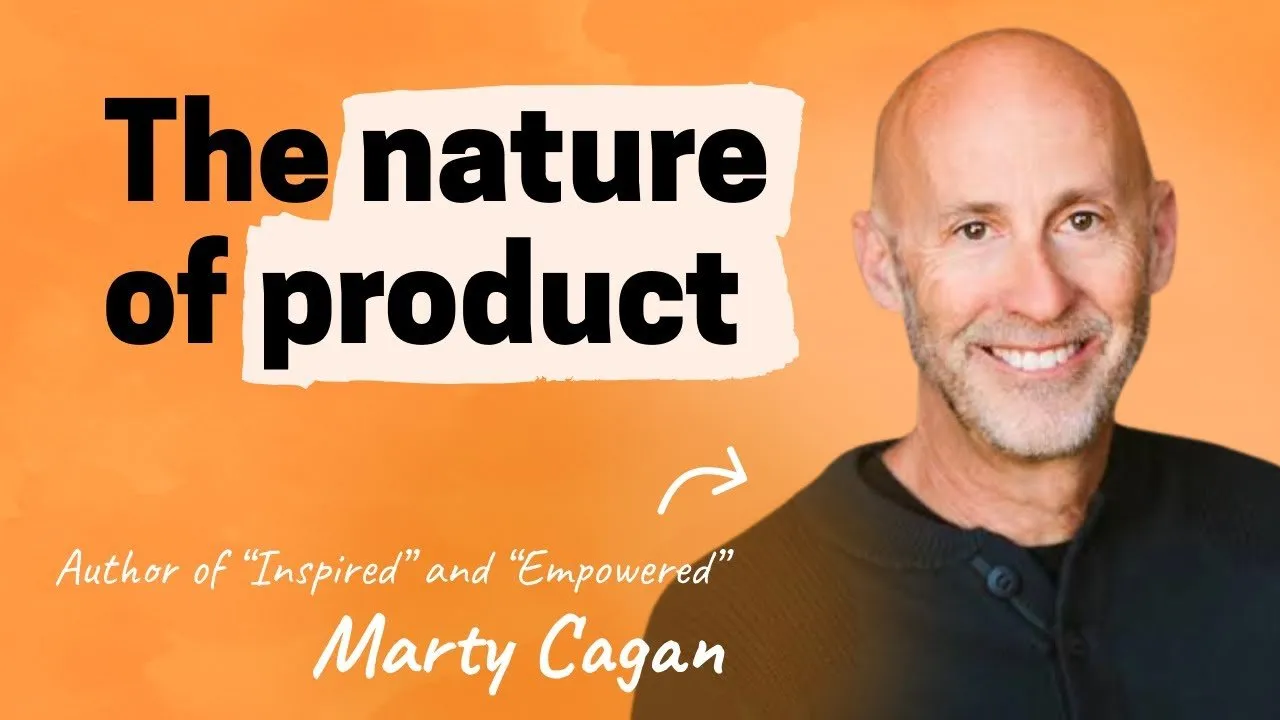
Despite the explosion of product management literature and the clear success of tech giants like Amazon, Apple, and Netflix, a massive chasm remains in the industry. There is a fundamental disconnect between how the best companies build products and how the rest of the industry operates. While the best teams focus on solving problems and driving outcomes, the vast majority are stuck in "feature factories," churning out outputs that often fail to deliver value. In this deep dive based on insights from Marty Cagan, founder of the Silicon Valley Product Group and author of Inspired and Empowered, we explore the nature of true product management, the "diseases" that kill innovation, and how product leaders can escape the trap of mediocrity.
Key Takeaways
- Outcomes over Output: Feature teams focus on delivering a roadmap of prioritized features (output). Empowered product teams are given problems to solve and are measured by business results (outcomes).
- The "How" Matters: Contrary to popular belief, Product Managers are not responsible solely for the "why." They must own the value and viability of the solution, which requires deep involvement in the "how."
- Steve Jobs’ Warning: As companies scale, they often succumb to the "disease of process," where administrative roles take precedence over product craftsmanship, leading to stagnation.
- Solution Discovery is Key: Teams often waste time validating problems that are already known. The real challenge—and where the most time should be spent—is discovering a solution that is valuable, usable, feasible, and viable.
- Three Sacred Rights: To succeed, a PM must have unencumbered access to customers, engineers, and business stakeholders. Any role (like Product Ops or Proxies) that blocks this access is detrimental.
The Great Divide: Feature Factories vs. Empowered Teams
The most persistent issue in the product world is the confusion between a "feature team" and an "empowered product team." Superficially, they look identical. Both are comprised of a product manager, a designer, and several engineers working in squads. However, their operating models are diametrically opposed.
In a feature team, the roadmap is handed down from stakeholders. The team is essentially a group of order takers. The "product manager" is tasked with project management—gathering requirements, documenting them, and shepherding them through sprint planning. The designer is there to make the UI look good, and engineers are there to code. Success is measured by shipping features on time.
In contrast, an empowered product team is assigned a problem to solve, not a feature to build. This fundamentally shifts the dynamic:
- From Output to Outcome: The goal isn't to deploy code; it is to solve a customer or business problem. If a feature launches but doesn't move the needle, it is not a success.
- The Netflix Principle: Decisions are pushed down to the people with the most relevant knowledge. Engineers work with the technology daily; product managers work with customers daily. They are best positioned to find the solution.
- Shared Ownership: Engineers and designers are not just executing tasks; they are co-creators responsible for the solution's success.
"In a real product team, you celebrate when you actually solve the problem when you accomplish those results. That's why we say product teams are about outcomes, they're not about output."
Steve Jobs and the Diseases of Innovation
To understand why so many companies devolve into feature factories, Cagan points to the insights of Steve Jobs, specifically from the 1995 documentary The Lost Interview. Jobs identified specific "diseases" that afflict companies as they scale—observations that remain shockingly relevant decades later.
The Disease of the Sales-Led Organization
Jobs argued that as companies grow and capture market share, the product itself becomes less critical to daily survival. The power shifts to sales and marketing—the engines of growth—and finance, the engine of cost-cutting. Consequently, product people lose influence and eventually leave. The company stops innovating because the culture no longer values the craftsmanship of product development.
The Disease of Process
Another fatal error is the belief that process is a substitute for talent. Companies attempt to scale by implementing rigid frameworks (like SAFe or heavy-handed agile processes) rather than developing leaders. They believe that by following a recipe, they can replicate success. Jobs, and Cagan, argue that process people eventually stifle the product culture, viewing the process itself as the work rather than the product.
The "Idea is 90%" Fallacy
Perhaps the most damaging misconception is that a great idea is 90% of the work. Executives often believe that once they have strategized and prioritized a feature, the rest is just execution.
"The idea is just the very sparkle in the eye... getting to a product is what matters. That is the craftsmanship of going from an idea to a product."
Real product discovery involves thousands of trade-offs, iterations, and pivots. It is in the "how" that a product lives or dies, not in the initial concept.
The Four Risks: Redefining the Product Manager Role
There is a pervasive myth in the industry that the Product Manager owns the "Why" and the "What," while the engineers and designers own the "How." This oversimplification is dangerous. While PMs do not tell engineers how to code or designers how to arrange pixels, they are deeply responsible for the implementation of the product.
Successful products must mitigate four specific risks:
- Feasibility: (Engineering) Can we build this with the time and skills we have?
- Usability: (Design) Can users figure out how to use it?
- Value: (Product Management) Will customers choose to buy or use this?
- Viability: (Product Management) Does this solution work for our business?
The Product Manager is explicitly responsible for Value and Viability. This includes the business model, go-to-market strategy, privacy compliance, legal constraints, and sales channel integration. These are fundamentally "how" questions. If a PM only defines the problem and walks away, they are neglecting the most difficult parts of the job.
Mastering Product Discovery
Many teams fall into the trap of spending weeks or months validating a problem that the founder or the business already knows exists. While problem validation is necessary when there is ambiguity, the majority of a team’s energy should be spent on solution discovery.
Customers generally do not buy problems; they buy solutions. The question is not "Does this problem exist?" but "Do we solve this problem better than the competition?"
Evaluative vs. Generative Research
When conducting user research, the goal isn't to seek validation or compliments. As Elon Musk has noted, the goal of user research should be to find all the reasons someone won't use your product. This mindset shift—from seeking approval to seeking friction—is critical for solution optimization.
Furthermore, user research should never be outsourced entirely to a research team. If the PM and Designer are not present during the testing, the value is largely lost. The "magic" happens when the creators see the user struggle firsthand, allowing them to build a robust mental model of the customer.
Escaping the Feature Factory: A Guide for PMs
If you find yourself working in a feature factory, you do not necessarily need to quit immediately. It is possible to run an experiment within your team. By asking leadership for a single quarter to work differently, you can demonstrate the value of the empowered model.
To succeed in this transition, the Product Manager must step up. A feature team PM is often a project manager; an empowered team PM must be a true leader. This requires mastering four specific competencies:
1. Deep User Knowledge
You must be the undisputed expert on your user. This isn't about reading reports; it requires direct interaction. A good rule of thumb is that you cannot make decisions for the team until you have visited at least 30 customers.
2. Data Fluency
You must understand how the product is actually used. This involves mastery of user analytics, sales data, and retention metrics. You cannot rely solely on qualitative feedback; the data tells the story of behavior.
3. Business Context
This is often the hardest hurdle. You must understand how your product is marketed, sold, and monetized. You need to know the legal, privacy, and security constraints. Gaining the trust of stakeholders requires you to prove that you understand their constraints as well as they do.
4. Industry Landscape
You must know the trends, the competitors, and the enabling technologies. You should be the person bringing external context to the internal discussion.
The Three Sacred Freedoms of Product Management
As the discipline of product management evolves, new roles like "Product Ops" and "Product Owners" (in the Scrum sense) have emerged. While operational support can be helpful, Cagan warns against any role or process that severs the Product Manager's connection to three critical groups. These are the "sacred" freedoms that must remain unencumbered:
- Direct Access to Users/Customers: If a Customer Success manager or Sales rep insists on being the conduit for all feedback, the PM cannot succeed.
- Direct Access to Engineers: If a "Product Owner" or project manager acts as a buffer between the PM and the developers, innovation dies. The friction between product and engineering is where great solutions are forged.
- Direct Access to Stakeholders: The PM must negotiate directly with legal, finance, sales, and marketing to ensure business viability.
Conclusion: Scale with Leaders, Not Process
The ultimate lesson from top-tier product companies is that you cannot scale innovation through process alone. Frameworks like SAFe are often appealing to executives because they promise control and predictability, but they largely institutionalize the waterfall method and stifle agility.
To build a company that survives the "diseases" of growth, leaders must focus on scaling through people. This means hiring and developing strong product leaders who can coach their teams, rather than implementing rigid rulebooks. It requires a culture where coaching is the primary responsibility of management, and where teams are empowered to solve problems rather than just build features.
To learn more from Marty Cagan, visit the Silicon Valley Product Group website.